

Choosing upholstery fabrics for summer comfort isn't just about picking something that looks fresh and light. The way your home is cooled, whether you're running central air, a window unit, or relying on cross-breezes and ceiling fans, changes everything about which fabric is going to feel good, hold up well, and actually work in your space. Pick the wrong one and you're either sticking to your sofa by August or watching a fabric warp from humidity it was never meant to handle. This guide covers what you need to know about fabric breathability, moisture-wicking properties, and material composition so you can make a smart call for your specific setup.
Why Your Cooling Method Changes Everything About Upholstery Comfort
Air-conditioned rooms run cool and dry. Naturally ventilated spaces run warmer and can trap humidity, especially in climates where summer air is thick. Those two environments put completely different demands on a fabric's fiber structure. A velvet sofa that feels perfectly fine in a climate-controlled living room can become a sweaty, uncomfortable experience in a room that relies on open windows and a box fan.
Fabric breathability refers to how freely air moves through a material's weave structure. Tightly woven fabrics, like many vinyls and faux leathers, create a surface barrier that traps body heat. Looser, open weaves allow air to circulate around you as you sit. In an air-conditioned room, that distinction matters a little less because the ambient temperature is already being managed. In a naturally ventilated space, it becomes the most important factor on your list.
Moisture-wicking is a separate but related property. Some fibers, particularly natural ones like linen and cotton, pull moisture away from the skin and allow it to evaporate. Others, like synthetic vinyls and many faux leathers, have no absorption capacity at all. That's not necessarily a flaw. In a dry, air-conditioned environment, a non-absorbent surface stays cool and is incredibly easy to wipe down. In a humid room, that same surface just collects moisture and holds it against you.
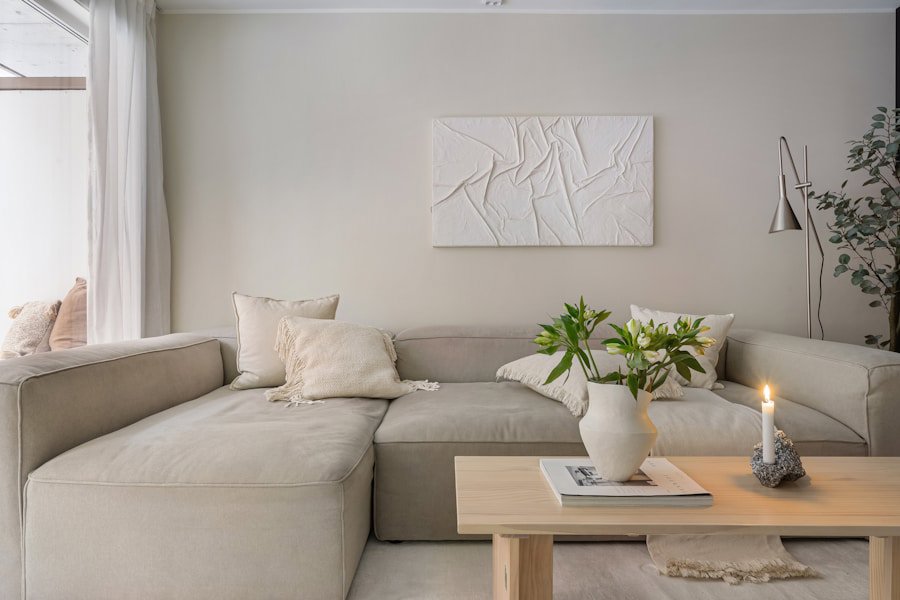
Photo by Alex Tyson on Unsplash
What Are the Best Upholstery Fabrics for Air-Conditioned Summer Rooms?
The best upholstery fabrics for air-conditioned summer rooms are those that feel comfortable against skin in a dry, cool environment and are easy to clean. Since humidity isn't the primary concern, you have significantly more flexibility in your material choices, including fabrics that would feel oppressive in a warm room.
Velvet gets a bad rap in summer, and honestly, it's undeserved in cooled spaces. A well-made velvet in an air-conditioned room stays comfortable, feels luxurious, and holds its shape beautifully. The key quality indicator to look for is the double rub count, which is a measure of how many back-and-forth abrasion cycles a fabric can withstand before showing wear. Think of it like a durability odometer for upholstery. For a high-traffic living room sofa, aim for a minimum of 30,000 double rubs. Many performance velvets hit 50,000 or higher, making them genuinely family-friendly.
Faux leather and vinyl are also strong choices for air-conditioned rooms. These materials are non-porous, which means spills sit on the surface and wipe clean in seconds. They don't absorb moisture, so in a dry, cool room, they stay comfortable and require almost no maintenance. Vinyl upholstery, in particular, is one of the most practical options for homes with kids or pets. It resists stains, doesn't trap pet hair, and can handle repeated cleaning without degrading.
Chenille is criminally underrated for cool-room summer use. The fabric has a soft, velvety pile that feels gentle against bare arms and legs, and modern chenille is typically woven with polyester or acrylic fibers that resist fading and pilling. It reads as casual enough for a family room but refined enough for a living room. If you've dismissed chenille as something from your grandmother's sectional, it's worth a second look.
Jacquard fabrics, which are woven with a raised pattern built directly into the weave rather than printed on top, also perform well in cooled rooms. The weave structure gives them a slight texture that keeps fabric from lying completely flat against the skin, which helps with comfort even at lower temperatures. Plus, they're typically durable enough to handle years of daily use.
What Are the Best Upholstery Fabrics for Naturally Ventilated Summer Spaces?
The best upholstery fabrics for naturally ventilated summer rooms are breathable, moisture-wicking natural fibers or open-weave constructions that allow air to move freely and don't trap body heat against the skin. In warm, humid environments, this distinction can make a significant difference in daily comfort.
Linen is the gold standard here. It's a plant-based fiber with a naturally open weave that promotes airflow, and it has one of the highest moisture-wicking capacities of any upholstery material. Linen absorbs perspiration and releases it quickly through evaporation, which is exactly what you want when the breeze isn't quite doing enough. It also has a natural thermal regulation property: linen fiber conducts heat away from the body, so it actually feels cooler than the ambient room temperature in many situations. The tradeoff is that linen wrinkles and can be more susceptible to soiling than synthetic options. If you have kids or pets, look for a linen blend rather than pure linen, which gives you most of the breathability benefits with improved durability.
Cotton upholstery shares many of linen's breathability advantages. It's soft, absorbent, and widely available in a range of weave styles. Cotton canvas and cotton twill constructions are sturdy enough for everyday furniture use and respond well to cleaning. The thing to watch with cotton in humid environments is that it can hold onto moisture longer than linen, which can invite mildew in very humid climates if the room doesn't dry out regularly. In moderate humidity with good airflow, it's an excellent choice.
Woven fabrics with an open or semi-open structure, including some boucle styles and textured weaves, also perform well in ventilated spaces. The texture in boucle creates small air pockets between the fabric and your skin, which reduces the contact surface area and helps with heat dissipation. Boucle has had a serious moment in home decor over the last couple of years, and it's not just a trend. The looped fiber construction is genuinely functional in warm conditions.
Corduroy is an interesting case. Its ridged structure, called a wale, creates channels that allow airflow along the surface of the fabric. Lightweight corduroy with a wide wale can actually be quite comfortable in naturally ventilated rooms during summer, particularly in cooler evenings. It's not the first fabric most people think of for summer, but it earns its place here.
What you want to avoid in naturally ventilated, humid rooms: faux leather, vinyl, and tightly woven synthetics without any moisture management properties. These materials will trap heat and moisture against skin and make warm rooms feel significantly worse. They're better saved for climate-controlled environments where their easy-clean benefits can shine without the comfort cost.

How Fabric Composition Affects Long-Term Durability in Summer Conditions
Durability in summer conditions isn't just about how much use a fabric can handle. It's about how the material holds up to the specific stressors of your environment: UV exposure from sunlight, humidity cycling, sweat, sunscreen residue, and repeated cleaning.
Solution-dyed acrylic is worth knowing about if your furniture gets significant sun exposure. In solution-dyed fibers, the color pigment is incorporated into the fiber during manufacturing rather than applied as a surface dye afterward. The result is a fabric with exceptional fade resistance. Solution-dyed acrylic fabrics typically retain color vibrancy after 500 or more hours of direct UV exposure in standardized testing, compared to surface-dyed fabrics that can begin fading noticeably within a single season in a bright room.
For naturally ventilated spaces where humidity is a factor, look for fabrics with a moisture-resistant finish or those made from inherently quick-drying fibers. Polyester blends dry faster than pure cotton or linen and resist mildew better. Many performance upholstery fabrics are rated using the Martindale abrasion test, which measures fabric durability in cycles of multi-directional rubbing. A fabric rated at 20,000 Martindale cycles is considered suitable for light domestic use. Heavy domestic use, think a sofa that gets daily use from a full family, warrants a minimum of 30,000 Martindale cycles.
Spot cleaning capability matters a lot in summer. With bare skin, sunscreen, and cold drinks in the mix, your upholstery is going to take some hits. Fabrics treated with a stain-resistant finish, or those made from tightly processed synthetic fibers, will give you a much easier time maintaining your furniture through the season. Always check the care label before you buy.
Quick Reference: Matching Fabric to Your Summer Setup
- Air-conditioned rooms: Velvet, faux leather, vinyl, chenille, jacquard, suede. Prioritize durability and easy cleaning over breathability.
- Naturally ventilated rooms: Linen, cotton, open-weave boucle, lightweight corduroy, linen-blend fabrics. Prioritize breathability and moisture management.
- High humidity climates: Avoid pure linen or cotton if ventilation is poor. Opt for moisture-resistant polyester blends or treated natural fiber blends.
- High sun exposure: Look for solution-dyed acrylic or fabrics with a UV-resistant rating to prevent fading.
- Homes with kids and pets: Vinyl and performance-grade velvet or chenille offer the best combination of durability and cleanability across both environments.
Frequently Asked Questions
Q: What is the most breathable upholstery fabric for a naturally ventilated summer room?Linen is the most breathable upholstery fabric for naturally ventilated summer spaces. It has an open weave structure that allows air to circulate freely and wicks moisture away from the skin, helping you stay cooler even when a room is warm and humid. Cotton is a close second and is generally easier to source in a wider range of colors and styles.
Q: Can you use velvet upholstery in summer without being uncomfortable?Yes, velvet is comfortable in summer when used in an air-conditioned room. In a climate-controlled, dry environment, velvet's pile doesn't trap body heat the way it would in a warm, humid space. Performance velvets with double rub counts of 30,000 or higher are particularly well-suited for year-round use in cooled rooms.
Q: Is faux leather a good choice for summer upholstery?Faux leather works well in air-conditioned summer rooms where humidity is low and the temperature is controlled. It's non-porous, wipes clean easily, and resists stains from sunscreen and food. In naturally ventilated rooms with higher humidity and warmth, faux leather can feel uncomfortably warm against bare skin and is better avoided in favor of breathable natural fiber fabrics.