
Why Your Upholstery Fabric Actually Matters in Summer
If you've ever peeled yourself off a leather sofa on a hot afternoon, you already know that not all upholstery fabrics are created equal. Choosing the right lightweight upholstery fabric for summer isn't just about aesthetics. It directly affects how comfortable your furniture feels, how well it holds up in heat and humidity, and whether your living room stays a place you actually want to spend time in.
The good news is that fabric technology has come a long way, and there are genuinely great options that are breathable, durable, and look sharp in a modern home. The not-so-good news is that a lot of shoppers pick fabric based on color alone and end up surprised when it traps heat, shows every sweat mark, or starts breaking down in humid conditions. This guide cuts through all of that.
We'll cover the fabrics that genuinely perform in hot weather, what to look for in fiber content and weave, and which options hold up best if you have kids, pets, or just a lot of life happening on your furniture.
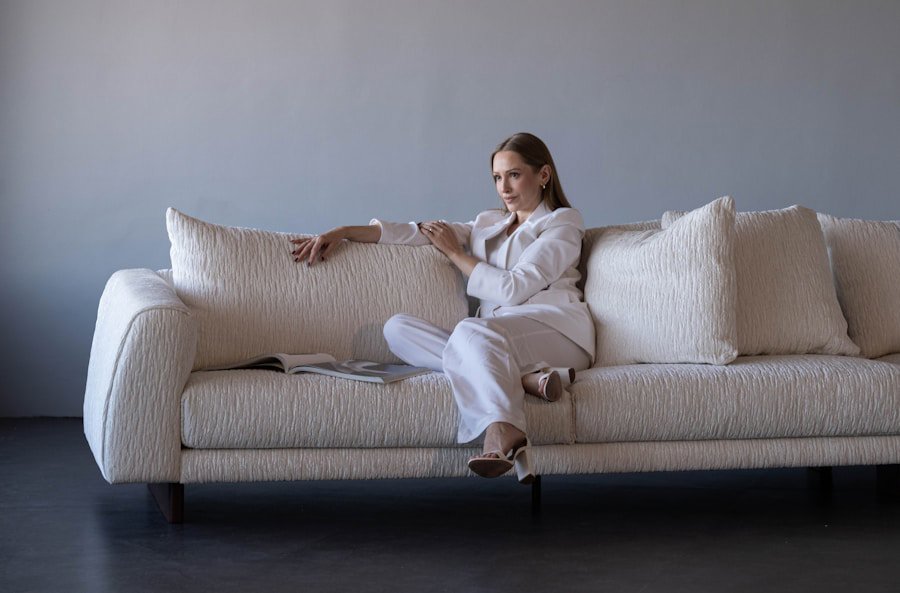
Photo by Caroline Badran on Unsplash
What Makes a Fabric Breathable and Cool to the Touch?
Breathable upholstery fabrics allow air to circulate through the weave, which prevents heat from building up at the surface where your skin makes contact. Natural fibers like linen and cotton have hollow or open fiber structures that wick moisture and release heat. Tightly woven synthetics, on the other hand, tend to trap warmth and hold humidity against the skin.
Fabric weight plays a big role here too. Measured in ounces per yard or grams per square meter, lighter-weight fabrics (typically under 12 oz/yd for upholstery) tend to feel cooler and less stifling. That said, weight alone doesn't tell the whole story. A loosely woven heavy linen can feel airier than a dense lightweight polyester. Weave structure matters just as much as the number on the label.
Here's the thing: the best summer upholstery fabrics share a few common traits.
- Open or semi-open weave structures that allow airflow
- Natural or moisture-wicking fiber content
- Light to medium weight (roughly 8 to 14 oz/yd for upholstery use)
- Surface textures that reduce full skin contact, like a slight nub or grain
- Color stability in bright light and UV exposure
Keep those five things in mind as we go through the specific fabric options below, and you'll have a much easier time narrowing down your choices.
The Best Upholstery Fabrics for Hot Weather Living
Linen: The Gold Standard for Summer Furniture
Linen is, honestly, the best all-around upholstery fabric for summer. It's made from flax fibers, which are naturally hollow, and that structure gives linen exceptional breathability and moisture-wicking ability. Linen stays noticeably cooler than most synthetics because it absorbs and releases moisture quickly rather than holding it at the surface.
From a durability standpoint, linen upholstery typically carries a double rub count of 15,000 to 30,000 or higher. A double rub count measures abrasion resistance by simulating back-and-forth friction on the fabric surface. For residential use, anything above 15,000 is considered durable enough for everyday furniture like sofas and chairs. Linen hits that mark comfortably.
One honest caveat: pure linen wrinkles and can be prone to soiling if untreated. Look for linen blends with a small percentage of polyester or nylon, or linen fabrics with a stain-resistant finish. That combination gives you the breathability of linen with better real-world performance for active households.
Linen also looks genuinely beautiful in summer. Its natural, slightly textured surface pairs well with light neutrals, sandy tones, and coastal-inspired rooms that are everywhere in home decor right now.
Cotton and Cotton Blends: Reliable, Versatile, and Budget-Friendly
Cotton upholstery fabric is soft, breathable, and one of the most accessible options at most price points. Like linen, cotton's natural fiber structure allows airflow and pulls moisture away from skin. It's a go-to choice for family rooms because it's easy to find in a huge range of colors and patterns, it cleans up reasonably well, and it doesn't feel clinical or synthetic.
Pure cotton upholstery does have limitations. It tends to fade in direct sunlight and can wear down faster than synthetics under heavy use. Solution-dyed cotton, where color is added to the fiber before weaving rather than printed on top, holds up significantly better against UV exposure and repeated cleaning. If fading is a concern for a sun-facing room, ask specifically whether a cotton fabric is solution-dyed.
Cotton-polyester blends are worth serious consideration for families. The polyester component boosts abrasion resistance and reduces wrinkling while the cotton keeps the breathability intact. Many cotton blends achieve double rub counts of 25,000 or more, which is solid for a living room sofa that sees daily use.
Woven and Jacquard Fabrics: Structure That Stays Cool
Woven upholstery fabrics aren't a single fiber type. They're defined by their construction, and that construction is what makes them relevant for summer. A well-woven fabric with an open structure traps less heat than a dense, flat weave because air can move between the threads.
Jacquard fabrics, which are woven on a specialized loom to create intricate patterns directly in the weave structure rather than printed on top, often have a slight surface dimension that reduces full skin contact. That small amount of texture makes a noticeable difference in how a fabric feels on a warm day. Jacquard cotton and linen blends are particularly well-suited to summer use.
If you're leaning toward a patterned fabric for your space, a woven or jacquard option in a light linen-cotton blend gives you visual interest without sacrificing comfort in the heat.
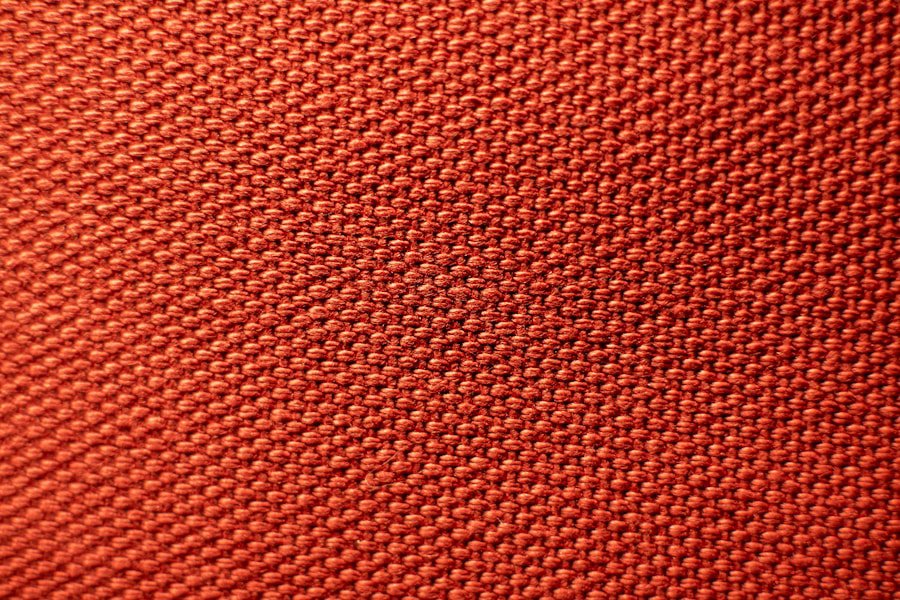
Photo by Marcus Urbenz on Unsplash
What About Chenille, Velvet, and Heavier Fabrics?
Honestly, chenille is criminally underrated for a lot of applications, but hot summer weather isn't its moment to shine. Chenille has a dense, looped pile that traps warmth and can feel heavy and sticky against skin in high humidity. The same goes for velvet, which gets a bad rap for being delicate but is actually quite durable. The problem in summer is the pile. It holds heat and can feel uncomfortably warm in rooms without good air conditioning.
That doesn't mean you need to avoid these fabrics entirely if you love them. In climate-controlled homes or in rooms that don't get direct afternoon sun, chenille and velvet can work year-round. Just know what you're working with before committing.
Boucle, which has a looped, nubby texture, is similar. It's having a major moment in interior design right now, and it looks stunning, but it's not the most practical choice for a stuffy sunroom or a house without central air. Save it for the bedroom or a cooler, shaded space.
How to Choose Summer Upholstery Fabric for Families with Kids and Pets
Breathability is great, but if you have children and pets, durability and cleanability have to be part of the equation. A fabric that's cool in July doesn't do much good if it's stained and pilling by September.
Here's a practical checklist for family-friendly summer upholstery:
- Double rub count of 25,000 or higher. This is the minimum recommended for households with kids or pets. It means the fabric has been tested against significant friction and held up. Anything below 15,000 is better suited for decorative or low-traffic pieces.
- Solution-dyed fibers. Color that's locked into the fiber itself resists fading from sunlight and bleach-based cleaners, which is a real advantage if you're spot-cleaning often.
- Performance linen or linen blends with a stain treatment. These give you breathability without sacrificing cleanability. Many performance linens are specifically engineered for high-traffic use.
- Avoid loosely woven or open-grid fabrics. They breathe well but snag easily on pet claws and wear faster in active households.
- Check the cleaning code on the fabric spec sheet. "W" means water-based cleaner is safe. "S" means solvent only. "WS" means both. For families, a "W" or "WS" rating makes life much easier.
Cotton canvas and tightly woven performance linens consistently rank among the top choices for families who want breathable fabric without sacrificing practicality.
Quick Guide to Summer Upholstery Fabric by Room
Not every room has the same demands, and matching the fabric to the space makes a real difference in how long it lasts and how good it looks.
- Living room sofa: Performance linen blend or cotton-poly blend, medium weight, 25,000+ double rub count
- Sunroom or screened porch: Solution-dyed acrylic or performance cotton, UV-resistant, easy to wipe down
- Dining chairs: Woven cotton, linen blend, or lightweight jacquard — these get cleaned frequently, so prioritize a "W" cleaning code
- Bedroom accent chair: This is where you can afford to prioritize feel over durability. Linen, soft cotton, even a light boucle works if it's low-traffic
- Kids' playroom furniture: Solution-dyed performance fabric with high abrasion resistance. Breathability still matters for comfort, but stain resistance is the priority
Frequently Asked Questions
Q: What is the most breathable upholstery fabric for summer?
Linen is the most breathable upholstery fabric for summer use. Its natural flax fiber structure allows airflow and wicks moisture efficiently, keeping furniture surfaces noticeably cooler than synthetic alternatives. Linen-cotton blends offer similar breathability with added durability and are a strong choice for everyday furniture.
Q: How do I know if an upholstery fabric is durable enough for daily use?
Check the double rub count, which measures how many times a fabric can be rubbed back and forth before showing wear. For residential upholstery that sees regular use, look for a minimum of 15,000 double rubs. Households with kids or pets should target 25,000 or higher. This number is usually listed on the fabric's specification sheet or product details page.
Q: Can I use indoor upholstery fabric in a sunroom or on a covered porch?
Standard indoor upholstery fabrics are not engineered for direct sun or high humidity and will fade and break down faster in those conditions. For sunrooms or covered porches, look for solution-dyed acrylic or fabrics specifically labeled as performance or outdoor-rated. Solution-dyed acrylic locks color into the fiber before weaving, which gives it strong resistance to UV fading and moisture damage compared to surface-printed fabrics.