
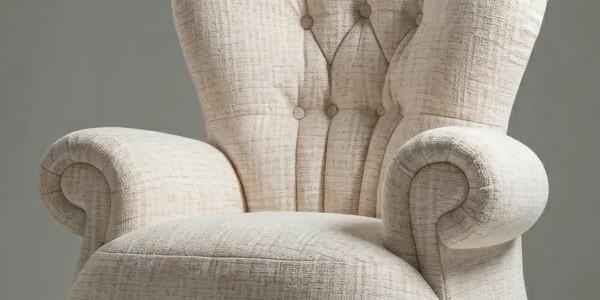
If you share your home with a cat, you already know that choosing upholstery fabric for cat owners is a different challenge than shopping for a "pet-friendly" sofa in general. Dogs shed on flat surfaces and occasionally have an accident. Cats scratch, dig their claws into loose weaves, and pack hair into every tiny gap in a textured fabric. As the weather cools and cats spend more time indoors clawing at their favorite armchair, fall is actually the perfect season to rethink what's on your furniture before the damage sets in.
What Is the Best Upholstery Fabric for Cat Owners?
The best upholstery fabric for cat owners is a tight, low-loop weave with a high double rub count, like performance chenille, microfiber, or faux leather, since these resist claw snagging and release embedded hair more easily than loosely woven textiles. Fabric labeled for 30,000+ double rubs on the Martindale or Wyzenbeek abrasion test is generally tough enough to handle daily scratching without pilling or tearing.
Here's an expert-level fact worth remembering: the Martindale test measures abrasion resistance by counting how many rubbing cycles a fabric endures before visible wear appears, and most residential upholstery fabrics rated for cat households should test above 20,000 rubs, with heavy-use pieces ideally hitting 30,000 or more.
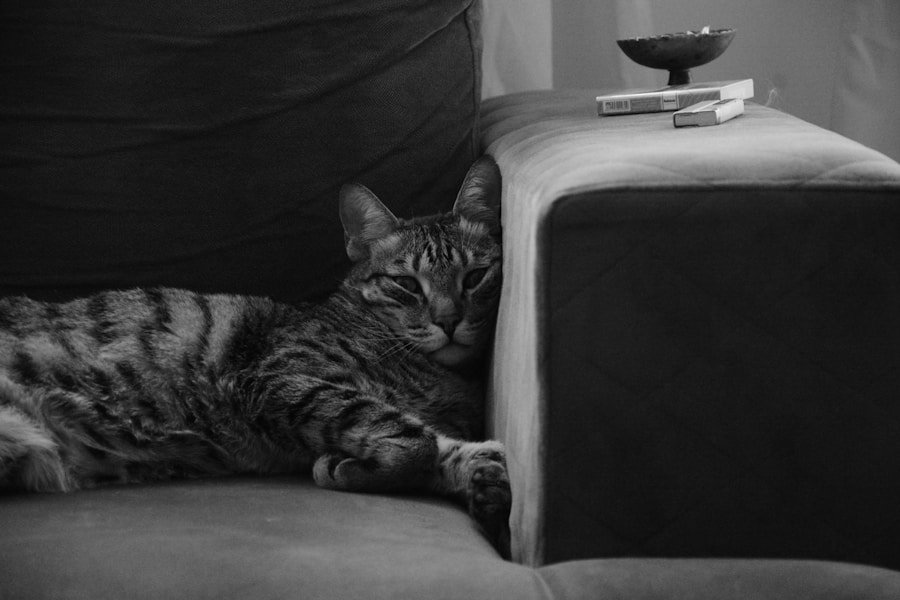
Photo by Amin Yazdani on Unsplash
Step-by-Step Instructions
- Check the abrasion rating before anything else. Look for a Martindale or Wyzenbeek double rub count on the product listing. Anything under 15,000 rubs is going to show claw damage fast, so aim for 30,000+ if the piece gets daily cat traffic.
- Choose tight, flat weaves over open, looped ones. Boucle and some open-weave linens look gorgeous, but their loops are basically an invitation for claws to catch and pull. A dense, low-pile chenille upholstery fabric gives cats less to grip onto in the first place.
- Skip fabrics with visible weave gaps. Hair and litter dust settle into the little valleys between threads, and once it's packed in there, a regular vacuum won't pull it out. Flatter weaves with smaller yarn gaps stay cleaner longer.
- Consider faux leather or vinyl for litter room furniture. If you've got a bench, ottoman, or chair near the litter box, faux leather upholstery fabric wipes clean of dust and doesn't trap odor the way woven fibers can.
- Go with performance velvet for scratch-prone spots. Modern performance velvets are woven tighter and coated for durability, which means claws slide across the surface instead of catching a thread. A well-made velvet upholstery fabric can actually outlast basic cotton in cat households.
- Pick patterns or mid-tones over solid pale colors. Cat hair shows up like a spotlight on solid black or white fabric. A subtle pattern or heathered tone hides hair between cleanings, which honestly buys you a few extra days before you have to break out the lint roller.
- Test the fabric with your own cat before committing. If you're buying fabric by the yard for a reupholstery project, order a swatch and let your cat sniff and paw at it for a week. Real-world testing beats any spec sheet.
- Build a simple cleaning routine into your week. A rubber squeegee glove or a vacuum with an upholstery brush attachment pulls embedded hair out of tight weaves far better than a standard lint roller.
Why Do Cats Snag Certain Fabrics More Than Others?
Cats snag fabrics with visible loops or long floating yarns because their claws are designed to hook into fibrous surfaces, similar to how they'd grip tree bark. Fabrics like boucle, some jacquards, and loosely woven linens have raised loops or long yarn floats that create the perfect claw target, while flat, tightly woven fabrics give claws nothing to grab.
This is exactly why interior designers steer cat owners away from boucle upholstery fabric for main seating, even though it's trending everywhere right now. The nubby texture that makes boucle so cozy-looking is the same texture that turns into a scratching post within weeks. If you love the look, save it for throw pillows your cat doesn't sit on.
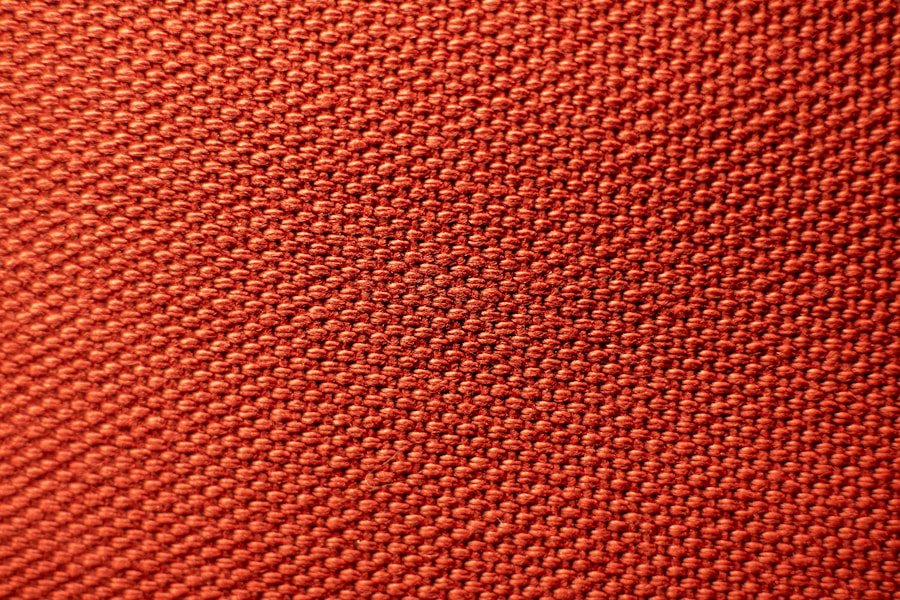
Photo by Marcus Urbenz on Unsplash
How Do You Get Cat Hair Out of Upholstery Fabric?
Cat hair embeds deepest in textured weaves, and the fastest removal method is a damp rubber glove or squeegee brush dragged across the fabric in one direction, followed by a vacuum with an upholstery attachment. Dry lint rollers work fine on flat fabrics but barely touch hair trapped in chenille or boucle loops.
Fun fact: static electricity actually works in your favor here. Lightly misting the fabric with water before brushing reduces static cling, so hair lifts free instead of clinging tighter to the fibers.
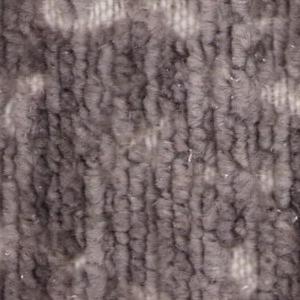
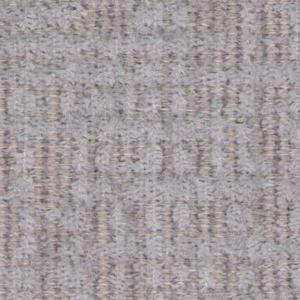
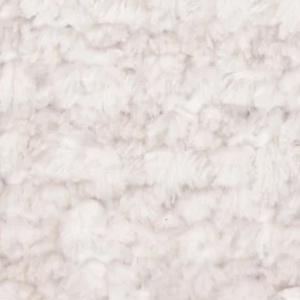
If you're shopping for a reupholstery project or a slipcover swap this fall, here are a few cat-friendly options worth browsing.
Litter Dust Cleanability: What Homeowners Overlook
Litter dust is finer than cat hair and settles into fabric weave the same way flour settles into a towel. Tightly woven or coated fabrics like faux leather, vinyl, and performance chenille wipe clean with a damp cloth, while loosely woven natural fibers require a full vacuum session to get dust out of the base weave.
Solution-dyed acrylics and vinyl-coated fabrics also resist moisture and dust buildup better than natural fiber blends, since the coating prevents fine particles from working down into individual yarns. If the litter box lives in a den or mudroom with upholstered seating nearby, this is the detail that saves you the most cleaning time long term.
Tips for Keeping Cat-Friendly Furniture Looking New
- Rotate cushions weekly if they're reversible. Even wear keeps one side from taking all the claw damage.
- Keep a scratching post near favorite furniture spots. Cats often scratch out of habit, not malice, and redirecting the habit protects the fabric.
- Vacuum weekly, not just when hair is visible. Litter dust and dander build up invisibly between deep cleans.
- Choose grey chenille upholstery fabric or other mid-tone textures for high-traffic pieces since they hide both hair and everyday wear better than solid brights.
- Trim claws regularly. It sounds obvious, but it's the single cheapest way to extend the life of any fabric, no matter how durable.
Frequently Asked Questions
Q: What is the most scratch-resistant upholstery fabric for cats?
Performance chenille, microfiber, and faux leather are the most scratch-resistant options for cat owners because their tight, flat construction gives claws little to catch onto, and most test above 30,000 double rubs on the Martindale abrasion scale.
Q: Should I avoid boucle fabric if I have cats?
Yes, boucle is one of the riskiest choices for cat owners since its raised loop texture is easy for claws to snag and pull, so it's better used on decorative pillows rather than main seating surfaces.
Q: Does fabric color matter for hiding cat hair?
Yes, mid-tone or patterned fabrics hide cat hair far better than solid black or white fabric, since contrast between the hair color and fabric color is what makes shedding visible in the first place.
