
Picking the right upholstery fabric for summer isn't just about color or texture. If you live somewhere humid, you're dealing with a trifecta of fabric enemies: intense UV light that bleaches color out of fibers, heat that accelerates wear, and moisture from the air, open windows, and yes, that dripping condensation ring from your air conditioning unit. The good news is that the right summer upholstery fabric can handle all three. You just need to know what to look for before you buy.
This guide walks you through the fiber types, weave structures, and finish treatments that genuinely perform in hot, humid conditions. No fluff, no jargon you have to Google separately. Just practical advice so you can shop with confidence.
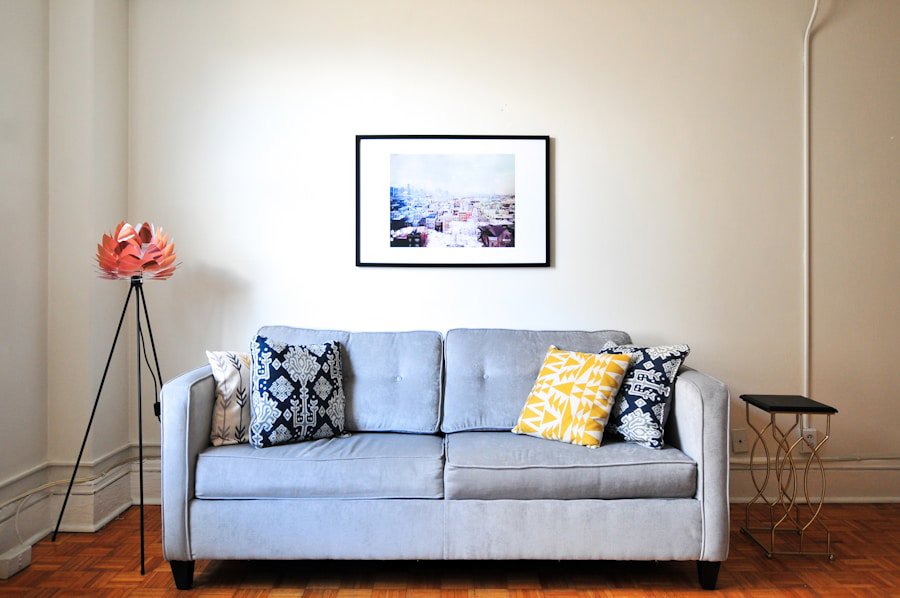
Photo by Naomi Hébert on Unsplash
Why Humidity Is Harder on Upholstery Than You Might Think
High humidity does two things to fabric that most people don't expect. First, it keeps fibers slightly damp for long stretches of time, which creates the perfect conditions for mildew growth, especially in fabrics with natural fibers that absorb and hold moisture. Second, the constant cycle of humid air followed by cool, dry air conditioning causes fibers to expand and contract repeatedly. Over a single summer, that stress weakens the weave and can cause pilling, distortion, or even seam separation.
Air conditioning condensation is a specific problem worth calling out. If your sofa sits near a window unit or a vent that sweats in summer, the base of the cushions and the lower sections of the frame fabric are getting intermittent moisture exposure. That's a mildew setup if your fabric isn't treated or naturally resistant.
- Mildew risk: Highest in untreated natural fibers like unfinished cotton, linen, and wool
- Fading risk: Highest in fabrics with surface-applied dyes, especially in rooms with direct sun exposure
- Structural stress: Loose or open weaves suffer more from humidity cycling than tight, dense weaves
The fabrics that win in humid climates tend to share a few traits: synthetic or solution-dyed fibers, tight weave construction, and either an inherent or applied moisture-resistant treatment. Let's look at each category honestly.
What Are the Best Fiber Types for Humid Summer Conditions?
Solution-dyed acrylic is the single most humidity-resistant upholstery fiber available for residential use. In solution-dyed fabrics, the color is added to the liquid fiber before it's spun into yarn, meaning the dye goes all the way through the strand. UV light, moisture, and cleaning agents have nothing to grab onto to pull the color out. Outdoor and performance upholstery fabrics are almost always solution-dyed acrylic for exactly this reason, and many of them carry a 500-hour UV fade resistance rating under accelerated testing conditions.
Here's how the most common fiber types stack up for humid climates:
- Solution-dyed acrylic: Top performer. Fade-resistant, moisture-resistant, mildew-resistant. Cleans easily with mild soap and water. The gold standard for humid or sun-exposed rooms.
- Polyester: Strong resistance to moisture and mildew. Doesn't absorb water readily, so it dries fast when it does get damp. Holds color well, though surface-dyed polyester fades faster than solution-dyed versions.
- Vinyl and faux leather: Non-porous, so moisture sits on the surface rather than being absorbed. Excellent for homes with kids and pets. In extreme heat, however, some vinyl formulations can feel sticky and may crack over time if they dry out. Look for vinyl blended with a fabric backing, which improves breathability.
- Olefin (polypropylene): Naturally hydrophobic, meaning it repels water at the fiber level. It's also inherently resistant to mildew, staining, and fading. Often used in indoor-outdoor fabrics and genuinely underrated for humid living rooms.
- Cotton (untreated): Absorbs moisture readily, which makes it a mildew risk in humid conditions. That said, tightly woven cotton treated with a moisture-resistant or antimicrobial finish performs much better. Avoid loosely woven or slubbed cotton weaves in humid climates.
- Linen: Beautiful, breathable, and feels cool in summer heat. The downside is it absorbs moisture and wrinkles easily. Linen blended with synthetic fibers handles humidity better than pure linen alone.
Which Weave Structures Hold Up Best in Heat and Humidity?
Tight, dense weaves resist humidity better than open or loosely structured ones. A tighter weave means less surface area exposed to moisture and fewer gaps for mildew spores to settle into. When comparing fabrics, a Martindale abrasion test rating above 25,000 cycles is a reliable sign that the weave is dense and well-constructed enough for everyday residential use. For reference, the Martindale test measures how many cycles of rubbing a fabric can endure before showing visible wear. Higher is always better for durability.
Chenille, honestly, is criminally underrated here. The dense pile construction makes it plush and soft, and when it's made from polyester or acrylic fibers, it resists moisture and holds its shape well through humid summers. It's not the first fabric people reach for, but it checks a surprising number of boxes.
- Woven fabrics with tight construction: Jacquard weaves, for example, are dense by nature and handle humidity well when made from synthetic or treated fibers
- Velvet: Gets a bad rap for being high-maintenance, but polyester velvet in particular is more moisture-tolerant than people expect and resists crushing better than silk or cotton velvet
- Boucle: The looped texture is charming but creates more surface area and more gaps in the weave. In a very humid room, boucle made from natural fibers can trap moisture. Synthetic boucle is the safer choice.
- Flat wovens and solid weaves: Generally the easiest to clean and the least likely to harbor mildew in their weave structure
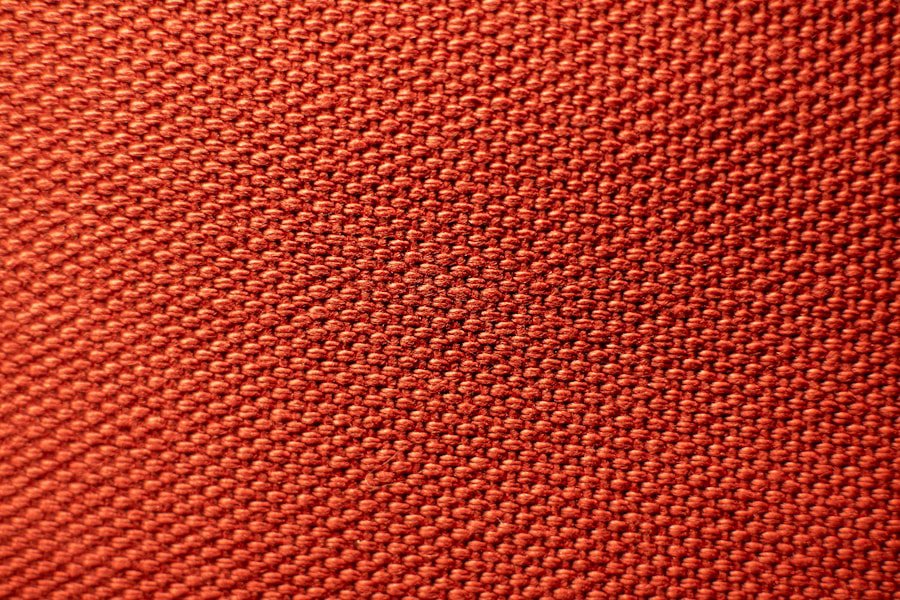
Photo by Marcus Urbenz on Unsplash
Do Fabric Treatments and Finishes Actually Make a Difference?
Yes, and significantly so. Fabric treatments are often the difference between a natural fiber that fails in humidity and one that holds up through a full summer. Here are the treatments worth knowing about:
Moisture-resistant finishes are applied to the surface of the fabric and create a barrier that causes liquid to bead up rather than absorb. These are effective, but they wear down over time with washing and use. Most manufacturers recommend reapplying a spray-on fabric protector like Scotchgard every 12 to 18 months on treated fabrics.
Antimicrobial treatments inhibit mildew and bacterial growth at the fiber level. These are especially valuable for fabrics used in rooms with poor air circulation or near windows. Look for fabrics that explicitly list antimicrobial or mildew-resistant treatment on the product specifications.
Solution dyeing is technically a production method, not a coating, but it functions like a treatment when it comes to fade resistance. Because the color is locked inside the fiber rather than painted on the surface, it can't be washed, bleached, or UV-degraded out of the fabric the same way surface dyes can. For sun-facing rooms, solution-dyed fabrics are the single most important specification to look for.
Also worth mentioning: a double rub count is the standard measure of fabric durability against friction. One "double rub" is one back-and-forth stroke across the fabric surface. Residential use generally requires a minimum of 15,000 double rubs. Fabrics rated at 30,000 or higher are considered heavy-duty and are a smart choice for high-traffic sofas, especially in homes with kids or pets.
Practical Tips for Choosing Summer Upholstery Fabric by Room
The room matters as much as the fabric. A fabric that's perfect for a shaded den might fail in a sun-drenched living room. Here's a quick breakdown by situation:
- Sun-facing living rooms: Prioritize solution-dyed acrylic or polyester with UV-resistant finishing. Light to medium colors hide fading longer than very dark shades, which fade unevenly.
- Rooms near windows or AC units: Moisture resistance is the priority. Vinyl, faux leather, or tightly woven polyester are your best options. Add a fabric protector spray as a secondary layer.
- Family rooms with kids and pets: High double rub count (30,000 or more), easy-clean surface, and a pattern or texture that hides daily wear. Chenille, performance polyester, and vinyl all work well here.
- Coastal or high-humidity climates: Avoid untreated natural fibers unless you can commit to regular airing and maintenance. Solution-dyed acrylic or olefin fabrics built for indoor-outdoor use will outlast everything else.
- Formal sitting rooms with lower traffic: You have more flexibility here. A linen blend or treated cotton can work beautifully if the room isn't sun-drenched and you're not dealing with daily wear.
Color and Pattern Choices That Work Harder in Summer
Performance fabrics have come a long way in the past decade, and you no longer have to sacrifice style for durability. Solution-dyed acrylics and high-performance polyesters now come in the full range of upholstery colors, including rich blues, warm greens, creams, and multi-color prints.
For humid climates specifically, mid-tone colors tend to be the most forgiving. Very light fabrics like white or cream show moisture marks and environmental dirt more readily, while very dark fabrics like black or deep navy tend to show fading and dust. A warm grey, a soft blue, or a warm beige hits the sweet spot of looking clean longer and hiding minor fade.
Patterns help too. A solid fabric will show any uneven fading immediately. A stripe or a woven texture distributes the visual effect of slight wear much more gracefully. Stripes in particular are having a strong summer moment right now, and they're genuinely practical for humid climates because the pattern variation makes minor wear nearly invisible.
Frequently Asked Questions
Q: What is the most mildew-resistant upholstery fabric for a humid climate?Solution-dyed acrylic and olefin (polypropylene) fabrics are the most mildew-resistant options for humid climates. Both fibers are hydrophobic, meaning they don't absorb water, which prevents the damp conditions that allow mildew to grow. Vinyl and faux leather are also excellent choices because their non-porous surface gives mildew nowhere to take hold.
Q: How do I protect upholstery fabric from fading in a sunny room?Choose solution-dyed fabrics, where color is locked inside the fiber rather than applied to the surface. These fabrics can withstand up to 500 hours of UV exposure in accelerated fade testing, far outperforming surface-dyed alternatives. Adding UV-filtering window film or curtains provides a second layer of protection and extends the life of any upholstery fabric significantly.
Q: Is linen a good upholstery fabric for summer?Pure linen is cool and breathable, which feels great in summer, but it absorbs moisture readily and can be a mildew risk in very humid conditions. A linen blend that incorporates synthetic fibers like polyester performs much better in humidity while keeping that light, casual summer look. If you love linen, look for a blended fabric and apply a moisture-resistant fabric protector after installation.
