
Faux leather upholstery fabric deserves a serious second look. For years it carried a reputation as the budget stand-in for real leather, something you'd find on a hand-me-down office chair or a diner booth. But the category has genuinely evolved. Modern faux leather is thicker, more realistic in texture and feel, and engineered to handle real household life in a way that even genuine leather sometimes can't match. If you're shopping for upholstery fabric this spring and you want something that looks polished, cleans up easily, and doesn't require a second mortgage, faux leather belongs on your shortlist.
What Exactly Is Faux Leather Upholstery Fabric?
Faux leather upholstery fabric is a synthetic textile designed to replicate the look and feel of animal hide without using any leather at all. It typically consists of a fabric backing, most often polyester or cotton, coated with a layer of polyurethane (PU) or polyvinyl chloride (PVC). The coating is what creates that smooth, leather-like surface, and it's also what determines how the fabric performs over time.
PU faux leather is the more popular choice for home upholstery right now. It's softer and more flexible than PVC, it breathes slightly better, and it tends to look more convincingly leather-like up close. PVC versions are stiffer and more moisture-resistant, which makes them a better fit for commercial settings or high-traffic areas where waterproofing really matters. Both types are available in a wide range of colors and finishes, from matte and distressed to high-gloss and embossed grain patterns.
One thing worth knowing: the durability of faux leather is often measured using the Martindale abrasion test or a double rub count. Quality upholstery-grade faux leather typically starts at around 50,000 double rubs and can go significantly higher. That puts it well within the range of heavy-duty use for residential furniture.
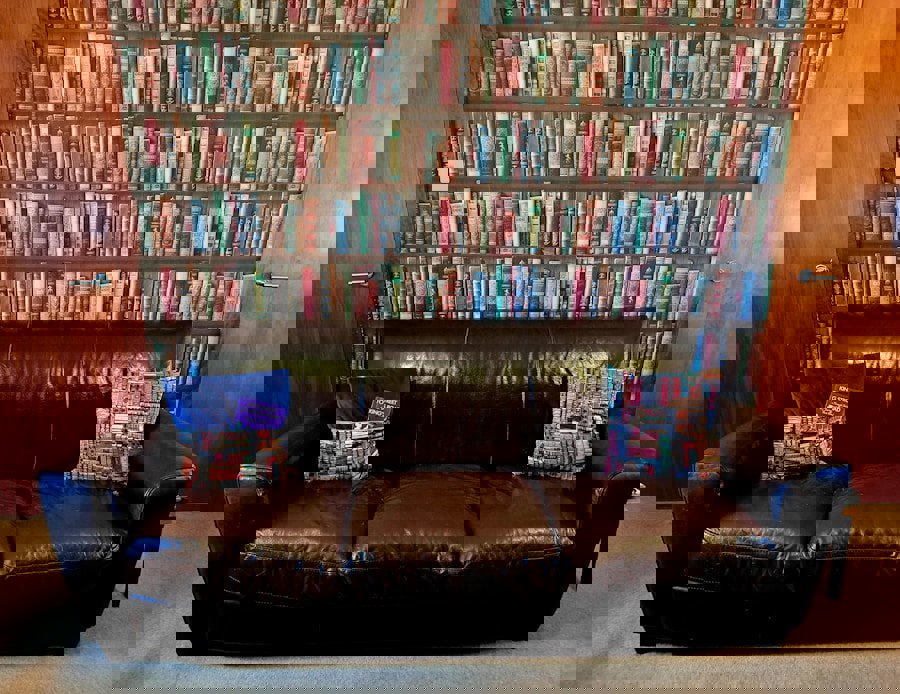
Photo by Jacqueline Heron Wray on Unsplash
Why So Many Homeowners Are Choosing Faux Leather Right Now
Faux leather checks a lot of boxes at once, which is honestly why it keeps showing up in living rooms, home offices, and dining spaces across the country. It's easy to wipe down, it doesn't absorb odors, and it holds up against pets and kids in a way that many fabric options simply can't claim.
From a design standpoint, faux leather fits naturally into the interior styles that are trending hard this spring. Clean-lined modern furniture, minimalist Scandinavian setups, moody jewel-toned rooms, and warm earthy interiors all work beautifully with the right faux leather. The texture adds visual weight without adding visual noise. A deep cognac faux leather armchair, for example, can anchor an entire room the same way real leather would, at a fraction of the cost.
Here's the thing: real leather is porous and requires conditioning to stay supple. It can crack in dry climates, stain with oil-based spills, and fade unevenly with sun exposure. Faux leather, especially PU versions, skips most of those maintenance headaches. A damp cloth handles most messes. That's a genuine advantage for busy households.
Also, for anyone shopping with sustainability in mind, faux leather avoids the environmental and ethical concerns tied to animal hides. That matters to a growing segment of buyers, and it's a legitimate reason to choose it beyond just price.
What Colors and Styles Work Best With Faux Leather Upholstery?
Neutral tones are the most versatile place to start. Black faux leather is a classic for a reason, it works in nearly every room style and reads as intentional rather than default. Cream, beige, and warm grey options soften the look considerably and blend beautifully with natural wood tones, which are everywhere in spring home decor right now.
If you want something with more personality, brown and cognac tones bring warmth and a vintage-adjacent feel that works especially well with mid-century modern furniture. On the bolder end, deep green, navy, and even blush faux leathers have been showing up in designer projects and frankly look incredible. The smooth surface of faux leather makes color saturation really pop in a way that textured fabrics sometimes mute.
For interior designers working on spec projects or staging homes, faux leather is a reliable go-to because it photographs beautifully and photographs consistently. The surface doesn't shift with different lighting the way napped fabrics like velvet or suede can.
How to Choose the Right Faux Leather for Your Project
Start with the backing. A fabric-backed faux leather is more stable and less likely to stretch or distort during upholstery work. Knit backings offer a little more give, which is useful for curved furniture pieces. Woven backings are stiffer and better for flat panels or structured seating.
Check the double rub count for your use case. For a decorative accent chair that doesn't see daily use, 30,000 to 50,000 double rubs is plenty. For a primary sofa or a dining chair that gets used every single day, look for 100,000 double rubs or higher. Commercial-grade faux leather often exceeds 150,000 double rubs, and while that's more than most households need, it's a good benchmark for durability.
Thickness matters too. Thinner faux leathers (around 0.6mm to 0.8mm) work well for lighter upholstery applications. Heavier weights (1.0mm to 1.4mm) are better for frequently used pieces because they resist cracking and delamination over time. Delamination, where the coating separates from the backing, is the most common failure mode in lower-quality faux leather, so thickness is a real indicator of longevity.
Finally, think about the finish. A matte finish hides minor scratches better than a high-gloss one. Distressed or pebbled grain textures also do a better job of disguising wear. If you're covering a sofa that gets heavy daily use, skip the mirror-shine finish and go for something with a little texture to it.
Frequently Asked Questions
Q: Is faux leather upholstery fabric durable enough for everyday use?Yes. Quality faux leather upholstery fabric with a double rub count of 50,000 or higher is suitable for everyday residential use. For high-traffic pieces like primary sofas or dining chairs, look for options rated at 100,000 double rubs or more to ensure long-term durability.
Q: How do you clean faux leather upholstery fabric?Most faux leather upholstery can be cleaned with a damp cloth and mild soap. Because the surface is non-porous, spills don't absorb the way they would with fabric upholstery. Avoid harsh solvents or abrasive cleaners, which can damage the polyurethane coating over time.
Q: What is the difference between PU and PVC faux leather for upholstery?PU faux leather is softer, more flexible, and more breathable than PVC, making it the preferred choice for most home upholstery applications. PVC faux leather is more rigid and highly waterproof, which suits commercial or outdoor-adjacent settings better. For living rooms and residential furniture, PU is generally the better option.