
Picking upholstery fabric for outdoor furniture sounds simple until your cushions start pilling, fraying at the seams, or fading into a sad, washed-out version of themselves by mid-July. If your backyard gets regular wind, even light breezes, the fabric you choose has to do a lot more than just look pretty on the patio. It needs to resist constant movement, handle friction without breaking down, and hold its color through sun and air exposure. This guide walks you through how to choose outdoor upholstery fabric for wind-exposed spaces, step by step, so you can shop with confidence and actually enjoy your backyard furniture this summer.
Why Wind Exposure Matters More Than Most People Realize
Wind is one of the most underestimated forms of fabric wear. Most homeowners think about UV fading or rain damage, and those are real concerns, but constant movement is what actually breaks fabric down fastest. Every time a cushion flaps, shifts, or rubs against a chair frame, it's creating friction. That friction wears down fibers, loosens weave structures, and causes fraying at edges and seams.
Fabrics with a loose weave, like many decorative linens or lightweight cottons, fray quickly under this kind of stress. Tightly woven fabrics, or those with a bonded backing, hold up far better. A fabric's abrasion resistance is typically measured by a double rub count, which is the number of times a fabric can be rubbed back and forth before it shows visible wear. For outdoor furniture in a breezy location, you want a minimum of 30,000 double rubs. High-traffic or very windy spots call for 50,000 or more.
Here's the thing: the shape of your backyard matters too. A narrow side yard acts like a wind tunnel. An open deck on a hillside gets constant airflow from multiple directions. A pergola with lattice sides creates turbulence. Knowing your specific wind pattern helps you choose not just the right fabric, but also the right weight and construction.
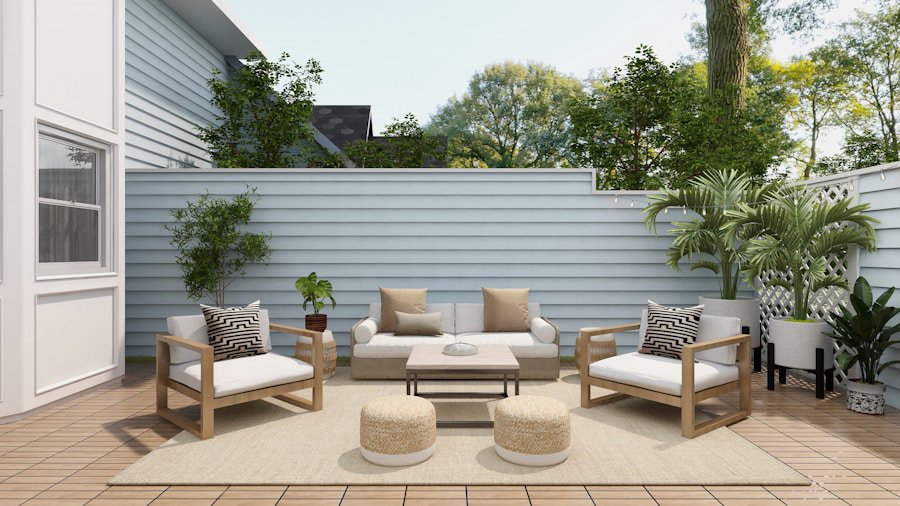
Photo by Collov Home Design on Unsplash
Step-by-Step Instructions
- Assess your backyard's wind exposure level. Before you buy a single yard of fabric, spend a few minutes observing where wind hits your outdoor space. Does air move through consistently, or only during storms? Is there a direction it usually comes from? High-exposure areas need the most durable, tightly woven fabrics you can find. Lower-exposure spaces give you a little more flexibility with texture and weight.
- Prioritize solution-dyed acrylic fabric for high-wind areas. Solution-dyed acrylic is the gold standard for outdoor upholstery fabric in windy conditions. In solution-dyed fabric, the color is added to the fiber itself before it's spun into yarn, not printed or coated on top. That means the color can't wash out, fade from UV exposure, or wear off from friction. Brands like Sunbrella use this process, and the results are genuinely impressive. These fabrics typically carry UV resistance ratings of 1,000 hours or more under direct sunlight, and they resist mold, mildew, and moisture without losing their integrity.
- Check the weave tightness before buying. Hold a fabric swatch up to light. If you can see a lot of light passing through, the weave is loose, and that fabric will fray faster in wind. A tight, dense weave keeps fibers locked together even when the fabric flexes and moves constantly. Woven fabrics with a flat, compact structure, like outdoor canvas or tightly woven vinyl-coated textiles, are your best bet for breezy spaces. Our woven upholstery fabrics are a great place to start if you want options that tick this box.
- Look for fabrics with a backing or bonded construction. A fabric backing, usually a layer of acrylic or poly material bonded to the underside, does two things in windy conditions. It adds weight so the fabric doesn't flap as aggressively, and it reinforces the weave so friction at seams and edges doesn't cause unraveling. Vinyl and faux leather with a fabric backing are especially good at this. They're also nearly impervious to moisture, which matters when wind carries rain horizontally onto your furniture.
- Avoid fabrics prone to fraying in outdoor conditions. Raw-edge natural fibers like untreated linen or standard cotton are beautiful indoors, but they're not suited for high-movement outdoor environments. They absorb moisture, they fray at cut edges when flexed repeatedly, and they're prone to mildew if they can't dry quickly. If you love the look of linen or cotton, look for outdoor-rated versions that have been treated for water and UV resistance. They exist, and they perform much better.
- Factor in fabric weight for your specific wind level. Heavier fabrics stay in place better and resist the flapping motion that causes friction wear. A medium-to-heavy weight outdoor fabric, typically around 8 to 12 ounces per yard, is ideal for moderately breezy spaces. For very exposed areas, go heavier. Lighter fabrics like outdoor sheers or decorative weaves are fine for low-wind patios or covered porches with minimal airflow, but they'll struggle in open, exposed backyards.
- Choose colors and patterns strategically for wind-exposed fabric. Solution-dyed acrylics hold color best, but you can also make smart color choices that hide minor wear. Solid colors in mid-tones, think blues, greens, greys, and warm neutrals like beige or cream, tend to show wear less than very dark or very light colors. Stripes and multi-colored patterns are also forgiving because any slight fading happens evenly across the pattern rather than creating obvious bleached-out spots. Our solid outdoor fabrics and stripe collections have a lot of options that work well here.
- Measure for generous seam allowances and secure finishing. When you're cutting and sewing outdoor cushion covers for windy areas, use at least a half-inch seam allowance and finish every raw edge with a serger or binding tape. Fraying almost always starts at seams and cut edges, not in the middle of the fabric. Double-stitching seams on wind-exposed cushions adds a small amount of time but significantly extends how long the finished piece holds up. If you're buying pre-made cushion covers, check that seams are reinforced and edges are bound.
- Test your fabric choice with a swatch before committing. Order a swatch before buying full yardage. Flex it, pull it at the edges, hold it in the sun for a few minutes, and get it wet. A good outdoor fabric will bounce back, dry quickly, and show no sign of fraying at the edges even when you stress them a little. It's a two-minute test that can save you from a frustrating and expensive mistake.
- Consider storage and off-season care in your decision. Even the best wind-resistant outdoor fabric lasts longer when you store cushions during the off-season or bring them in during severe storms. Fabrics with a tight weave and moisture-resistant finish clean up easily with mild soap and water, which matters when you're dealing with pollen, dirt, and debris that wind carries in. Check that any fabric you choose is listed as machine washable or at minimum hose-cleanable, so maintenance doesn't become a project of its own.
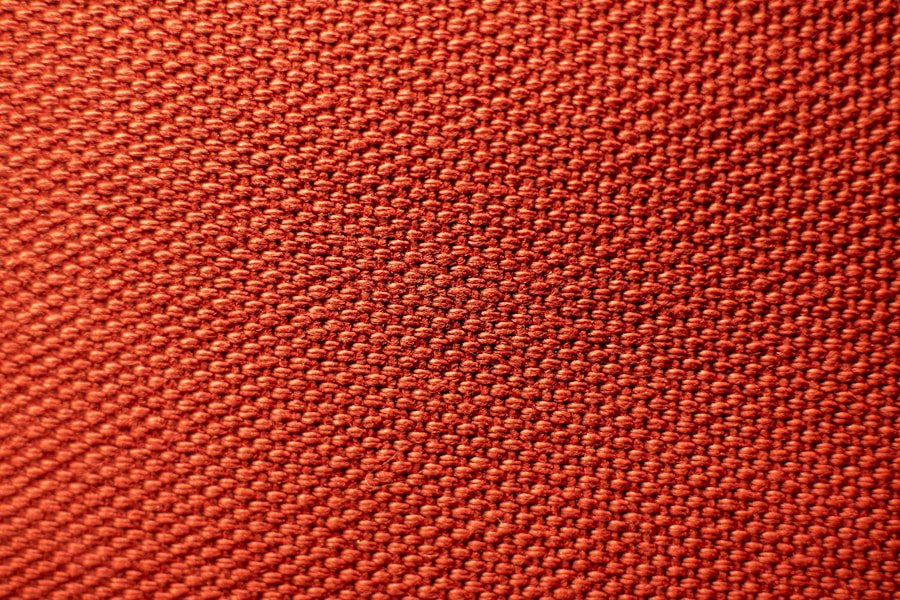
Photo by Marcus Urbenz on Unsplash
What Is the Best Fabric for Outdoor Furniture in Windy Conditions?
Solution-dyed acrylic is the best fabric for outdoor furniture in windy conditions. It resists UV fading, holds its color through friction and movement, repels moisture, and maintains its structural integrity in high-abrasion environments far better than most alternatives.
Tightly woven vinyl and faux leather with fabric backing are strong second choices, especially if you want a smooth surface that doesn't trap debris or moisture. Both handle wind-driven friction well because the surface is non-porous and doesn't have exposed fiber ends that can catch and fray. Honestly, vinyl gets dismissed as a cheap option, but modern outdoor vinyl fabrics are genuinely durable and easy to maintain, and they're a smart call for very exposed spaces.
If you want texture and visual interest, look at outdoor-rated chenille blends or woven jacquard fabrics that are specifically constructed for exterior use. These have tighter surface structures than their indoor counterparts, and many are treated with water and UV resistance at the fiber level. They won't perform exactly like solution-dyed acrylic in extreme conditions, but for moderate wind exposure they're a great middle ground between style and durability.
Which Fabric Colors Hold Up Best in Sunny, Breezy Backyards?
Mid-tone solid colors and multi-colored patterns hold up best in sunny, breezy backyards because they show uneven fading least and tend to be manufactured in colorfast constructions that prioritize long-term performance.
Blues and greens are perennially popular for outdoor spaces, and there's a practical reason beyond trend cycles: these colors are consistently manufactured in solution-dyed and UV-resistant constructions because demand is so high. Beige, grey, and warm cream tones are equally practical and fit naturally into the earthy, relaxed aesthetic that's trending heavily in outdoor decor right now. Very bright reds, oranges, and yellows can look stunning but tend to fade faster even in treated fabrics, so if you love a bold color, confirm the fabric is solution-dyed before you commit.
Stripes are worth a special mention. Because the pattern repeats with alternating light and dark tones, any fading that does occur tends to be even across the surface rather than creating patchy, washed-out spots. That makes striped outdoor fabric a genuinely smart choice for high-sun, high-wind environments, not just a stylish one.
Quick Tips for Long-Lasting Outdoor Cushion Fabric
- Store cushions indoors or in a waterproof storage box during storms, even if your fabric is rated for all-weather use. Constant exposure shortens lifespan faster than anything else.
- Rinse fabric regularly to remove pollen, salt air deposits, and debris. These particles act like sandpaper and accelerate abrasion from wind movement.
- Re-apply a fabric protector spray at the start of each season if your fabric doesn't have a built-in finish. It adds an extra layer of moisture and UV resistance without changing the look or feel.
- Rotate cushions periodically so one side doesn't take all the sun and friction exposure. This simple habit can double the usable life of your outdoor fabric.
- If you're sewing your own cushion covers, use UV-resistant polyester thread. Standard thread degrades outdoors almost as fast as the wrong fabric choice would.
Frequently Asked Questions
Q: What type of upholstery fabric is most resistant to wind damage outdoors?Solution-dyed acrylic fabric is the most wind-resistant option for outdoor upholstery. It has a tight weave structure that resists fraying under constant movement, color that won't fade from UV exposure or friction, and moisture-repelling properties that prevent mildew in damp breezy conditions. For very exposed areas, look for fabrics with a double rub count of 50,000 or higher.
Q: Can I use indoor upholstery fabric for outdoor furniture if I bring it inside at night?It's possible, but not recommended for windy environments. Indoor upholstery fabrics like standard linen, cotton, or chenille aren't treated for UV resistance or moisture, so even limited outdoor exposure will cause fading and fraying faster than you'd expect. If you want a fabric that looks like an indoor textile, choose an outdoor-rated version that mimics the texture but has weather-resistant properties built in.
Q: How do I stop outdoor cushion fabric from fraying at the seams in windy conditions?Use a serger or binding tape to finish every raw edge before sewing, and double-stitch seams on any panel that gets direct wind exposure. Choosing a tightly woven or backing-reinforced fabric is the most effective prevention, since loose weaves fray at cut edges no matter how well you finish them. Keeping seam allowances at half an inch or more also gives the stitching more fabric to grip, which helps the seam hold up under repeated flexing and movement.