
If you've ever walked outside on a spring or summer morning and found your patio cushions coated in a fine yellow dust, you already know the problem. Pollen doesn't just irritate your sinuses. It settles into fabric fibers, accumulates over days, and gets stirred back up every time someone sits down. Choosing the right outdoor upholstery fabric based on your local pollen and allergen levels is one of the most practical things you can do for your home this season. This guide covers exactly which fabric types, weave structures, and surface finishes work best depending on how bad pollen is where you live, plus what to look for when you're shopping.
Why Pollen Season Changes Everything About Outdoor Fabric
Pollen grains are microscopic, ranging from about 10 to 100 microns in size, and they're incredibly sticky. Fabrics with open, looping, or heavily textured surfaces act like natural pollen traps. The more surface variation a fabric has, the more places pollen has to lodge and stay. This is why the same fabric that looks gorgeous indoors can become a seasonal nightmare outside.
Here's the thing: not all outdoor fabrics are created equal when it comes to allergen resistance. Some are engineered specifically to shed particles, while others are basically a welcome mat for everything floating through the air. Your local pollen count matters here too. If you live in the Southeast or Mid-Atlantic, where tree, grass, and weed pollen seasons stack on top of each other from March through October, you need a fabric that's easy to wipe down frequently. If you're in a drier climate with shorter pollen windows, you have a little more flexibility.
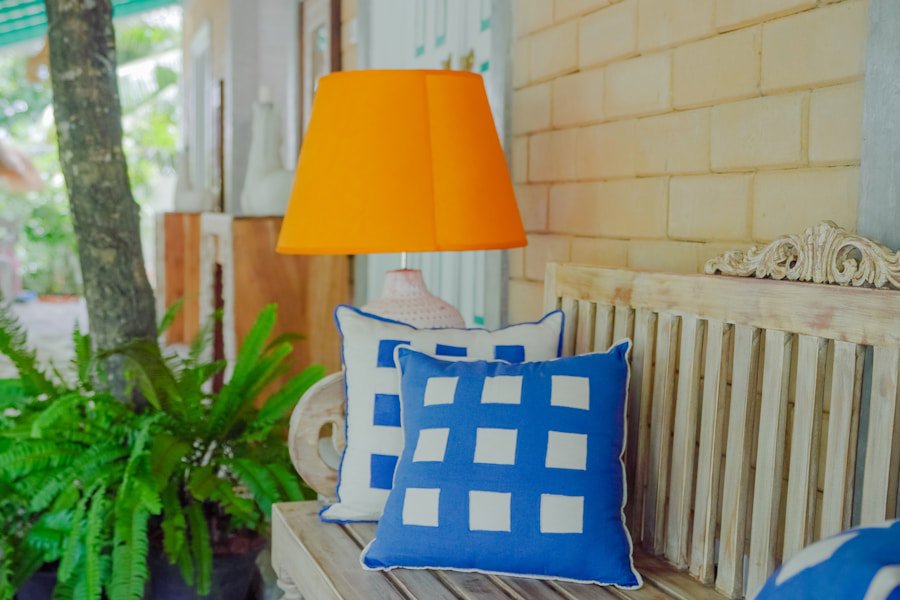
Photo by sidath vimukthi on Unsplash
What Fabric Weave Has to Do With Allergen Accumulation
Tight, smooth weave structures shed pollen more effectively than open or loopy ones. A dense plain weave or a tightly knit surface leaves fewer physical gaps where pollen grains can wedge themselves in and resist rinsing. Loose weaves, nubby textures, and fabrics with raised loops, think boucle or heavily textured chenille, create micro-pockets that hold onto pollen and allergens stubbornly.
For outdoor use in high-pollen areas, a flat-woven or solution-dyed woven fabric with a tight thread count is your best starting point. Jacquard weaves can go either way: a flat-faced jacquard with a smooth finish is easier to clean than one with raised patterns that create texture variation. When you're shopping, run your finger across the fabric surface. If it feels uniformly smooth with no raised ridges or loops, it'll shed pollen better. If it catches your fingernail or feels like it has texture depth, it'll collect more.
What Is the Best Outdoor Upholstery Fabric for Allergy Sufferers?
Solution-dyed acrylic is widely considered the best outdoor upholstery fabric for people dealing with allergies and high pollen seasons. It has a tight weave, a smooth surface, and resists moisture, mold, and mildew, all of which can compound allergy symptoms.
Solution-dyed acrylic means the color is baked into the fiber during manufacturing, not applied to the surface. That process results in a denser, more uniform fiber that doesn't have the surface irregularities that trap particles. It also means the fabric can be scrubbed and rinsed without the color bleeding or fading. Brands that use this construction typically rate their fabrics for significant UV and moisture exposure, which is exactly what outdoor cushions face all summer.
Beyond acrylic, vinyl and faux leather upholstery fabrics are the easiest to keep allergen-free because they have no fiber structure at all. Pollen literally cannot embed in a non-porous surface. A damp cloth removes it completely. The tradeoff is breathability: vinyl gets hot in direct summer sun, which is a comfort issue worth thinking about depending on your patio setup. If your furniture sits in shade, vinyl and faux leather are genuinely excellent choices for allergen control.
Step-by-Step Instructions
- Check your local pollen levels before you shop. The American Academy of Allergy, Asthma and Immunology maintains a pollen count network across the U.S. Look up your zip code and note which pollen types are dominant in your area, tree, grass, or weed, and how long your peak season runs. This tells you how aggressive your fabric choice needs to be.
- Prioritize surface smoothness over texture. Reach for fabrics with a flat, tight face rather than looped, nubby, or raised-pattern surfaces. Smooth surfaces shed pollen when rinsed or wiped. Textured surfaces hold onto it. This is the single most impactful decision you'll make.
- Choose solution-dyed acrylic, vinyl, or faux leather for high-pollen zones. If you're in a region with a pollen index above 7 out of 12 during peak months, these three fabric types are your most allergen-resistant options. Solution-dyed acrylic handles the most use with the best durability. Faux leather and vinyl are easier to wipe clean but may get warm in direct sun.
- Look for fabrics with a protective finish or coating. Some outdoor upholstery fabrics come with a topical treatment that repels water and particles. A fabric with a water-repellent finish causes pollen to bead up rather than absorb into the surface, which makes hosing down your cushions quick and effective. Check the product description for terms like "water-repellent," "stain-resistant," or "performance coating."
- Assess the double rub count for durability. Double rub count measures how many times a fabric can be rubbed back and forth before it shows wear. Think of it like a stress test for the fabric surface. For outdoor furniture that gets regular cleaning during pollen season, you want a double rub count of at least 15,000. High-traffic pieces benefit from 30,000 or more. A fabric that pills or breaks down from frequent wiping defeats the purpose.
- Pick colors that don't show pollen as a daily stressor. This sounds minor but it matters for your sanity. Yellow and green pollen shows up dramatically on dark fabrics like black, navy, or deep grey, which can make even a low-pollen day look alarming. Neutral tones like beige, cream, and light grey tend to visually absorb the appearance of light pollen dust better between cleanings. You'll still need to clean regularly, but you won't feel panicked every morning.
- Test your cleaning method before committing to a fabric. Order a sample swatch before purchasing yardage or a full cushion cover. Dust it with a small amount of flour (similar particle size to heavy pollen) and try your intended cleaning method. A quick rinse? A damp wipe? Does the surface come clean without rubbing hard? This tells you what your weekly pollen cleanups will actually look like.
- Consider how the fabric is constructed at the seams and edges. Pollen accumulates in seams, piping channels, and tufted buttons just as readily as on flat surfaces. If you're having cushions made or recovered, request minimal seam detail and flat rather than tufted construction for outdoor pieces. Fewer crevices means fewer places for allergens to hide.
- Plan a regular cleaning schedule that matches your pollen calendar. Even the best fabric can become an allergen source if you don't clean it consistently. During peak pollen season, a quick rinse or wipe-down twice a week is reasonable for high-exposure pieces. Solution-dyed acrylic and vinyl both handle repeated cleaning without degrading. Build the habit early in the season rather than waiting until the problem is visible.
- Store or cover cushions during the worst pollen days. No fabric is completely pollen-proof when a high-wind, high-pollen day rolls through. Outdoor furniture covers are a practical backup strategy. Keep cushions covered or brought inside during peak morning pollen hours, which typically run from 5 a.m. to 10 a.m. This reduces accumulation even if your fabric is already a good allergen-resistant choice.
Which Fabric Types to Avoid on High-Pollen Patios
Honestly, boucle is beautiful and we love it indoors, but it has no business being on outdoor furniture in a high-pollen zone. The looping structure that gives boucle its signature texture is essentially a pollen net. The same goes for heavily textured chenille, open-weave linens, and any fabric with a raised or pile surface like velvet. These fabrics are genuinely difficult to rinse clean, and repeated scrubbing to remove embedded pollen breaks down the fiber structure faster.
Natural fibers like untreated cotton and linen absorb moisture readily, which means pollen sticks to them more aggressively and mold can become a secondary problem in humid climates. If you love the look of linen for your outdoor space, look for a linen-blend fabric that includes a synthetic component and has been treated with a water-repellent finish. That combination gets you closer to the right balance of aesthetics and function.
Budget-Smart Tips for Allergy-Friendly Outdoor Fabric
Performance outdoor fabrics can cost more per yard than basic indoor upholstery fabric, but the math works out over time. A solution-dyed acrylic fabric that holds up to three or four seasons of regular cleaning costs less in the long run than replacing cushion covers annually because a cheaper fabric broke down from repeated rinsing. Fabric durability ratings matter for outdoor use the same way appliance efficiency ratings matter for your electric bill.
Also, buying fabric by the yard and having cushion covers made, or making them yourself with a basic sewing setup, is almost always more cost-effective than buying pre-made cushions. You get to control the fabric choice, the construction details, and the cleaning-friendliness of every seam. Plus, you can replace just the covers when pollen and UV exposure eventually take their toll, rather than replacing the whole cushion.
Frequently Asked Questions
Q: What is the easiest outdoor upholstery fabric to clean during pollen season?Vinyl and faux leather are the easiest outdoor upholstery fabrics to clean during pollen season because their non-porous surfaces don't absorb pollen at all. A damp cloth removes pollen completely. For fabric options, solution-dyed acrylic is the easiest to clean among woven textiles, as its tight, dense weave allows pollen to be rinsed away without scrubbing.
Q: Does fabric color affect how much pollen accumulates on outdoor furniture?Fabric color doesn't change how much pollen a fabric collects, but it does affect how visible the accumulation is. Dark fabrics like black and navy show yellow and green pollen clearly, while neutral tones like beige and cream visually mask light pollen buildup between cleaning sessions. Choose your color based on your cleaning frequency tolerance as much as your aesthetic preference.
Q: How often should I clean outdoor upholstery fabric during peak pollen season?During peak pollen season, outdoor upholstery fabric should be rinsed or wiped down at least twice per week for furniture in high-exposure areas. High-performance fabrics like solution-dyed acrylic and vinyl tolerate frequent cleaning without degrading. Reducing morning exposure by covering cushions during peak pollen hours, typically 5 a.m. to 10 a.m., can also reduce how often deep cleaning is needed.