
Why Your Climate Zone Should Drive Your Outdoor Fabric Choice
Choosing the right outdoor upholstery fabric starts with one simple question: what does your weather actually do to things left outside? A homeowner in Miami and a homeowner in Minneapolis are not shopping for the same fabric, even if they both want something durable and good-looking. Outdoor upholstery fabric that works beautifully on a shaded Arizona patio can rot, mold, or warp completely in coastal Louisiana. Getting this right saves you real money, because outdoor cushions and reupholstery projects are not cheap.
This summer, patio furniture is getting more attention than ever. Outdoor living spaces have become full extensions of the home, and people want fabrics that look as pulled-together outside as their sofas do inside. But the number one mistake homeowners make is buying fabric based on looks alone, without thinking about what their local climate will do to it over a full year. Let's fix that.
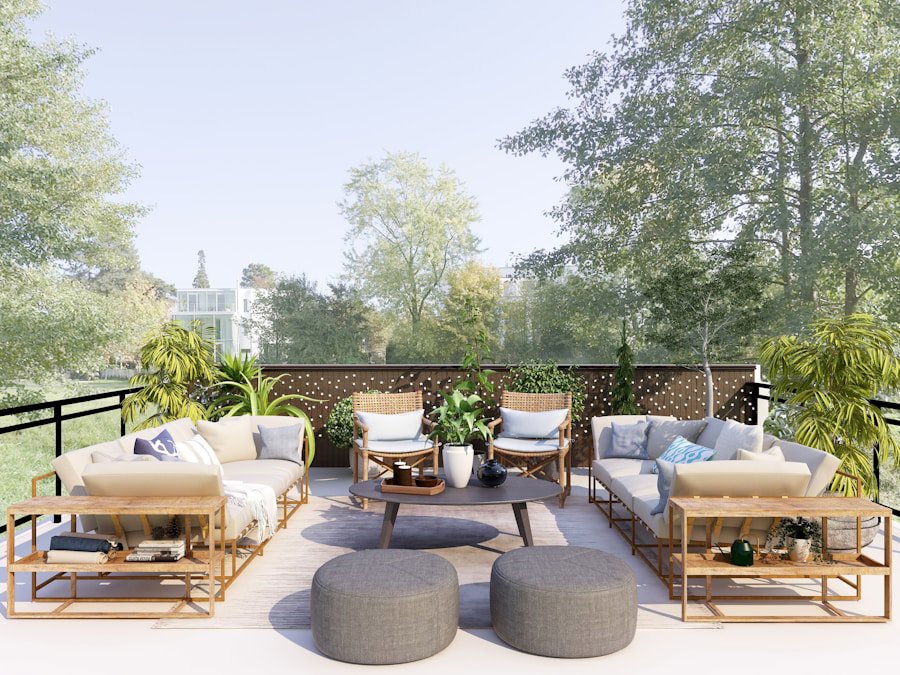
Photo by Collov Home Design on Unsplash
Tropical and Subtropical Climates: Humidity, Salt Air, and Mold Resistance Are Everything
Solution-dyed acrylic is the single best outdoor upholstery fabric for tropical and subtropical climates. In solution-dyed acrylic, the color is locked into the fiber itself during manufacturing, not applied as a surface dye. That means UV rays and moisture can't strip the color out, and the fiber doesn't absorb water the way untreated wovens do. Fabrics like Sunbrella (a well-known brand of solution-dyed acrylic) resist mold and mildew at a structural level, not just through a topical coating that washes away.
Tropical zones, think Florida, Hawaii, coastal Texas, and much of the Gulf Coast, combine intense UV exposure with high humidity and salt-laden air if you're near the ocean. Salt air is particularly destructive. It accelerates corrosion on metal frames and degrades fabric fibers faster than inland humidity alone. Here's what you need in this climate:
- Solution-dyed acrylic: Highest mold and UV resistance, holds color for years, dries quickly after rain
- Vinyl and faux leather: Completely non-porous, so moisture and salt can't penetrate; wipe clean in seconds; just make sure it's a marine-grade or outdoor-rated vinyl because indoor vinyl cracks in sustained heat and UV
- Avoid: Natural cotton, linen, and untreated chenille outdoors in this zone; they absorb moisture, mold quickly, and the fibers break down faster than you'd expect
One practical note on vinyl and faux leather in tropical climates: they can get extremely hot to the touch in direct sun. If your furniture is fully exposed, look for lighter colors and prioritize fabrics with a UV stabilizer additive. A light-colored outdoor vinyl in a breezy covered space is genuinely a great call here.
Arid and Desert Climates: UV Degradation and Extreme Heat Are Your Real Enemies
UV degradation destroys more outdoor fabric in arid climates than anything else. In places like Phoenix, Las Vegas, Albuquerque, and the Inland Empire of Southern California, temperatures regularly exceed 110°F and the sun is intense for the majority of the year. Fabric that isn't engineered for UV exposure will fade, become brittle, and start cracking or fraying within a single season.
Solution-dyed acrylic is again a top performer here. The dye-in-fiber construction means it won't fade even under punishing sun. Outdoor-rated vinyl and faux leather can also work well in dry heat as long as they're UV stabilized, because low humidity means mold isn't a concern. The bigger risk in arid climates is thermal stress: repeated extreme heating and cooling causes fibers and coatings to expand and contract, which weakens them over time.
- Solution-dyed acrylic: Rated for thousands of hours of UV exposure without significant color loss; some high-performance acrylics are tested to resist fading for up to 5 years in direct sun
- Outdoor vinyl: Works well in dry climates specifically; look for marine-grade or outdoor-rated options with UV inhibitors built in
- Woven synthetic blends: Polyester-based outdoor wovens with UV treatment are a budget-friendly option and perform reasonably well in lower-humidity zones
- Avoid: Natural fibers outdoors here as well; cotton and linen dry out, crack, and fade quickly under intense UV even without the humidity issue
Color choice also matters more in arid climates than people realize. Darker colors absorb significantly more heat and will be physically uncomfortable to sit on in direct afternoon sun. Light neutrals, creams, and soft blues are practical choices, not just aesthetic ones.
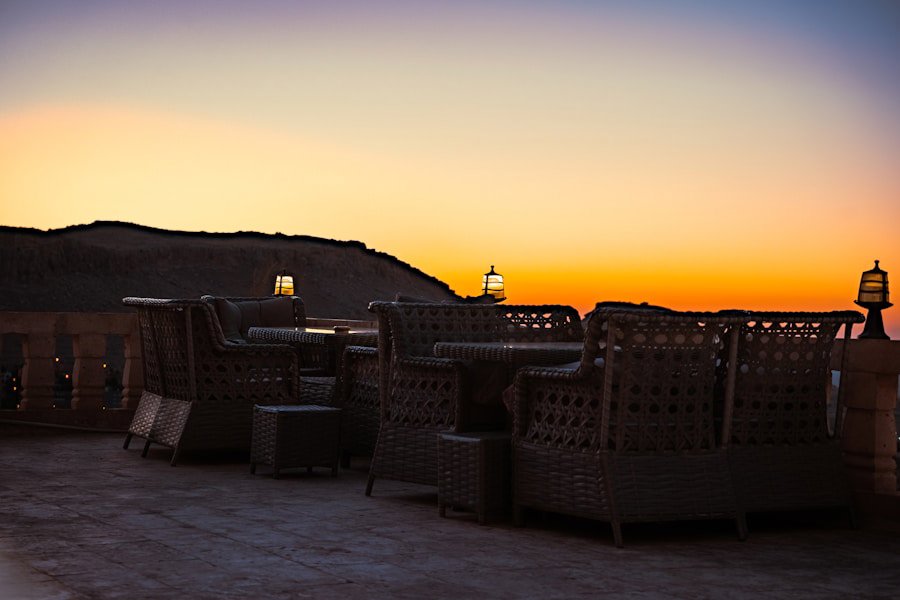
Photo by Yasin Onuş on Unsplash
What Is the Best Outdoor Fabric for Humid Continental Climates?
Solution-dyed acrylic and high-performance synthetic wovens are the best outdoor fabrics for humid continental climates because they handle both moisture and temperature extremes without degrading quickly. Humid continental zones, which cover much of the Midwest, the Northeast, and parts of the Pacific Northwest, are the most demanding climate category for outdoor fabric. You get freezing winters, hot humid summers, heavy rain, snow, and sometimes all of that within a few weeks of each other.
The fabric stress in this zone is cumulative. Freeze-thaw cycles are particularly rough on materials that absorb water, because water expands when it freezes. A fabric that traps moisture and then freezes will experience micro-tears in the fiber structure over time. This is why fast-drying fabrics are so important here. Look for tightly woven synthetics that shed water rather than absorb it.
- Solution-dyed acrylic: Fast-drying, mold-resistant, handles temperature swings well; the go-to for four-season outdoor use
- High-performance polyester: More affordable than acrylic, performs well when it includes a water-repellent finish; double rub count (the number of back-and-forth rubs a fabric withstands before showing wear) should be at least 15,000 for outdoor use
- Outdoor vinyl: Can crack in sustained freezing temperatures, so it's better suited to covered outdoor spaces in this zone rather than fully exposed furniture
- Avoid: Any fabric that isn't rated for outdoor use; indoor fabrics will degrade within a single winter in this climate
Honestly, if you live in the Midwest or Northeast and you've gone through multiple sets of outdoor cushions already, the fabric was almost certainly not rated for your climate. Investing in a true outdoor-rated solution-dyed acrylic upfront costs more but typically outlasts two or three rounds of cheaper replacements.
Temperate Climates: More Flexibility, But Mildew Still Sneaks Up on You
Temperate climates, including the Pacific Coast, parts of the mid-Atlantic, and much of the UK-influenced Pacific Northwest, offer the most forgiving conditions for outdoor fabric. You're not dealing with extreme heat, punishing UV, or hard freezes for extended periods. However, mild and wet are a combination that creates perfect conditions for mildew growth, especially on fabrics left outside through a rainy season.
Temperate homeowners have the most flexibility in fabric choice, but mold resistance should still be a priority. Solution-dyed acrylic remains the safest option, but you can also consider treated outdoor polyester blends and even some performance linen blends designed for covered outdoor use. The key word is "performance" or "outdoor-rated." A regular linen from an indoor collection will not survive a wet Pacific Northwest winter on a covered porch.
- Solution-dyed acrylic: Still the most reliable long-term choice
- Performance polyester blends: Good mid-range option; look for fabrics with built-in antimicrobial and water-repellent treatments
- Outdoor-rated wovens: Can work beautifully in covered or semi-sheltered outdoor spaces; add more visual interest than solid synthetics
- Faux leather: Works well in temperate climates for covered spaces; lower UV and heat stress means it holds up better here than in desert or tropical zones
Temperate climates are also where you can be a little more adventurous with pattern and texture in outdoor fabric. You're not fighting extreme conditions, so a woven stripe or a decorative outdoor print is a realistic option, not just a pretty idea.
Quick Reference: Fabric Performance by Climate Zone
- Tropical / Subtropical: Solution-dyed acrylic, marine-grade vinyl, outdoor faux leather (covered areas); avoid natural fibers
- Arid / Desert: UV-stabilized solution-dyed acrylic, outdoor vinyl (dry heat); choose light colors; avoid natural fibers and non-UV-treated synthetics
- Humid Continental: Solution-dyed acrylic, fast-drying performance polyester; avoid vinyl in fully exposed, freezing conditions
- Temperate: Solution-dyed acrylic, performance polyester blends, outdoor-rated wovens and faux leather in covered spaces; watch for mildew even in mild temps
How to Read an Outdoor Fabric Label Before You Buy
A few terms on fabric labels will tell you almost everything you need to know. The double rub count measures how many back-and-forth abrasion cycles a fabric survives before showing wear. For outdoor furniture that gets regular use, look for a minimum of 15,000 double rubs. High-traffic or commercial-grade outdoor fabrics often rate at 30,000 or higher.
Solution-dyed means the color is part of the fiber, not printed or dyed onto the surface afterward. This is the single most important factor in long-term color retention outdoors. UV stabilized or UV inhibitor means the fabric or a coating contains additives that slow down the photodegradation process caused by sunlight. And antimicrobial treatment means the fabric has a finish that resists mold and mildew growth, which matters most in humid and tropical zones.
If a fabric listing doesn't mention any of these features, assume it's an indoor fabric and treat it accordingly. Bringing an indoor fabric outside, even a durable one, will cut its lifespan dramatically regardless of your climate zone.
Frequently Asked Questions
Q: What is the most durable outdoor upholstery fabric for humid climates?Solution-dyed acrylic is the most durable outdoor upholstery fabric for humid climates. Because the color and UV resistance are built into the fiber itself, it resists both fading and mold without relying on surface coatings that wash off over time.
Q: Can you use vinyl or faux leather fabric on outdoor furniture?Yes, outdoor-rated vinyl and faux leather work well on outdoor furniture, especially in dry, tropical, or temperate climates. Marine-grade or UV-stabilized vinyl is the key distinction; standard indoor vinyl will crack and fade quickly when exposed to sustained sun and temperature changes.
Q: How do I know if an upholstery fabric is rated for outdoor use?Look for labels that specify solution-dyed construction, UV stabilization, and a double rub count of at least 15,000. Fabrics marketed specifically as outdoor or performance fabrics will list these features; if a listing doesn't mention them, the fabric is most likely intended for indoor use only.