
Choosing upholstery fabrics for outdoor furniture is usually about durability, fade resistance, and easy cleaning. Those things matter a lot. But there's one factor most homeowners completely overlook until they're sitting poolside on a July afternoon, shading their eyes with both hands: glare. The wrong fabric finish, color, or weave can turn a relaxing patio into a squint-fest. The right outdoor upholstery fabric for glare reflection and eye comfort makes a bigger difference than you'd expect, and once you know what to look for, the decision becomes surprisingly straightforward.
Why Your Outdoor Fabric Finish Matters More Than You Think
Fabric finish is the biggest driver of glare on outdoor furniture. A glossy or tightly sealed surface behaves almost like a mirror in direct sunlight, bouncing light straight back at you and anyone nearby. Matte finishes scatter that light in multiple directions instead of concentrating it, which dramatically reduces the intensity hitting your eyes.
Vinyl and faux leather are the classic offenders here. They're popular for outdoor use because they're waterproof and wipe-clean in seconds, which are genuinely great qualities. But their smooth, sealed surfaces reflect sunlight aggressively. If you love the look of vinyl or faux leather for patio seating, try to position those pieces in shaded spots rather than in full sun. Textured or embossed versions of these materials scatter light better than flat, glossy ones, so if you're set on vinyl, look for options with visible grain or texture rather than a polished finish.
Woven fabrics, especially those with visible texture, are naturally better at diffusing light. The physical structure of the weave creates tiny peaks and valleys on the surface, and those micro-variations break up incoming light rather than reflecting it as a single concentrated beam. This is why a well-chosen woven or chenille outdoor cushion feels so much easier on the eyes than a shiny vinyl pad, even in the exact same sun conditions.
Solution-dyed acrylic fabrics, like those used in high-performance outdoor lines, are worth calling out specifically. In solution-dyeing, color is added to the fiber before it's spun into yarn, rather than applied to the finished fabric surface. This process tends to produce a matte, slightly muted finish with excellent UV resistance. Solution-dyed acrylic fabrics typically retain color for 1,000+ hours of UV exposure in standardized testing, which means they won't fade and develop that bleached-out, light-scattering surface that older outdoor fabrics are prone to.
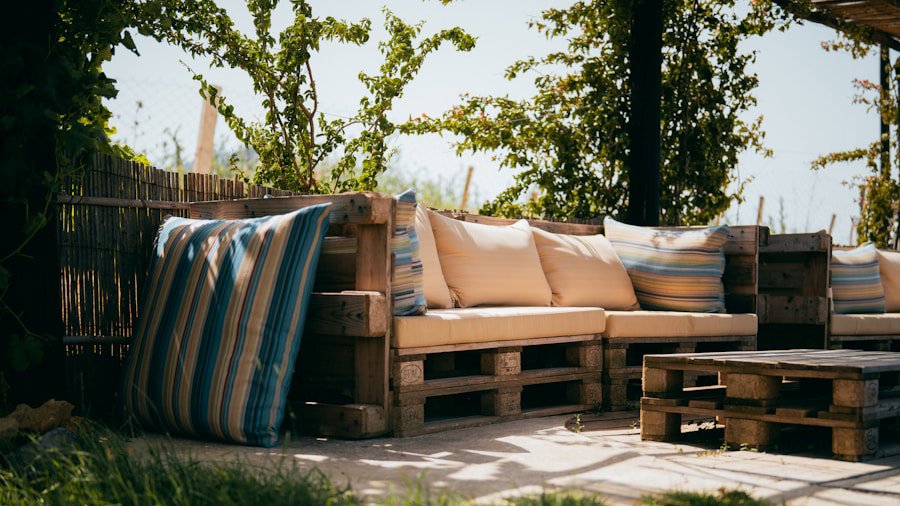
Photo by Othman Alghanmi on Unsplash
Which Colors Actually Reduce Glare on Outdoor Furniture?
Color choice directly affects how much light a fabric reflects back at you. Lighter colors reflect more light overall, which is why a white tablecloth on a sunny day can make you squint just from peripheral glare. Darker colors absorb more light energy rather than bouncing it outward.
For outdoor seating where eye comfort matters, mid-tone and deeper colors consistently outperform whites, creams, and very pale neutrals in terms of glare reduction. Here's a practical breakdown:
- Blues and greens: These sit in the mid-range of the color spectrum and absorb a solid amount of visible light. Navy, teal, forest green, and slate blue are especially good choices for poolside furniture because they also visually complement water and landscaping without creating harsh contrast.
- Browns and warm neutrals: Tan, camel, and medium brown tones absorb light well and don't produce the stark reflective quality of white or cream. They're also forgiving with dirt, which is a real bonus around a pool or garden.
- Greys: Medium to charcoal grey is one of the smartest choices for outdoor fabric from a glare perspective. It absorbs light efficiently, looks clean against most exterior color schemes, and hides everyday grime remarkably well.
- Deeper jewel tones: Burgundy, deep orange, and rich purple all absorb light effectively. They can feel a little bold, but they're genuinely comfortable to look at in full sun.
White, cream, and very pale yellow fabrics are the highest-glare options. They're beautiful and they keep heat absorption low on the fabric itself, which matters if you're sitting directly on cushions in hot weather. But from a pure eye-comfort standpoint, they push reflected light outward in every direction. If you love light colors, pair them with a shade sail or umbrella to limit direct sun exposure, and look for matte-finish wovens rather than smooth or sateen-weave versions.
One nuance worth understanding: very dark colors like black absorb the most light and produce the least glare, but they also absorb the most heat. A black cushion in direct July sun can become genuinely uncomfortable to sit on within an hour. Deep charcoal, navy, and dark teal give you most of the glare-reduction benefit of black without turning your seating into a stovetop.
Does Weave Density Actually Affect Glare and Eye Comfort?
Yes, significantly. Weave density refers to how tightly the yarns are packed together per inch of fabric. A denser weave creates a smoother, more uniform surface that can reflect light more consistently in one direction. A looser or more textured weave creates irregular surface variations that scatter light rather than directing it.
For outdoor use, a moderate weave density hits the sweet spot. Too loose and the fabric won't hold up well to outdoor conditions or provide adequate UV protection for the cushion fill underneath. Too tight and smooth, and you're back to a surface that reflects like a mirror on a bright day.
Fabrics with a visible texture weave, like a basket weave, boucle-style outdoor fabric, or a casual linen-look outdoor textile, tend to perform best for glare reduction. The surface variation is doing real optical work, breaking up incoming light at multiple angles simultaneously. A tight sateen-weave outdoor fabric, by contrast, has a slight sheen even without any finishing treatment, and that sheen translates directly to glare in full sun.
Here's the thing: weave density also affects how well a fabric handles the double rub count stress of outdoor use. Double rub count is a measurement of how many times a fabric can be rubbed back and forth before it shows wear. For outdoor furniture that gets regular use, you want a minimum of 15,000 double rubs, and ideally 30,000 or higher for high-traffic pieces like poolside loungers. The good news is that fabrics with a moderately dense, textured weave often hit that durability target while still providing good glare-diffusing surface variation.
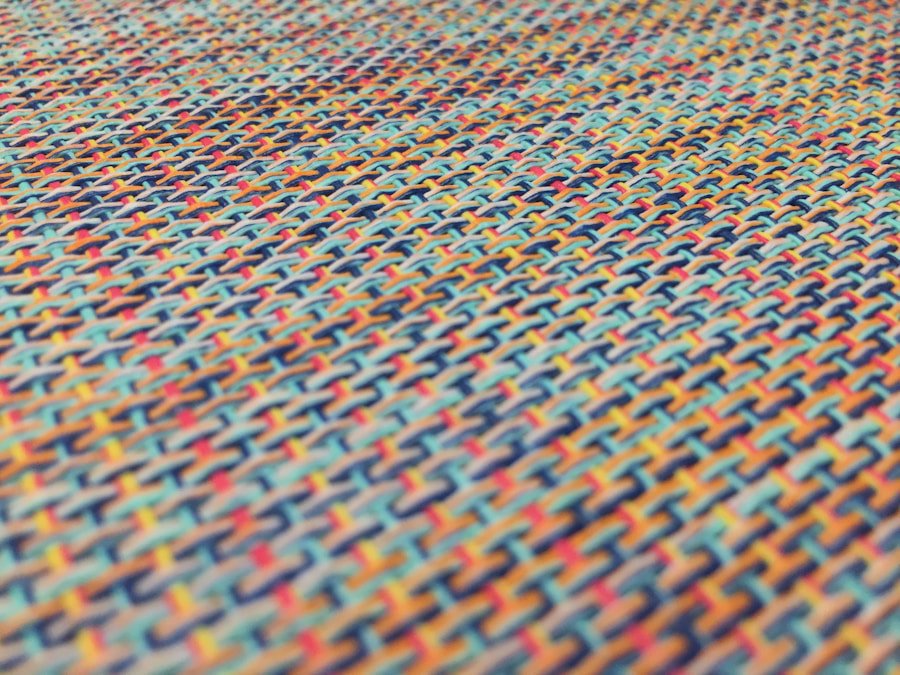
Photo by Mikaela Wiedenhoff on Unsplash
The Best Fabric Types for Poolside and Patio Seating
Pulling all of this together, here are the specific fabric types that consistently deliver on glare reduction, eye comfort, and real-world outdoor durability:
- Solution-dyed acrylic wovens: The gold standard for outdoor upholstery. Matte finish, excellent UV resistance, good weave texture, and available in a wide range of mid-tone and deep colors that minimize glare. Look for these in solid, stripe, and decorative patterns.
- Outdoor-rated linen-look fabrics: These are typically a polyester or acrylic blend with a linen-style texture. The surface variation from the weave is excellent for scattering light, and the casual look suits most patio styles. They're not the same as indoor linen, which doesn't hold up outdoors, but they deliver that relaxed, matte visual quality.
- Textured woven polyester: High-performance polyester outdoor fabrics with a basket or twill weave offer good durability, a matte-leaning finish, and solid color retention. They're often more budget-friendly than solution-dyed acrylics while still handling outdoor conditions well.
- Embossed or grain-textured vinyl: If you need the waterproof, wipe-clean properties of vinyl for a pool area, choose embossed or grain-textured versions over flat glossy ones. The surface texture meaningfully reduces glare compared to smooth vinyl.
Fabrics to use more carefully in full sun: smooth vinyl, sateen-weave polyester, and any fabric in white or very pale cream without overhead shade coverage.
Practical Buying Tips Before You Order
A few things that will save you a trip back to square one:
- Order samples before committing to yardage. Hold the sample outside in actual sunlight and check how it looks both in direct sun and when you're looking toward it from a seated position.
- Check the double rub count for any fabric you're considering for high-use outdoor seating. Anything under 15,000 is going to show wear fast in an active backyard.
- Look for fabrics rated for outdoor or UV exposure. Indoor upholstery fabrics, even durable ones, aren't formulated to handle sustained UV without fading and degrading.
- Consider the heat factor alongside glare. Very dark fabrics absorb more heat into the cushion surface. In extremely hot climates, mid-tones like slate blue, sage green, and warm grey give you most of the glare reduction without making your cushions uncomfortable to sit on.
- If you're working with a mix of shaded and unshaded seating, you can use lighter colors in the shaded spots and reserve your mid-tone, matte-weave fabrics for the pieces in full sun.
Summer is exactly the right time to sort this out. Getting your outdoor fabric choices right now means you'll actually enjoy sitting outside instead of retreating indoors every time the afternoon sun hits its peak. A little planning at the fabric selection stage pays off every single time you step onto your patio without grabbing your sunglasses.
Frequently Asked Questions
Q: What fabric finish is best for reducing glare on outdoor furniture?Matte-finish woven fabrics reduce glare most effectively because their textured surfaces scatter incoming light rather than reflecting it in one concentrated direction. Avoid smooth vinyl and sateen-weave fabrics in direct sun positions, as their low-texture surfaces behave like partial mirrors in bright light.
Q: What colors are best for outdoor cushions to minimize eye strain?Mid-tone and deeper colors, such as navy, charcoal grey, slate blue, forest green, and warm brown, absorb more light than they reflect and significantly reduce glare compared to white, cream, or pale yellow fabrics. Very dark colors like black absorb the most light but can become uncomfortably hot in direct sun, so charcoal and deep navy are often the practical sweet spot.
Q: How does weave density affect glare on outdoor upholstery?A moderate, textured weave creates surface variation that scatters light at multiple angles, reducing the concentrated glare you get from smooth or tightly woven fabrics. Basket weaves, linen-look textures, and loosely structured wovens consistently outperform tight, flat weaves for eye comfort in bright outdoor conditions.