
If you've ever pulled a cushion off a poolside chair and found it stiff, stained, or outright moldy after one summer, you already know the problem. Chlorine-splashed kids, saltwater-soaked towels, and sunscreen-smeared hands are relentless, and most standard upholstery fabrics simply weren't designed to handle that kind of abuse. This guide will help you pick upholstery fabrics that withstand chlorine, saltwater, and sunscreen residue for poolside and beach house furniture, clean up with a damp cloth or garden hose, and still look like something you'd actually want in your home.
Why Most Regular Upholstery Fabrics Fail Near Water
Most indoor upholstery fabrics are made with dyes and fibers that were never tested against chlorinated water or saltwater exposure. When chlorine contacts a standard dye, it doesn't just fade the color gradually. It can bleach it unevenly within a single season, leaving splotchy, washed-out fabric that no amount of spot cleaning will fix. Saltwater is just as destructive, leaving behind mineral deposits that break down fibers over time. And sunscreen? That stuff is practically an adhesive. The oily residue from SPF 50 bonds to fabric fibers and, left untreated, creates a yellowed buildup that attracts more dirt.
The good news is that specific fabric constructions and fiber types were literally engineered to survive these conditions. Knowing which ones they are makes the difference between furniture that lasts a decade and cushions you're replacing every two years.
Step-by-Step Instructions for Choosing the Right Poolside and Beach House Upholstery Fabric
- Start with solution-dyed acrylic as your benchmark. Solution-dyed acrylic is the gold standard for any fabric that will face chlorine, saltwater, or prolonged sun exposure. In solution-dyed fabrics, the color is added to the fiber itself during manufacturing before it's ever spun into yarn. That means the pigment goes all the way through the fiber, not just on the surface. Brands like Sunbrella use this method, and it's why solution-dyed acrylic fabrics can lose less than 3% of their color strength after 2,000 hours of UV exposure, according to independent accelerated weathering tests. If you're furnishing a beach house or a pool deck, this is your starting point.
- Check the double rub count before you buy anything. A double rub count measures abrasion resistance. One "double rub" means the fabric has been rubbed back and forth once, simulating real wear. For poolside and beach house furniture that gets regular use, look for a minimum of 15,000 double rubs. High-traffic applications benefit from 30,000 or more. Fabrics with counts below 10,000 will show wear quickly, especially when wet fabric rubs against a chair frame repeatedly during a summer of daily use.
- Consider vinyl or marine-grade vinyl for heavy-use areas. Vinyl upholstery is waterproof by nature, which makes it genuinely practical for pool-edge seating and outdoor dining chairs. Marine-grade vinyl is specifically formulated to resist mildew, chlorine, and UV degradation. It won't absorb sunscreen the way woven fabrics do, and you can wipe it clean with a damp cloth or a mild soap solution. Honestly, vinyl gets dismissed as cheap-looking, but modern textured vinyl options have come a long way. Some are nearly indistinguishable from leather at a glance, and they're a fraction of the maintenance cost.
- Give faux leather a serious look for beach house interiors. If your furniture is inside a beach house or a screened porch rather than directly at the pool's edge, faux leather is a strong contender. It resists moisture reasonably well, repels sunscreen oils, and wipes clean quickly. It's not fully waterproof the way vinyl is, so you don't want it soaking in a rainstorm, but for interior beach house settings where the main concern is wet swimsuits and sandy feet, it performs really well. Plus, it looks polished without feeling too formal for a casual summer home.
- Look for fabrics with a tight, closed weave if you prefer a textile feel. Open weaves trap sunscreen, salt crystals, and debris in their gaps, making cleaning exponentially harder. A tightly woven fabric, like a flat-woven outdoor linen-look or a densely woven solution-dyed acrylic, gives liquids less surface area to penetrate and gives you more cleaning options. If you're drawn to the look of chenille or bouclé for an interior beach house space, choose versions treated with a stain-resistant finish and keep them away from direct poolside splash zones.
- Verify the fabric's mildew and mold resistance rating. This is the one that people skip and then regret. Damp upholstery that doesn't dry quickly becomes a mold habitat within 24 to 48 hours in warm summer humidity. Look for fabrics that specifically state mildew resistance in their product specs. Solution-dyed acrylics and marine vinyls typically carry this, as do many performance fabrics treated with antimicrobial finishes. If a product listing doesn't mention mildew resistance and you're shopping for poolside use, keep scrolling.
- Prioritize fabrics that dry fast after saturation. Quick-dry performance is tied directly to the fiber's structure. Synthetic fibers like acrylic and polyester don't absorb water into the fiber core the way cotton or linen do, so they dry faster after getting soaked. For poolside furniture specifically, a fabric that dries in one to two hours versus six to eight hours makes a real difference in preventing the mildew cycle mentioned above. When you're reading product details, look for language like "quick-dry," "water-repellent," or "moisture-wicking construction."
- Test your cleaning plan before you commit. Before you upholster anything, confirm that your chosen fabric can be cleaned with the products you actually have at home. Most high-performance poolside fabrics can handle a mild dish soap and water solution, and some can even tolerate diluted bleach solutions (check the spec sheet first). This is particularly important for chlorine stain situations. A fabric that requires professional cleaning after every summer splash is not the right fabric for this application, no matter how good it looks on a swatch.
- Factor in color choice as a practical decision, not just an aesthetic one. Darker colors hide sunscreen residue better between cleanings. Navy, charcoal, and deep green are popular for pool areas partly because they're forgiving about that faint oily film that appears after a few weeks of use. Lighter colors like cream and white look gorgeous at a beach house but require more frequent cleaning to stay fresh. That's not a reason to avoid them entirely, just a reason to choose a fabric with strong stain-release properties if you go light.
- Match the fabric's performance level to where the furniture actually lives. Not every piece needs the most extreme specification. A sofa inside an air-conditioned beach house that occasionally hosts a sun-dried guest is a different situation from a lounger sitting at the pool's edge in direct sun and regular splash range. Overspending on marine-grade vinyl for an interior piece is unnecessary. Under-specifying for true outdoor furniture is how you end up replacing it constantly. Be honest about the exposure level and choose accordingly.
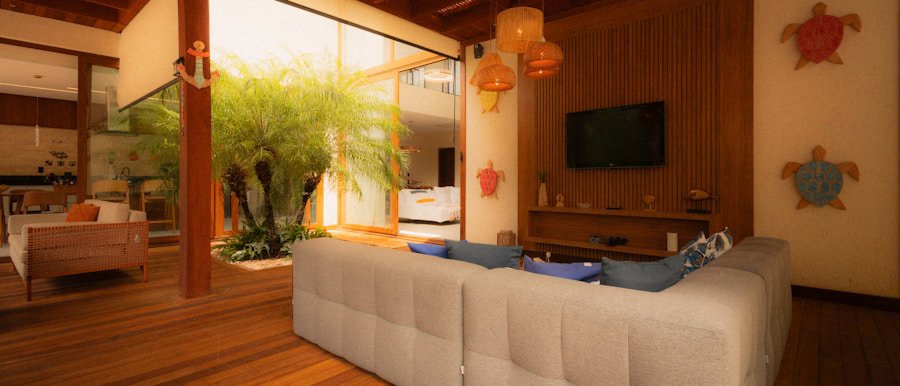
Photo by Alef Morais on Unsplash
What Are the Best Fabrics Specifically for Chlorine and Saltwater Exposure?
Solution-dyed acrylic and marine-grade vinyl are the two fabrics best suited for direct chlorine and saltwater exposure. Solution-dyed acrylic resists chemical degradation because the pigment is locked into the fiber at the molecular level, not coated on top. Marine-grade vinyl is fully non-porous, meaning chlorinated water and saltwater have nothing to penetrate or degrade.
Polyester-based performance fabrics treated with a polyurethane backing also perform well in these conditions, though they typically carry a shorter expected lifespan than solution-dyed acrylic under continuous outdoor exposure. For furniture that lives fully outdoors in a coastal or pool environment, aim for fabrics with a UV resistance rating of at least 1,000 hours on the AATCC 16 accelerated fade test standard. That rating tells you the fabric was actually tested under simulated sun conditions, not just described as "outdoor-friendly" in a product listing.
How Do You Remove Sunscreen Residue from Upholstery Without Damaging the Fabric?
Sunscreen residue comes off most performance upholstery fabrics with a mixture of mild dish soap and warm water, applied with a soft brush and rinsed thoroughly. The key is treating it before it dries and sets.
For sunscreen that's already dried and yellowed, a diluted solution of white vinegar and water (roughly one part vinegar to three parts water) works well on vinyl and acrylic fabrics. Avoid using vinegar on any natural fiber fabrics or fabrics with a metallic finish. For stubborn oily residue on woven performance fabrics, a small amount of rubbing alcohol on a clean cloth can break down the oil without harming the dye, but test on a hidden section first. The single most effective preventive measure is covering cushions or using a hose rinse on fabric seating at the end of each pool day before the residue sets overnight.
Quick Tips for Keeping Your Pool and Beach House Fabrics Looking Good All Summer
- Rinse fabric cushions with fresh water after saltwater exposure. Salt crystals left behind accelerate fiber degradation significantly.
- Store cushions upright or in a breathable storage bag when not in use. Flat storage traps moisture underneath.
- Apply a fabric protector spray rated for outdoor use at the start of each season. It adds another layer of resistance between sunscreen and the fiber.
- Rotate cushions regularly if they're in a spot with uneven sun exposure. Even solution-dyed acrylics benefit from even fading, which is more forgiving than patchy fading on one side.
- Check seams and piping for mildew first. It usually starts there before appearing on the fabric face, giving you early warning before it spreads.
Frequently Asked Questions
Q: What is the best upholstery fabric for poolside furniture that can be cleaned without professional help?
Solution-dyed acrylic is the best upholstery fabric for poolside furniture. It resists chlorine, UV fading, and mildew, and it cleans up with mild soap and water. Marine-grade vinyl is also an excellent choice because it's fully waterproof and wipes clean instantly.
Q: Can regular indoor upholstery fabrics be used near a pool if they're treated with a waterproofing spray?
A waterproofing spray provides limited temporary protection but doesn't make a standard indoor fabric suitable for poolside use. Chlorine and saltwater will still degrade the dye and fibers over time, and a spray treatment wears off quickly under direct sun and repeated water exposure. Purpose-built performance fabrics are a far more durable long-term solution.
Q: How often should pool and beach house upholstery fabrics be deep cleaned?
For poolside and beach house upholstery fabrics in regular summer use, a thorough cleaning with soap and water every two to four weeks is reasonable for most performance fabrics. A fresh-water rinse after each use and a quick wipe-down of any visible sunscreen or salt residue keeps the deeper cleanings simple and extends the time between them significantly.