
Choosing spring upholstery fabrics isn't just a style decision. It's a comfort decision. Spring is that in-between season where your home might feel chilly before noon and stuffy by three in the afternoon, especially if you're in a climate where the air conditioning hasn't kicked on yet but the sun is already doing its thing through the windows. The fabric covering your sofa, chairs, and cushions directly affects how warm or cool those surfaces feel against your skin, and that matters more than most people give it credit for.
If you've ever sat down on a velvet sofa on a warm day and immediately regretted it, you already understand the problem. The good news is that spring's transitional weather actually gives you a lot of flexibility in fabric choice, as long as you know what you're working with.
Why Fabric Choice Affects Thermal Comfort More Than You Think
Natural and synthetic fibers behave very differently when temperatures fluctuate. Breathable fabrics allow air to circulate through the weave, which helps regulate the surface temperature of your furniture. Dense, tightly woven fabrics trap heat. This is great in January. In April, not so much.
Here's the thing: your room's climate control setup matters too. If your home relies heavily on ceiling fans rather than central air during spring, you'll want fabrics that work with airflow rather than against it. Open-weave textiles like linen and loosely woven cotton are your friends here. They don't hold heat the way a thick chenille or velvet would, and they tend to feel neutral to the touch even on warmer days.
- Breathable fabrics allow air to pass through the weave, keeping surface temperatures comfortable without relying on your HVAC system.
- Moisture-wicking fabrics pull light perspiration away from skin contact, which becomes relevant during spring afternoons when the temperature climbs unexpectedly.
- Dense fabrics retain warmth, which can feel luxurious in cooler months but heavy and sticky during spring's warmer stretches.
The weave structure and fiber content together determine how a fabric performs thermally. A tightly woven cotton can still trap heat, while a loosely woven synthetic blend might actually breathe better than you'd expect. Always look at both.
What Are the Best Breathable Upholstery Fabrics for Spring?
Linen and cotton are consistently the top performers for spring upholstery comfort. Both are natural fibers with open weave structures that allow air circulation, and both have a naturally cool feel against skin, even without air conditioning running.
Linen is one of the most breathable upholstery fabrics available. Its fiber structure is hollow at a microscopic level, which allows heat to move away from the surface rather than building up. Linen is also naturally moisture-wicking, meaning it handles light humidity and perspiration better than most synthetics. The trade-off is that pure linen can wrinkle and may need a blend to hold up to heavy daily use. A linen-cotton or linen-polyester blend gives you the breathability of linen with better durability for everyday family life.
Cotton upholstery is another excellent spring choice. It's soft, it breathes well, and it doesn't build up static. Plain-woven cotton or cotton canvas tends to feel cooler than velvet or chenille at the same room temperature because it doesn't trap a layer of warm air at the surface the way a plush pile fabric does. Look for cotton with a double rub count of at least 15,000 for upholstered seating. Double rub count is the industry measure of how many times a fabric can be rubbed back and forth before showing wear, so higher is better for anything that gets regular use.
Woven fabrics in general, particularly those with visible texture from an open weave rather than a thick pile, tend to perform well in spring. They look fresh and relaxed, which also happens to match the seasonal aesthetic most people are going for around this time of year.
Fabrics That Feel Heavy in Spring (And When That's Actually Fine)
Velvet gets a bad rap as a "winter-only" fabric, but honestly, the situation is more specific than that. The issue with velvet in spring isn't the fiber itself, it's the pile. Velvet's characteristic plush surface traps a warm air pocket between the fabric and your skin, which creates that sticky, overheated feeling on warmer days. In a home with reliable air conditioning that kicks on before mid-spring, velvet is completely manageable year-round.
Chenille is criminally underrated as a year-round fabric, and spring is no exception. Yes, it has a soft pile like velvet, but chenille's pile is typically less dense and the yarn construction allows for more airflow than you'd expect. It's also incredibly durable, with quality chenille fabrics often rated at 30,000 double rubs or higher, making it a smart pick for households with kids and pets. In rooms that stay climate-controlled, chenille is a perfectly reasonable spring choice.
Fabrics to approach carefully in warm spring rooms without AC:
- Velvet: Dense pile traps heat. Best in air-conditioned rooms or cooler climates.
- Boucle: The looped yarn texture is beautiful but can feel warm and textured against bare skin in high temperatures.
- Faux leather and vinyl: These surfaces don't breathe at all. They can feel cool initially but become uncomfortably warm and sticky with prolonged contact in spring heat.
- Heavy jacquard: Thick jacquard weaves with high thread density hold heat similarly to velvet. Lighter jacquard patterns in cotton or linen blends are the exception.
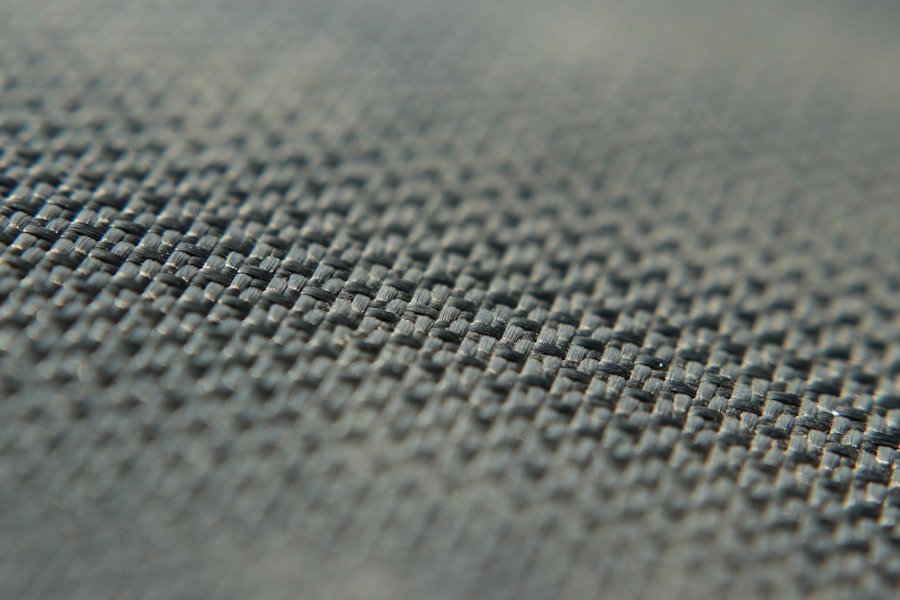
Photo by Akshay Krishna on Unsplash
How Humidity and Regional Climate Should Influence Your Decision
Spring humidity is a real factor that most fabric guides skip over entirely. If you live in the Southeast, the Gulf Coast, or anywhere with humid springs, moisture-resistance in upholstery fabric becomes as important as breathability.
Solution-dyed acrylic fabrics, often marketed under performance fabric labels, are worth serious consideration for humid climates. In solution-dyed acrylic, the color is added to the fiber during manufacturing rather than applied to the surface afterward. This makes the fabric inherently resistant to moisture, mildew, and fading, which matters when spring air carries real humidity into your home every time a door opens. These fabrics are also UV-stable, so they hold their color well near windows that get direct spring sunlight.
Here's the thing about performance fabrics: they've come a long way in the last decade. You're not choosing between comfort and durability anymore. Many solution-dyed acrylics now have a soft hand feel and come in fresh spring colors and patterns that look nothing like the stiff outdoor furniture fabrics people remember.
For dry climates with warm springs, like the Southwest or high desert regions, the priority shifts more toward pure breathability. Natural fiber blends and open-weave linens perform especially well here because the low humidity means moisture-wicking is less critical, and the fabrics just need to avoid holding surface heat.
Picking Spring Colors That Work With the Season's Light
Spring light is different from winter light. It's brighter, comes in at a lower angle in the morning, and tends to flood rooms that were dimmer all winter. This directly affects how upholstery fabric looks and even how warm it feels in rooms with significant sun exposure.
Lighter fabric colors reflect more light and absorb less heat. This is basic physics, but it's genuinely useful when you're choosing between a deep navy velvet and a cream linen for a south-facing room that gets afternoon sun. The cream linen will feel noticeably cooler at the surface on a warm spring day, even before you factor in the breathability difference between the two fabrics.
Popular spring upholstery directions right now lean toward:
- Soft greens and sage tones in linen or woven fabrics, which feel botanical and fresh without skewing too trendy.
- Warm creams and off-whites in cotton or linen blends, which work with both the thermal comfort goal and the light-and-airy look most people want for spring.
- Muted florals and botanical prints on a light ground, especially in designer print or decorative fabric categories, bring in the season without requiring a full room overhaul.
- Soft blues in woven or linen textures that visually read as cool and calm even before you touch the fabric.
What to Look for on the Label Before You Buy
Fabric specs sound intimidating, but you only really need to know a few things when shopping for spring upholstery fabric with comfort and climate in mind.
- Fiber content: Natural fibers like linen, cotton, and wool breathe better than most synthetics. Blends can give you the best of both.
- Double rub count: For a sofa or chair that sees daily use, aim for 25,000 or higher. For decorative pieces or low-traffic chairs, 15,000 is workable.
- Cleaning code: W means water-cleanable, S means solvent only, W-S means both work, X means vacuum only. For spring with kids around, W or W-S is your safest bet.
- Weave type: Open weaves breathe better. Pile fabrics (velvet, chenille, boucle) hold more heat but are also softer underfoot and to the touch.
- Solution-dyed: If you see this on the label, the color goes all the way through the fiber. That means better fade resistance and moisture resistance, both useful for spring.
Spring is one of the best times of year to reupholster or refresh your furniture because you're not working against the extreme heat of summer or the full cold of winter. You've got a practical window to pick something that will carry you comfortably into summer without feeling like a mistake by July.
Frequently Asked Questions
Q: What is the most breathable upholstery fabric for spring?Linen is the most breathable upholstery fabric for spring use. Its naturally hollow fiber structure allows heat to move away from the surface, and it wicks light moisture better than most synthetics. A linen-cotton or linen-polyester blend offers similar breathability with better durability for everyday use.
Q: Is velvet upholstery too hot for spring?Velvet can feel warm in spring because its dense pile traps a layer of heat at the surface. In a climate-controlled room with reliable air conditioning, velvet is manageable year-round. In rooms that rely on fans or open windows during spring, a breathable fabric like linen or woven cotton will be more comfortable.
Q: What upholstery fabrics work best in humid spring climates?Solution-dyed acrylic performance fabrics are the best choice for humid spring climates. Because the color is added to the fiber during manufacturing, these fabrics resist moisture, mildew, and fading naturally. They hold up well in homes where spring humidity is a recurring issue and work in both indoor and transitional spaces.