
Why Your Accent Chair or Ottoman Deserves a Bold Fabric This Spring
Spring upholstery fabrics are having a real moment right now, and if you've been playing it safe with your accent chair or ottoman, this season is a great reason to stop. Statement pieces are exactly that: pieces that make a statement. They're not the sofa everyone piles onto for movie night. They're the chair in the corner that makes visitors say "where did you get that?" and the ottoman that pulls the whole room together. Choosing a bold fabric for these smaller pieces is actually one of the lowest-risk ways to inject serious personality into a living room, because you're covering less surface area and spending less money than you would on a full sofa reupholster.
The key is understanding how to be bold without being chaotic. A deeply textured boucle in cream can anchor a neutral room just as effectively as a jewel-toned velvet in emerald. It's about choosing a fabric that does something, visually or texturally, that the rest of the room doesn't already do. Spring color palettes right now are leaning into soft greens, warm terracottas, dusty pinks, and that particular shade of blue that feels like a clear sky after a long winter. Any of these, applied to the right fabric, can transform a forgettable accent piece into the focal point of the room.
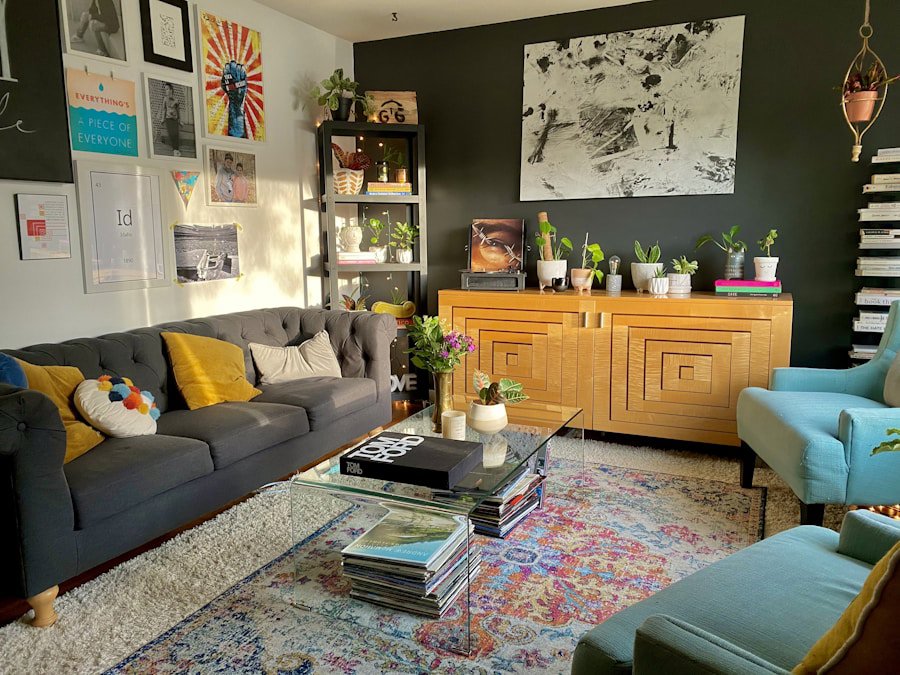
Photo by LeeAnn Cline on Unsplash
What Fabrics Work Best for Accent Chairs and Ottomans?
The best fabrics for accent chairs and ottomans combine visual impact with enough durability to handle daily use. Velvet, boucle, chenille, and jacquard are consistently strong choices because they offer texture, depth, and structure that flat weaves simply can't match.
Here's a quick breakdown of the fabrics worth considering this spring:
- Velvet: Velvet gets a bad rap for being high-maintenance, but modern upholstery velvet is surprisingly resilient. A quality polyester or cotton-blend velvet typically achieves 30,000 to 50,000 double rubs (that's the industry measure of how many back-and-forth friction cycles a fabric can withstand before it starts to wear, and 15,000 is considered the minimum for residential use). Velvet in deep greens, dusty pinks, or rich blues reads as spring-fresh without looking like a garden center exploded in your living room.
- Boucle: Boucle is the textured, looped fabric that's been everywhere in interior design for the past two years, and it's not slowing down. It's warm, tactile, and works beautifully in creams, whites, and soft naturals. It photographs well, which matters if you care about how your home looks on any screen. Fair warning: boucle can be trickier to clean, so it's a better fit for an accent chair that's more for looks than for the kids to do homework on.
- Chenille: Honestly, chenille is criminally underrated. It's soft, it has natural visual depth because of how the fibers are twisted, and it tends to be more forgiving with everyday use than velvet. Chenille in warm terracottas or sage greens is a genuinely beautiful spring choice that doesn't look like you're trying too hard.
- Jacquard: Jacquard is a woven fabric with patterns built directly into the structure of the cloth, not printed on top. That means the design won't fade or peel the way a printed fabric can. If you want something with a botanical or geometric pattern for spring, a jacquard is the durable way to get it.
- Linen and linen blends: Linen has a relaxed, natural texture that suits spring perfectly. It breathes well and looks effortlessly put-together. Pure linen wrinkles and can be fussy to clean, but linen blended with synthetic fibers gives you the look with better performance. Good for ottomans in lower-traffic areas.
- Faux leather: If you have kids or pets, faux leather on an ottoman is genuinely practical. It wipes clean, it's typically rated for 50,000 or more double rubs, and in warm caramels or sage tones it looks sharp. It's not the most "spring" choice texturally, but it earns its place when life is messy.
Which Spring Colors Actually Anchor a Room Without Overwhelming It?
A bold color on a statement piece anchors a room when it connects to at least one other element already in the space. That's the practical rule. You don't need a matching set, but your accent chair's fabric color should echo something: a throw pillow, a plant, a piece of art, even the tone of your wood floors.
Spring 2025 home decor trends are favoring colors that feel organic and grounded rather than loud. Soft sage and eucalyptus greens are particularly strong right now. They read as fresh and seasonal without committing to a "theme." Terracotta and warm rust tones are still very much in play and work especially well with natural textures like boucle and chenille. Dusty pink and mauve are having a quieter moment but they're genuinely lovely on a velvet accent chair, especially in a room with warm neutrals or natural wood.
If you're nervous about committing to color on a chair, an ottoman is a lower-stakes starting point. It's closer to the floor, visually smaller, and often partially hidden under a coffee table. A bold fabric on an ottoman adds a hit of color that feels considered rather than overwhelming.
Colors that tend to anchor well on accent pieces this spring:
- Sage and soft green (connects to natural elements, plants, outdoor views)
- Warm terracotta and rust (grounds earthy, neutral rooms)
- Dusty pink and mauve (softens grey and white spaces)
- Deep teal or ocean blue (pairs beautifully with warm wood tones)
- Warm cream and oat (adds texture without color conflict)
- Mustard yellow (a small dose goes a long way, especially on an ottoman)
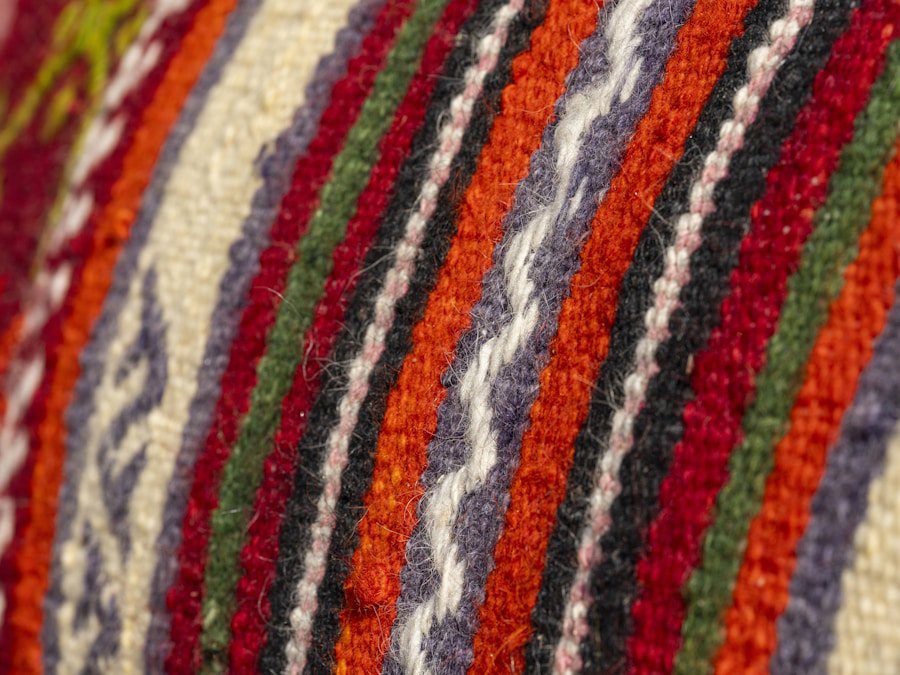
Photo by engin akyurt on Unsplash
What to Know About Durability Before You Buy Upholstery Fabric
Durability ratings matter, especially for accent pieces that see more use than they look like they do. The double rub count is your most useful number when shopping upholstery fabric. Fabrics rated at 15,000 double rubs are considered suitable for light residential use. For a busy household with kids or pets, you want 30,000 or higher. Performance fabrics and solution-dyed acrylics (where the color is embedded into the fiber, not just applied to the surface) can reach 100,000 double rubs and are highly resistant to staining and fading.
The Martindale abrasion test is another standard you'll see, more common on European fabrics. It measures wear resistance similarly to the double rub test. A Martindale rating of 20,000 or higher is generally recommended for residential upholstery, with 40,000 and above being a strong choice for pieces that get daily use.
Here's the thing: a beautiful boucle accent chair in a formal living room used mostly by adults will last years at a lower durability rating. The same chair in a playroom needs to be a different conversation entirely. Match the fabric's rating to how the piece will actually be used, not how you hope it will be used.
Quick durability guide for common spring fabric choices:
- Velvet (polyester blend): 30,000 to 50,000 double rubs, moderate pet resistance, spot clean carefully
- Boucle: Variable, typically 20,000 to 40,000 double rubs, harder to deep clean, avoid for high-traffic use
- Chenille: 25,000 to 40,000 double rubs, soft and relatively forgiving, can snag with sharp pet claws
- Jacquard (woven): 30,000 to 60,000 double rubs depending on fiber content, pattern stays sharp over time
- Faux leather / vinyl: 50,000+ double rubs, very easy to wipe clean, excellent for high-traffic pieces
- Linen blend: 15,000 to 30,000 double rubs, best for lower-traffic accent use
How Much Fabric Do You Actually Need for an Accent Chair or Ottoman?
Buying the right amount of fabric saves you money and a headache. Most standard accent chairs require between 4 and 6 yards of 54-inch-wide upholstery fabric. An ottoman, depending on the size and whether it has a skirt, typically takes 2 to 4 yards. If your fabric has a repeat pattern (a floral or geometric design that has to line up), add 1 to 2 extra yards to account for matching the repeats.
If you're hiring an upholsterer, they can give you an exact yardage quote. If you're doing it yourself, err on the side of buying more. Running out mid-project and trying to find the same dye lot later is a frustrating experience that more than a few home DIYers have dealt with.
Also, check the fabric width before you order. Standard upholstery fabric runs 54 to 60 inches wide. Narrower fabric means you'll need more yardage to cover the same piece, so the per-yard price isn't always the true cost comparison.
Putting It All Together: Anchoring Your Room Without Overdoing It
A statement accent chair or ottoman should feel intentional, not accidental. The fabric does the heavy lifting. Choose a texture that contrasts with your sofa (if your sofa is a flat weave, go boucle or velvet on the accent chair), and choose a color that connects to something already in the room without copying it exactly.
Spring is a genuinely good time to make this kind of change because the light shifts, the windows open, and rooms feel different. A fabric that felt heavy in January can feel fresh and alive in April. Dusty pinks, sage greens, warm creams, and deep blues all read differently when the room is full of spring light, and that's worth leaning into.
Start with one piece. Get the fabric right on the accent chair or the ottoman first. Live with it for a season. You'll know pretty quickly whether the room wants more of that energy or whether one statement piece was exactly enough.
Frequently Asked Questions
Q: What is the best upholstery fabric for an accent chair if I have pets?Faux leather and high-performance chenille are two of the most practical choices for pet-friendly accent chairs. Faux leather wipes clean easily and typically has a double rub count above 50,000, making it very resistant to wear. Chenille is soft and comfortable but can snag with sharp claws, so it works better for cats with trimmed nails or smaller dogs. Avoid boucle if pets are a factor, as its looped texture is easy for claws to catch and pull.
Q: How do I choose an upholstery fabric color that won't overwhelm my living room?Choose a bold color for your accent piece that already appears somewhere else in the room, even subtly. If you have a green plant, a rust throw pillow, or blue undertones in your rug, a fabric in that same family will feel connected rather than jarring. Keeping the bold color contained to one accent chair or ottoman means the room stays balanced even when the color is vivid.
Q: What does double rub count mean and how high should it be for home use?Double rub count measures how many back-and-forth friction cycles a fabric can withstand before it begins to show wear. A count of 15,000 is the baseline for light residential use, and 30,000 or higher is recommended for frequently used pieces or households with children and pets. For high-traffic ottomans or chairs that see daily use, look for fabrics rated at 50,000 double rubs or above for the best long-term performance.