
Spring is the perfect time to refresh your living room, and you don't have to spend a fortune doing it. Reupholstering one piece, recovering a set of dining chairs, or adding a new fabric accent can completely shift how a room feels without touching the rest of your furniture. The challenge most homeowners run into is this: how do you pick a spring upholstery fabric that actually works with the sofa, rug, or armchair you're keeping? That's exactly what this guide is here to help you figure out, step by step.
Step-by-Step Instructions for Choosing Spring Upholstery Fabrics That Complement Existing Furniture
- Start with what you're keeping, not what you're changing. Before you look at a single fabric swatch, take stock of your existing furniture. Note the dominant colors, the undertones (warm, cool, or neutral), and the general style, whether that's traditional, modern, coastal, or somewhere in between. Snap a few photos in natural daylight. Those photos will be your reference point every time you feel tempted by a beautiful fabric that actually clashes with your couch.
- Identify your room's color anchor. Every room has one piece that sets the tone. It might be a large sectional in a warm taupe, a dark walnut coffee table, or even a bold area rug. That anchor color is your starting point for everything else. If your sofa is a medium grey, for example, you have a lot of flexibility. A boucle in cream or off-white adds softness, while a blue or green chenille brings in that fresh spring energy without fighting the grey for attention.
- Use the 60-30-10 color rule as a loose guide. This is a design principle worth knowing. Roughly 60% of a room's color comes from walls and large furniture, 30% from secondary pieces like accent chairs or curtains, and 10% from accessories. When you're reupholstering one piece, you're usually working in that 30% zone. That means your new fabric has room to be bolder or more textural than you might expect, because it's playing a supporting role, not carrying the whole room.
- Match the fabric's mood to your furniture's style. Fabric texture and weave communicate style just as much as color does. A sleek, modern sofa in charcoal grey will look slightly off if you pair it with a heavily ornate jacquard print. On the flip side, a traditional rolled-arm armchair covered in a flat vinyl feels out of place too. Here's a quick guide: modern or mid-century pieces tend to work well with solid velvets, linens, and clean-lined wovens. Traditional pieces love jacquard, chenille, and floral prints. Coastal or relaxed styles pair beautifully with linen, cotton blends, and soft stripes.
- Bring in spring with color, not just pattern. This is where the season gets to play a role. Spring 2025 is leaning into soft, nature-inspired tones: sage green, warm terracotta, dusty rose, and creamy whites are showing up everywhere. You don't need a floral print to feel seasonal. A solid sage velvet on a recovered accent chair, or a dusty pink chenille on a window seat cushion, does the job quietly and lasts well beyond spring. If your existing furniture is in neutral tones like beige, cream, or grey, you have a lot of room to bring in color without overwhelming the space.
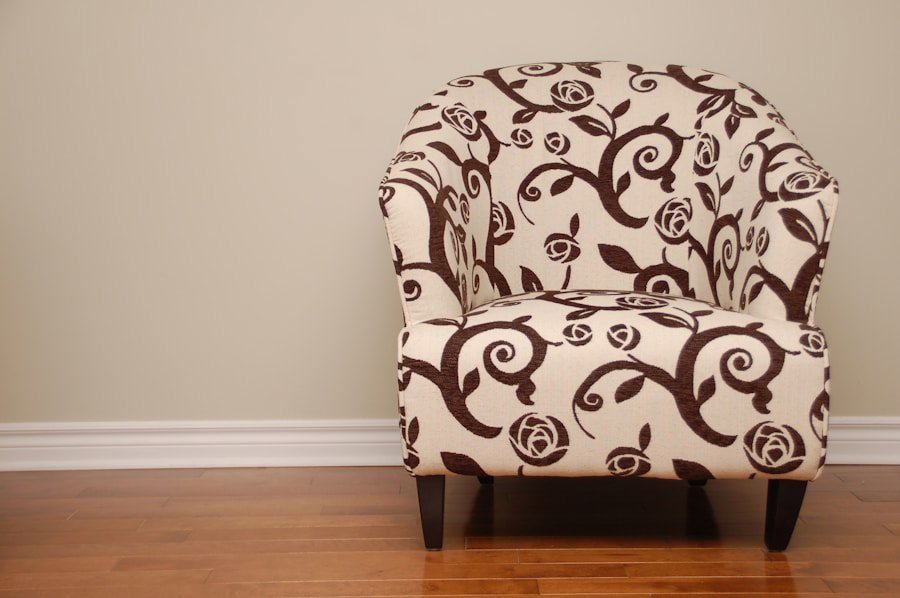
Photo by Hal Gatewood on Unsplash
- Consider how the fabric's texture will read next to existing pieces. A room with a lot of smooth, flat surfaces, think leather sofas, glass tables, painted walls, benefits from a fabric with some visual texture. Boucle, chenille, and woven fabrics add warmth and dimension. A room that already has a lot of texture, exposed brick, a chunky knit throw, a patterned rug, is often better served by a cleaner, more solid fabric choice. The goal is contrast and balance, not competition.
- Check durability before you fall in love with a fabric. This matters more than most homeowners realize until it's too late. Double rub count is a durability measure that tells you how many times a fabric can be rubbed back and forth before it starts to break down. For a living room with kids or pets, you want a minimum of 30,000 double rubs. Heavy-duty fabrics often reach 100,000 or more. Solution-dyed acrylic fabrics are also worth knowing about: the color is baked into the fiber rather than applied on top, which makes them significantly more resistant to fading, staining, and wear. Chenille and velvet can score high on durability too, especially performance versions designed specifically for upholstery use.
- Test your fabric choice against your lighting conditions. A fabric that looks like a warm cream in the store can look almost yellow in a room with warm-toned lighting, or flat and cold in a north-facing room with little natural light. Order fabric samples before committing. Hold them up to your furniture, lay them on the piece you're recovering, and look at them at different times of day. This one step saves a lot of returns and regrets.
- Think about cleanability before you think about pattern. Patterns can hide stains, which is a real practical benefit. But it's not the only factor. Look for fabrics with a tight weave, which resists liquid absorption, or those labeled as stain-resistant or performance fabrics. Microfiber and solution-dyed acrylics are genuinely easy to clean. Linen is beautiful but can watermark. Velvet gets a bad rap for being high-maintenance, but performance velvet is actually surprisingly forgiving with spot cleaning. Always check the fabric's cleaning code: W means water-based cleaners are safe, S means solvent only, WS means both work, and X means vacuuming only.
- Pull it all together with a small mood test. Once you've narrowed your choice to two or three fabric options, do a quick physical mock-up. Lay your fabric sample on or next to the piece it'll be covering. Stand back a few feet and look at the whole room, not just the fabric. Does it feel like it belongs? Does the room feel more or less cohesive with it in place? Trust your gut here. If you've followed the steps above, your gut will usually be pointing in the right direction.
What Are the Best Upholstery Fabrics for Matching Existing Furniture in Spring?
The best upholstery fabrics for complementing existing furniture in spring are solid-colored chenille, performance velvet, linen blends, and textured wovens. These options offer enough visual interest to feel fresh without competing with furniture you're keeping in place.
Honestly, chenille is criminally underrated for this exact situation. It has a subtle texture that photographs well, comes in a wide range of colors including the sage greens and warm neutrals trending right now, and holds up exceptionally well in lived-in spaces. Many chenille upholstery fabrics carry double rub counts between 30,000 and 100,000, making them a solid choice for family rooms. Linen brings a lighter, airier feel that suits spring perfectly, though it works best in lower-traffic spots like a bedroom chair or a formal living room. For pieces that take a beating, a performance velvet or a tightly woven jacquard gives you both durability and style without sacrificing anything aesthetically.
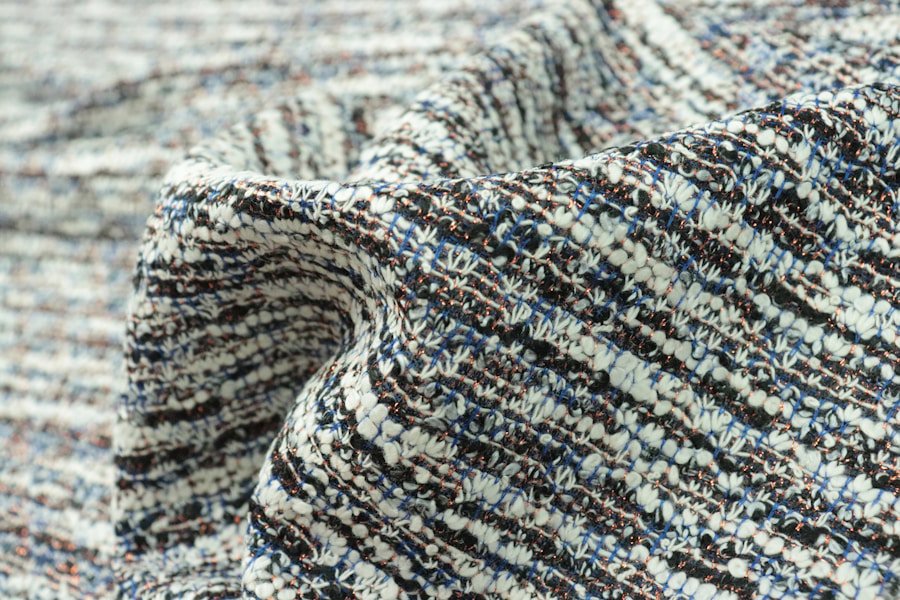
Photo by Divazus Fabric Store on Unsplash
Which Fabric Colors Work Best When You Can't Change Your Sofa?
When your sofa is staying put, the safest approach is to choose a fabric color that shares at least one undertone with it. A warm beige sofa pairs naturally with terracotta, warm green, or gold tones. A cool grey sofa works well with dusty blue, sage, blush, or crisp white.
Here's the thing: you don't always need to match. Sometimes the most cohesive rooms use contrast intentionally. A dark brown leather sofa can look stunning next to a recovered armchair in a pale cream boucle or a soft dusty pink velvet. The contrast works because the tones are balanced, not because they're identical. What you want to avoid is two competing mid-tones with no clear distinction, like a medium olive sofa next to a medium teal accent chair. That kind of color collision tends to flatten a room rather than enliven it. When in doubt, go lighter or go bolder than your anchor piece, but don't land in the same value range with a clashing hue.
Tips and Troubleshooting
- If the room feels too busy: Swap one patterned fabric for a solid in a coordinating color. A solid chenille in the right tone will calm the visual noise while still adding texture.
- If the room feels flat or boring: Add a stripe, a subtle geometric woven, or a fabric with a raised texture like boucle or corduroy. These add dimension without the commitment of a bold print.
- If you're stuck between two colors: Go with the lighter one. It's easier to add depth with pillows and accessories than to lighten a space that feels too heavy.
- If you have pets: Avoid loosely woven fabrics, which snag easily. Stick to tight weaves, performance velvets, or faux leather, which resists claw damage better than most people expect.
- If you're working with a bold existing piece: Neutral doesn't have to mean boring. A natural linen, an oatmeal woven, or a soft grey solid gives your bold piece room to breathe while still looking intentional.
Frequently Asked Questions
Q: How do I choose an upholstery fabric color that goes with my existing sofa?Identify the undertone of your existing sofa, whether it's warm, cool, or neutral, and choose a fabric that shares that undertone. Warm sofas in beige or brown pair well with terracotta, gold, and warm green tones. Cool grey or blue-based sofas work naturally with dusty blue, blush, sage, and off-white. Ordering fabric samples and comparing them in your actual room lighting is the most reliable way to confirm a good match before you commit.
Q: What is a double rub count and why does it matter for upholstery fabric?A double rub count measures how many times a fabric can withstand back-and-forth friction before showing wear. One double rub equals one back-and-forth motion. For everyday home use, look for a minimum of 15,000 double rubs. For homes with kids or pets, aim for 30,000 or higher. Many performance upholstery fabrics reach 100,000 double rubs, making them suitable for even the most heavily used furniture.
Q: What upholstery fabrics are easiest to clean for a family living room?Performance velvet, solution-dyed acrylic, microfiber, and tightly woven chenille are among the easiest upholstery fabrics to clean in a family living room. Solution-dyed acrylic is particularly effective because the color is embedded in the fiber rather than applied as a surface treatment, making it highly resistant to staining and fading. Always check the fabric's cleaning code before purchasing: W indicates water-safe cleaning, S indicates solvent-only, and WS means both methods are appropriate.
