
Choosing the right summer upholstery fabric for outdoor furniture sounds simple until you realize that a fabric that thrives in a shaded pergola can fall apart in six months if it's sitting in direct afternoon sun. Sunlight exposure is genuinely one of the most important variables in outdoor fabric performance, and most people don't find that out until their cushions are faded, cracked, or growing mildew. The good news is that once you understand how different fibers and weaves behave in different light conditions, picking the right fabric gets a lot easier. Let's get into it.
Why Sunlight Exposure Changes Everything for Outdoor Upholstery
UV radiation breaks down fiber structures over time. That's the simple version. The longer version is that different fibers absorb and release UV energy differently, which means some fabrics fade, weaken, and degrade much faster than others when they're parked in direct sunlight all summer long.
Here's the thing: it's not just about fading. UV damage also affects tensile strength, meaning a fabric can look okay but become brittle and tear-prone after a season of intense sun exposure. Solution-dyed acrylic, for example, has its color locked into the fiber itself during the manufacturing process rather than applied as a surface dye, which is why it resists UV fading significantly better than piece-dyed fabrics. Independent testing consistently shows solution-dyed acrylic retaining color integrity after 2,000 or more hours of UV exposure, compared to surface-dyed polyester blends that can show visible fading in as little as 500 hours.
Beyond fading, heat retention matters too. Fabrics with tighter, denser weaves trap more heat, which accelerates fiber breakdown and makes seating uncomfortable on hot summer afternoons. Loosely woven textiles allow airflow but may sacrifice some structural durability. It's a real trade-off depending on where your furniture lives.
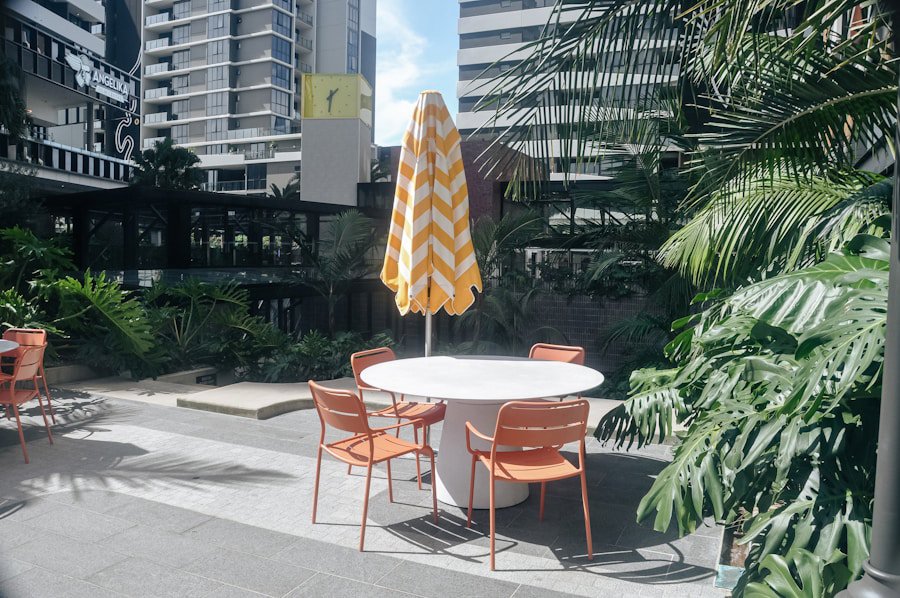
Photo by Maddy Ramsay on Unsplash
What Are the Best Fabrics for Full Sun Outdoor Furniture?
Full sun means your furniture gets direct, unobstructed sunlight for most of the day. This is the harshest condition you can put a fabric through, and not everything survives it gracefully.
Solution-dyed acrylic is the gold standard for full sun outdoor upholstery. The dye penetrates the fiber core, so UV rays can't strip the color from the surface. High-quality solution-dyed acrylic fabrics typically carry a double rub count of 50,000 or higher. Double rub count is just a way of measuring abrasion resistance: one "rub" is a back-and-forth motion, and the higher the number, the longer the fabric holds up to friction and wear. For outdoor furniture you're actually using regularly, 50,000 is a reasonable minimum.
Vinyl and faux leather are solid choices for full sun as well, with some caveats. High-grade marine vinyl is specifically engineered for UV and moisture resistance, and it's easy to wipe clean. Standard decorative faux leather, though, isn't always rated for prolonged UV exposure. Always check the spec sheet. If it doesn't mention UV resistance or outdoor suitability, assume it's meant for indoor use.
Fabrics that tend to struggle in full sun include:
- Untreated cotton and linen: Natural fibers degrade faster under UV radiation and absorb moisture readily, which invites mildew in humid summer conditions.
- Standard polyester blends: These can be treated for UV resistance, but without that treatment, surface dyes fade quickly and fibers weaken within a season or two.
- Velvet and chenille: Both are beautiful fabrics, but they're built for interiors. Pile fabrics trap heat, hold moisture, and aren't designed for direct sun exposure. Save them for inside.
- Untreated jacquard wovens: The intricate weave structure that makes jacquard so visually interesting also creates more surface area for UV damage to accumulate.
Which Fabrics Work Best in Partial Shade Outdoor Areas?
Partial shade is actually the sweet spot for outdoor fabric selection. You're getting some UV protection from trees, awnings, or structures, which opens up a wider range of fabric options without sacrificing too much durability.
In partial shade, solution-dyed acrylic is still a great choice, but you can also consider high-performance polyester blends that carry a UV-inhibitor treatment. These fabrics often have a double rub count between 30,000 and 50,000 and hold up well when they're not taking the full brunt of summer sun all day. Look for fabrics labeled "outdoor rated" or "weather resistant" even if they're not marketed specifically as marine-grade materials.
Woven fabrics with a tighter construction also perform reasonably well in partial shade. A flat, tight plain weave sheds water more efficiently than an open, textured weave, which reduces the risk of moisture sitting in the fabric and encouraging mold growth. Textured weaves like boucle or bouclé-inspired outdoor fabrics can work in partial shade settings, but you'll want to ensure they have a stain-resistant or moisture-wicking finish applied.
Honestly, partial shade is where some of the more visually interesting outdoor fabrics start to become viable. Solid-color performance fabrics in deep blues, greens, and warm neutrals are trending heavily this summer, and they look particularly good in partially shaded spaces where the color reads true without being washed out by harsh overhead light.
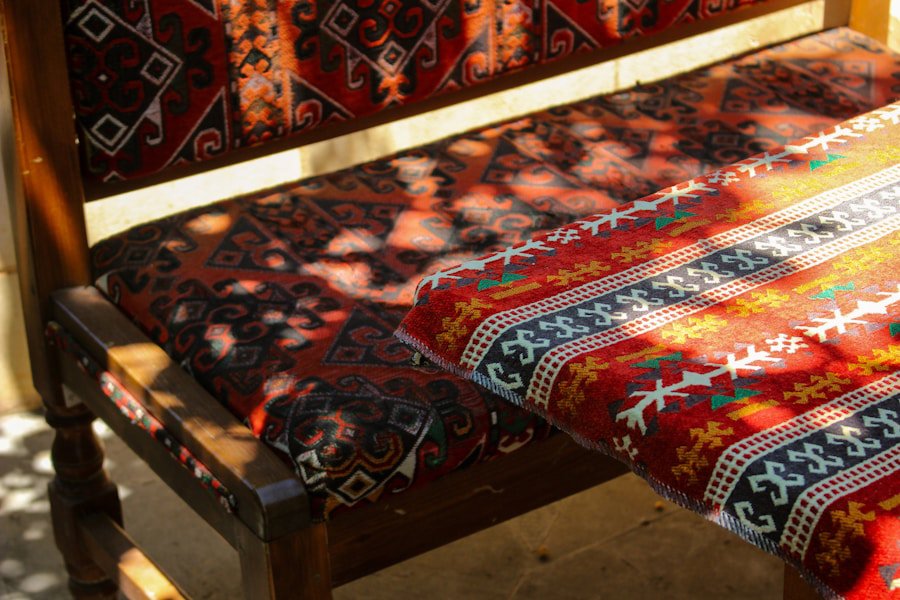
Photo by Ebru Doğan on Unsplash
Covered Outdoor Areas: More Fabric Freedom, But Still Real Considerations
A covered porch, enclosed lanai, or pergola with a solid roof changes the equation considerably. You're no longer fighting direct UV radiation, and moisture exposure is reduced. This is good news because it means you can use fabrics that are more interior-leaning without burning through your investment in one summer.
Chenille is honestly one of the most underrated choices for covered outdoor spaces. It's soft, visually rich, and far more durable than it looks. Quality upholstery chenille can reach double rub counts of 30,000 to 100,000 depending on the fiber blend, which is respectable for a fabric that also brings serious texture to a space. In a covered area with low direct UV and moisture exposure, chenille holds up beautifully and makes outdoor seating feel genuinely luxurious.
Velvet gets a bad rap as fragile, but high-performance velvet blends designed for upholstery are tougher than people give them credit for. In a covered outdoor setting, a velvet or velvet-blend fabric can be a stunning choice, especially in deep jewel tones or rich neutrals that complement summer garden settings. Just make sure you're buying upholstery-weight velvet, not drapery velvet. The backing and weave density are completely different.
Other fabrics that thrive in covered outdoor areas include:
- Linen blends: Linen breathes well and handles heat comfortably. A linen-polyester blend adds durability without losing the relaxed, airy look that linen is known for.
- Cotton canvas: Heavy cotton canvas with a stain-resistant finish is a classic for covered porch furniture. It's not fancy, but it's practical and holds color well away from direct sun.
- Jacquard wovens: The complex patterned weaves that make jacquard so visually appealing are much better protected in covered environments. You get the decorative payoff without the UV vulnerability.
- Indoor-outdoor performance fabrics: These are designed to bridge both worlds and often carry Martindale abrasion test ratings alongside UV resistance specs. The Martindale test measures how many cycles of abrasion a fabric withstands before showing wear, and a rating of 25,000 or higher is generally considered suitable for heavy domestic use.
How to Read a Fabric Spec Sheet Before You Buy
You don't need to be a textile engineer to understand a basic fabric spec sheet. Here's what to look for when you're shopping for outdoor upholstery fabric this summer:
- Double rub count: How many back-and-forth abrasion cycles the fabric survives before showing wear. Aim for 30,000 minimum for outdoor furniture that gets regular use.
- UV rating or UV hours: How long the fabric can be exposed to UV before showing significant color change. Solution-dyed acrylics often list 2,000 hours or more.
- Martindale rating: An abrasion resistance test common in European and performance fabric markets. 25,000 cycles is a practical baseline for active outdoor use.
- Fiber content: Acrylic and polyester perform better outdoors than cotton or linen without treatments. Check whether treatments like UV inhibitors or water repellency are applied, since some wash out over time.
- Cleaning instructions: Outdoor fabrics should ideally be cleanable with a mild bleach solution or at minimum a damp cloth without requiring dry cleaning.
A fabric that checks all those boxes for your specific sunlight situation is the one worth buying. A beautiful fabric that doesn't fit your exposure conditions is just an expensive mistake waiting to happen.
Matching Fabric to Sunlight: A Quick Reference
- Full sun: Solution-dyed acrylic, marine-grade vinyl, UV-rated high-performance polyester
- Partial shade: UV-treated polyester blends, outdoor-rated wovens, performance solid fabrics
- Covered areas: Chenille, velvet blends, linen blends, jacquard, cotton canvas, indoor-outdoor performance fabrics
Shopping at famcorfabrics.com this summer, you'll find options across all these categories. Sorting by fiber type and checking the product details for UV ratings and double rub counts will save you a lot of second-guessing at checkout.
Frequently Asked Questions
Q: What is the best upholstery fabric for outdoor furniture in full sun?Solution-dyed acrylic is the best choice for full sun outdoor furniture. The color is embedded in the fiber itself during manufacturing, which gives it significantly better UV resistance than surface-dyed fabrics. Look for a double rub count of at least 50,000 and a UV exposure rating of 2,000 hours or more for outdoor cushions that will sit in direct sunlight daily.
Q: Can you use indoor upholstery fabric on a covered porch?Yes, in many cases you can use indoor upholstery fabric on a covered porch, especially if the area is fully shaded and protected from rain. Fabrics like chenille, velvet blends, and jacquard wovens can work well in covered outdoor spaces. Just avoid fabrics that require dry cleaning, since outdoor environments almost always call for easy spot cleaning or damp-cloth maintenance.
Q: How do I know if an outdoor fabric will resist fading?Check for a UV hours rating on the fabric spec sheet, and look for the words "solution-dyed" in the fiber description. Solution-dyed fibers lock color into the fiber core, not just the surface, which makes them far more resistant to UV fading than piece-dyed alternatives. A fabric with a UV resistance rating of 1,500 hours or more will hold its color through multiple summer seasons in most sunlight conditions.