
Choosing upholstery fabric for basement furniture is one of those decisions that really does matter more than most people expect. Basements come with a specific set of challenges: higher humidity than the rest of the house, cooler temperatures, limited or zero natural light, and often some serious wear from kids, pets, or a dedicated media room crowd. Pick the wrong fabric and you're dealing with musty smells, fading, pilling, or worse, visible mold, within a couple of seasons. Pick the right one and your basement can look just as pulled-together as any room upstairs. This guide walks you through how to make that call confidently, from understanding which fabric properties actually matter to knowing which specific materials are worth your money.
Why Basement Spaces Are Harder on Upholstery Than You Think
Most basements maintain a relative humidity level between 50% and 70%, which is significantly higher than the 30% to 50% range most living spaces sit at. That extra moisture in the air is invisible, but it's constantly working on your furniture. Natural fibers like cotton and linen absorb humidity readily, which creates the conditions mildew needs to grow. You won't always see it right away. You'll smell it first.
Limited natural light compounds the problem in a different way. UV light from sunlight actually has mild antimicrobial properties, and it also helps dry out surfaces naturally. In a basement, you lose both of those benefits. Fabrics that rely on breathability and airflow to stay fresh are at a real disadvantage below grade.
The good news is that synthetic and performance fabrics were basically designed for exactly this scenario. They don't absorb moisture the same way natural fibers do, they resist mildew at the fiber level, and many of them are easier to clean than cotton or linen ever could be.
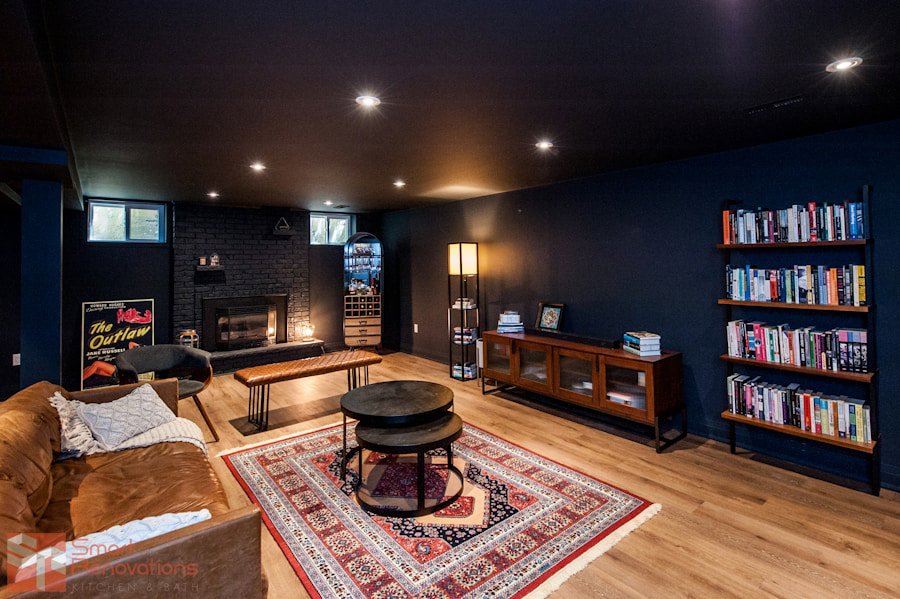
Photo by Smart Renovations on Unsplash
Step-by-Step Instructions
- Assess your basement's actual moisture level before you shop. Pick up an inexpensive hygrometer (a humidity meter) from any hardware store and let it run for 24 to 48 hours in the space where your furniture will sit. If your reading is consistently above 60%, you need to prioritize moisture-resistant fabrics above everything else, including color and texture preference. Knowing your number takes the guesswork out of the decision.
- Rule out high-risk natural fibers first. Cotton, linen, and untreated wool are beautiful fabrics, but they're the wrong call for a below-grade space with elevated humidity. These fibers are hygroscopic, meaning they actively draw moisture from the air. That retained moisture is exactly what feeds mildew. Save them for upstairs rooms with good ventilation and natural light.
- Put moisture-resistant synthetics at the top of your list. Vinyl and faux leather are the most moisture-proof options available. Neither fiber absorbs water, which means mildew literally has nothing to feed on at the fabric surface. Solution-dyed acrylic, which is a fabric where color is baked into the fiber during manufacturing rather than applied as a surface dye, also performs exceptionally well in humid environments. It's colorfast, mildew-resistant, and holds up to cleaning without fading. Polyester-based fabrics are another solid choice. They don't absorb moisture and are generally treated with stain-resistant finishes.
- Check the double rub count for any fabric you're seriously considering. Double rub count measures abrasion resistance. One double rub equals the friction of someone sitting down and standing up once. For a basement hangout space that gets regular use, you want a minimum of 30,000 double rubs. High-traffic spaces with kids or pets should push toward 50,000 or higher. Vinyl and faux leather typically rate above 100,000 double rubs, which is part of why they're so popular for heavily used furniture.
- Look for solution-dyed or fade-resistant fabrics to compensate for low light. This sounds counterintuitive since low light means less UV exposure, but basement lighting (especially overhead fluorescent or warm LED fixtures used for long hours) can still cause color shift over time. Solution-dyed acrylic and high-quality polyester fabrics hold their color under artificial light much better than surface-dyed alternatives. Darker, richer colors like navy, charcoal, forest green, or deep burgundy also tend to look intentional and grounded in a basement setting, and they hide everyday wear better than light neutrals.
- Consider texture and visual weight to offset the lack of natural light. Basements can feel flat without sunlight bouncing around the room. Fabrics with visual texture, like boucle, chenille, or a woven jacquard, add dimension that flat-weave solids just can't. Honestly, chenille is criminally underrated for basements. It's soft, visually interesting, and many chenille fabrics are now made with polyester or acrylic blends that perform well in higher-humidity environments. Just check the fiber content before you buy.
- Prioritize cleanability, especially if kids or pets are in the picture. Look for fabrics labeled with a "W" cleaning code (water-based cleaners safe), or better yet, a "WS" code (water or solvent cleaners). Vinyl and faux leather wipe clean with a damp cloth and mild soap, which is genuinely hard to beat for a busy basement. Many performance polyester fabrics are also bleach-cleanable, which matters if you're dealing with mildew spots or spills from a home theater setup.
- Factor in comfort for a space where people actually lounge. Vinyl and faux leather are practical, but they can feel sticky in warmer months, especially in a basement without strong air conditioning. If summer comfort is a priority, a performance velvet or a tightly woven polyester chenille gives you softness and durability without the clammy feeling. Velvet gets a bad rap for being high-maintenance, but performance velvet made with synthetic fibers is actually quite resilient and much easier to care for than the vintage silk versions people imagine.
- Shop for basement-specific colors and patterns with intention. Basements benefit from colors that feel cozy and intentional rather than washed out. Deep blues, warm greys, rich browns, and multi-colored patterns all read well under artificial lighting. Stripes and geometric woven patterns add a modern, finished look without requiring a lot of natural light to land correctly. If you want to go lighter, cream or warm white in a vinyl or performance polyester can still work, but plan for more frequent cleaning.
- Verify care instructions and spot test before committing to a full project. Order fabric samples before you buy yardage. Test your cleaner of choice on the sample. Let it sit in your actual basement for a few days to see how it responds to the humidity level in your specific space. This step takes maybe a week and can save you from a very expensive mistake.
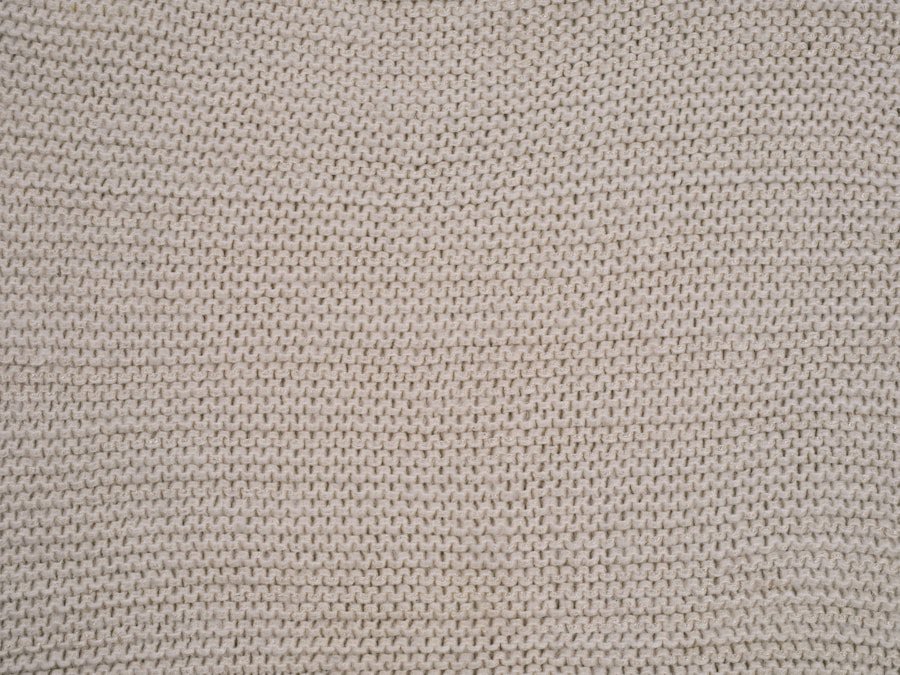
Photo by engin akyurt on Unsplash
What Is the Best Upholstery Fabric for a Humid Basement?
Vinyl, faux leather, and solution-dyed acrylic are the top performers for humid basement environments because they don't absorb moisture at the fiber level, which eliminates the primary condition mildew needs to grow.
Of these, vinyl is the most impermeable and the easiest to clean, which makes it a practical first choice for high-traffic basement family rooms. Faux leather gives you a similar performance profile with a softer hand and a more furniture-forward look. Solution-dyed acrylic, originally developed for marine and outdoor use, brings impressive colorfastness and mildew resistance into a fabric that still looks and feels like indoor upholstery. It typically carries UV and stain resistance as part of its fiber construction, not just as a surface coating, which means those properties don't wash out over time. For a basement media room or playroom, any of these three is a smart starting point.
Which Fabric Colors and Patterns Work Best in Low-Light Rooms?
Deep, saturated colors and fabrics with built-in texture perform best in low-light basement rooms because they read as intentional and rich rather than dim or washed out.
Under warm artificial lighting, which is what most basements rely on, colors in the navy, charcoal, forest green, warm brown, and deep burgundy family hold their visual weight beautifully. Light neutrals like cream or pale grey can work, but they tend to look a little flat unless the basement has good layered lighting. Multi-colored woven patterns and stripes are a smart play here because they create visual interest that doesn't depend on natural light to pop. Jacquard weaves with tone-on-tone patterns are another strong option for a more elevated look. The texture catches the light from different angles as people move through the room, which keeps the space feeling alive even without windows.
Tips and Troubleshooting
- Already noticing a musty smell? Address the moisture source first. No fabric will stay fresh in a basement that hasn't been dehumidified. A dehumidifier running consistently below 55% relative humidity makes a dramatic difference before you invest in new upholstery.
- Worried about vinyl feeling cold in winter? Layer with washable throw blankets in performance fabrics. You get the practical base fabric with the comfort you want seasonally.
- Boucle in a basement: Only if the fiber content is synthetic or a synthetic blend. Natural wool boucle in a humid basement is a setup for problems. Check the label.
- Getting pilling on your current basement sofa? Pilling usually means the fabric is wearing unevenly under friction. When you reupholster or buy new, look for tightly woven fabrics with a higher double rub count. Loose weaves pill faster.
- Summer tip: Summer is actually a great time to reupholster basement furniture because humidity levels are more obvious right now. If your current fabric feels damp or smells off heading into the summer months, that's your sign to upgrade before fall and winter trap the moisture problem indoors.
Frequently Asked Questions
Q: Can I use velvet upholstery fabric in a basement?
You can use performance velvet in a basement if it's made from synthetic fibers like polyester or nylon rather than natural silk or cotton. Synthetic performance velvet resists moisture better than traditional velvet and holds up to cleaning with water-based solutions. Avoid natural fiber velvet in below-grade spaces with elevated humidity.
Q: What upholstery fabric is most resistant to mildew?
Vinyl and solution-dyed acrylic are the most mildew-resistant upholstery fabrics available because neither material absorbs moisture at the fiber level. Mildew requires moisture and organic material to grow, and synthetic fabrics like vinyl remove both conditions. Faux leather and polyester are close behind and are strong choices for basement furniture as well.
Q: How do I clean mildew off basement upholstery fabric?
For most synthetic fabrics, a solution of mild dish soap and water applied with a soft cloth works for surface mildew. For fabrics with a "WS" cleaning code, a diluted white vinegar solution is also effective and naturally antimicrobial. On vinyl or faux leather, a mix of warm water and a small amount of bleach-free cleaner removes mildew without damaging the surface. Always test any cleaner on a hidden area of the fabric first and allow the piece to dry fully before use. If mildew keeps returning, the humidity level in the space needs to be addressed before cleaning alone will make a lasting difference.