
Summer is the season your outdoor furniture finally gets the attention it deserves. But if you've picked the wrong fabric for your cushions and pillows, you'll spend more time wringing them out after rainstorms than actually sitting on them. This guide covers exactly how to choose upholstery fabric for outdoor cushions and pillows that can take summer rain, strong UV exposure, and the kind of regular use that comes with kids, pets, and backyard entertaining. By the end, you'll know which fabric properties actually matter, which types to prioritize, and what to skip entirely.
Why Most Indoor Upholstery Fabrics Fail Outdoors
Indoor upholstery fabrics are engineered for a pretty controlled environment. Stable humidity. Indirect light. The occasional juice spill. Outdoors, the conditions are completely different, and most indoor fabrics simply aren't built for that punishment.
The three main threats to outdoor cushion fabric are UV radiation, moisture, and mildew. UV radiation breaks down fiber structure and causes color to fade, sometimes within a single season. Moisture that gets trapped inside a cushion creates the warm, dark conditions that mildew absolutely thrives in. And regular physical use from sitting, shifting, and kids treating every cushion like a trampoline adds abrasion stress on top of all that.
Standard cotton, linen, and most woven decorative fabrics absorb water readily. Once wet, they dry slowly, and slow-drying fabric in summer heat is basically a mildew invitation. That doesn't mean every one of these fibers is useless outdoors, but it does mean you need to be selective about finish treatments and construction when you're shopping.
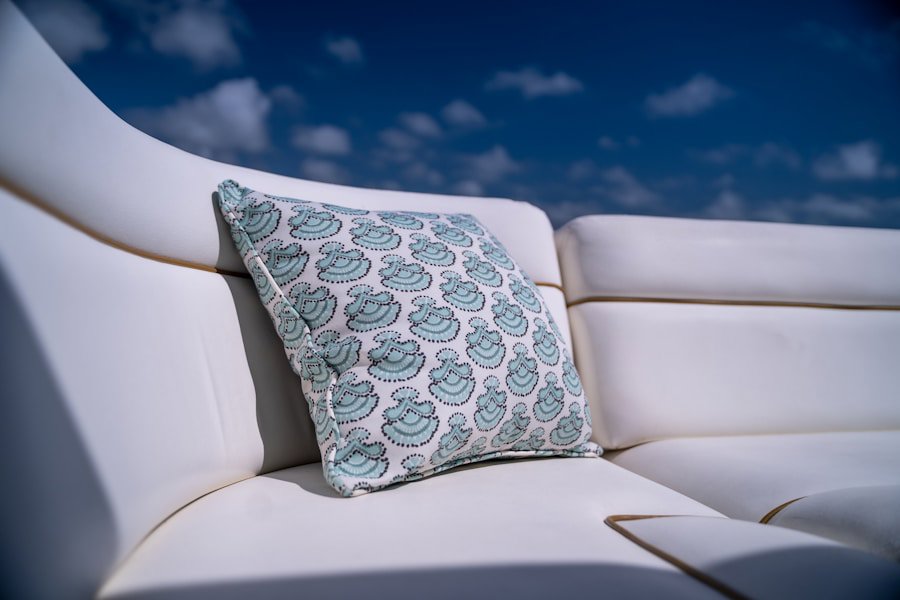
Photo by NATHAN MULLET on Unsplash
Step-by-Step Instructions for Choosing the Right Outdoor Upholstery Fabric
- Start with solution-dyed acrylic as your baseline benchmark. Solution-dyed acrylic is the gold standard for outdoor upholstery fabric. Unlike fabrics that are piece-dyed after weaving, solution-dyed acrylic has color locked into the fiber itself before it's even spun. That means UV radiation can't bleach it out the same way. Sunbrella-type solution-dyed acrylics are rated to resist fading for up to 1,000 hours of direct UV exposure in independent testing. If you're comparing any other fabric option, this is the performance level you're measuring against.
- Check for a quick-dry or moisture-wicking construction. Quick-dry fabric isn't magic. It's usually a combination of fiber type and weave structure that limits how much water the fabric actually absorbs and speeds up evaporation. Tightly woven synthetics like acrylic and polyester shed water faster than loosely woven natural fibers. Look for fabrics described as hydrophobic or water-resistant in the product listing. If a fabric description mentions "quick-dry technology," that typically means the fibers themselves have low moisture absorption, measured as moisture regain. Polyester, for example, has a moisture regain of less than 0.4%, meaning it holds almost no water weight when wet.
- Prioritize colorfastness ratings for wet conditions. Colorfastness is how well a fabric holds its color when exposed to water, light, or friction. For outdoor use, you specifically want to check wet colorfastness, because a fabric that looks fine dry might bleed or streak badly when soaked in a rainstorm. Colorfastness is rated on a scale of 1 to 5, with 5 being the best. For outdoor cushions and pillows that will see regular summer rain, aim for a wet colorfastness rating of at least 4. Solution-dyed acrylics typically achieve a rating of 4 to 5 in both wet and dry colorfastness testing.
- Evaluate abrasion resistance using the double rub count. Double rub count measures how many times a fabric can be rubbed back and forth before it shows wear. Think of it as a simulation of years of sitting, shifting, and everyday contact. One "double rub" is one back-and-forth stroke. For outdoor furniture that sees regular family use, aim for a double rub count of at least 15,000. High-performance outdoor fabrics often exceed 50,000 double rubs, which gives you serious long-term durability even with kids and pets in the mix.
- Look for a mildew-resistant treatment or inherently mildew-resistant fibers. Mildew grows on the surface of fabric, feeding on dirt and organic matter trapped in the fibers. It doesn't actually need the fabric itself as food, which is why even synthetic fabrics can develop mildew if they stay damp and dirty long enough. The best defense is a fabric that dries fast and resists soil buildup. Many outdoor-rated fabrics include a fluorocarbon or silicone-based finish that causes water to bead off the surface instead of soaking in. Acrylic and polyester are both inherently resistant to mildew, making them safer choices than untreated cotton or linen for outdoor applications.
- Consider vinyl and faux leather for specific outdoor use cases. Vinyl is completely non-porous, which means water can't penetrate it at all. That makes it genuinely waterproof rather than just water-resistant. For cushions on covered patios or in screened porches where rain exposure is limited, vinyl upholstery fabric is a practical, easy-to-clean option. The trade-off is breathability. In direct sun, vinyl can get uncomfortably hot and may feel sticky in humid summer conditions. Faux leather behaves similarly. Both work best in partially covered outdoor spaces rather than fully exposed settings.
- Assess color choice strategically for UV performance. Darker colors absorb more UV radiation, which can accelerate fading in fabrics that aren't solution-dyed. If you love deep navy, forest green, or charcoal for your outdoor cushions, make sure the fabric is solution-dyed acrylic or a high-quality UV-stabilized polyester. Lighter colors like cream, beige, and soft grey tend to show less dramatic fading over time on fabrics with average UV resistance, but they'll also show dirt more visibly. Honestly, the sweet spot for most outdoor spaces this summer is a medium tone, think warm blues, terracotta, and sage, in a solution-dyed construction.
- Read the care instructions before you buy, not after. The best outdoor fabric in the world won't last if you can't maintain it properly. Look for fabrics that can be cleaned with mild soap and water, or even rinsed with a hose. Fabrics that require dry cleaning are a hard no for outdoor use. Many outdoor-rated upholstery fabrics can tolerate a diluted bleach solution for mildew removal without compromising color or fiber integrity. That's a significant advantage when summer does what summer does.
- Factor in the cushion insert and cover combination. The fabric is only part of the equation. Your cushion insert matters too. Open-cell foam absorbs and holds water; quick-dry foam or polyester fiberfill wrapped in a drainage-friendly casing performs much better outdoors. If you're re-covering existing cushions, check whether the insert itself is outdoor-rated. A great fabric over a waterlogged insert is still going to feel like sitting on a wet sponge.
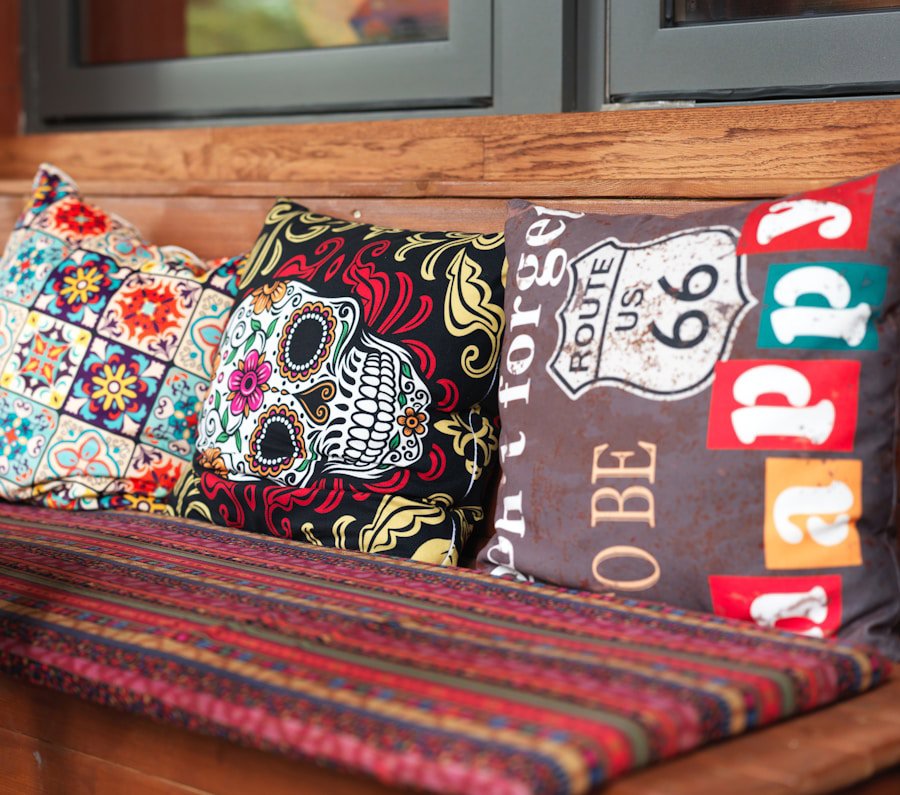
Photo by Declan Sun on Unsplash
What Are the Best Fabric Types for Outdoor Cushions?
Solution-dyed acrylic is the top performer for fully exposed outdoor settings, offering UV resistance, colorfastness, and mildew resistance in a single package. High-quality polyester blends are a close second and are often more budget-friendly while still delivering strong moisture and UV performance. Vinyl is the right call for waterproof needs in covered or semi-covered outdoor areas. Avoid untreated cotton and linen as primary outdoor fabrics unless they've been treated with a water-repellent finish, and even then, plan for more frequent maintenance.
If you're working with a tighter budget, look for polyester-acrylic blends or 100% polyester fabrics with a solution-dyed process. These often hit the 15,000 to 30,000 double rub range and offer solid UV resistance at a lower price point than pure acrylic. You don't always need to spend top dollar to get a fabric that performs well through a full summer season.
Which Colors and Patterns Hold Up Best in Summer Sun?
Solution-dyed fabrics in any color hold up significantly better than piece-dyed alternatives, regardless of the shade. That said, if you're working with a fabric that has average UV resistance, lighter neutrals like beige, cream, and white tend to show less visible fading than saturated darks. Stripes and multi-colored patterns in solution-dyed acrylic are a smart visual choice because the variation in color makes any minor fading less noticeable over time.
Solid colors in UV-stable fabrics are trending heavily this summer in outdoor spaces, with warm terracotta, sage green, and dusty blue leading the pack. These tones layer well with natural rattan and teak furniture finishes that are everywhere in outdoor decor right now. A solid solution-dyed fabric in one of these shades will look intentional and current while also being genuinely practical.
Tips and Troubleshooting
- Mildew spots already forming? Mix one cup of bleach with a quarter cup of mild soap per gallon of water. Apply to the affected area, let it sit for 15 minutes, then rinse thoroughly. This works well on acrylic and vinyl outdoor fabrics without damaging color.
- Fabric fading faster than expected? Check whether you bought a piece-dyed fabric instead of a solution-dyed one. The care tag or product listing should specify. If the dye was applied after weaving, UV fading will be more pronounced and harder to slow down.
- Cushions staying damp after rain? The issue is usually the insert, not just the cover. Swap the foam for an outdoor-rated quick-dry insert, or look for covers with drainage grommets at the base.
- Seams failing before the fabric does? Use UV-resistant polyester thread for any outdoor sewing projects. Standard cotton thread degrades in UV exposure much faster than the fabric itself, and seam failure is frustrating when the fabric face still looks great.
- Bringing cushions in every night? You can get away with a wider range of fabric choices if you're consistent about storage. A fabric with a solid water-repellent treatment and good colorfastness can perform well outdoors even if it's not specifically rated for full sun exposure, as long as it's not left out through every rainstorm.
Frequently Asked Questions
Q: What is the best upholstery fabric for outdoor cushions that will be exposed to rain?
Solution-dyed acrylic is the best upholstery fabric for outdoor cushions exposed to rain. It repels moisture, dries quickly, resists mildew, and maintains color through extended UV exposure. High-quality polyester with a water-repellent finish is a strong budget-friendly alternative.
Q: How do I know if an upholstery fabric is mildew resistant?
Check the product description for terms like "mildew resistant," "outdoor rated," or "solution-dyed." Fabrics made from acrylic or polyester fibers are inherently more resistant to mildew than natural fibers like cotton or linen. Quick-dry construction is also a key indicator, since fabrics that shed moisture fast give mildew far less opportunity to develop.
Q: What does colorfastness mean for outdoor upholstery fabric?
Colorfastness measures how well a fabric retains its color when exposed to water, sunlight, or rubbing. For outdoor upholstery, you want a wet colorfastness rating of at least 4 out of 5 to ensure colors don't bleed or fade noticeably after rain. Solution-dyed acrylic fabrics typically score 4 to 5 in both wet and dry colorfastness testing, making them the most reliable choice for outdoor settings.