
If you're planning to host outdoors this summer, your dining chairs and banquette cushions are about to earn their keep. Sun, humidity, spilled lemonade, dropped plates of BBQ sauce, and the general chaos of summer entertaining are all coming for your upholstery. The good news is that choosing the right upholstery fabric for outdoor dining chairs doesn't have to be complicated. This guide walks you through the performance requirements that actually matter for dining spaces, the fabric types that hold up best, and what to look for on a product label before you buy.
Step-by-Step Instructions: How to Choose the Right Outdoor Dining Chair Fabric
- Start with where the furniture actually lives. Before you pick a single fabric, be honest about your setup. Is your dining area fully exposed to direct afternoon sun? Partially shaded by a pergola? Under a covered porch roof? The more direct UV exposure your chairs get, the stricter your fabric requirements become. Full sun situations call for solution-dyed fibers, which we'll cover shortly. Covered or shaded spaces give you a little more flexibility in your choices.
- Prioritize UV resistance above everything else. Fabric fading is the number one complaint from homeowners who made the wrong outdoor fabric choice. Solution-dyed acrylic is the gold standard here. Unlike conventionally dyed fabrics where color sits on the surface of each fiber, solution-dyed acrylic has color locked into the fiber during manufacturing, before the fiber is even spun. The result is dramatically better fade resistance. Sunbrella, the most recognized brand in this category, rates its solution-dyed acrylic fabrics to resist fading for up to 1,000 hours of direct sun exposure. That's a meaningful number when you're comparing it to a standard polyester that might show visible fading within a single season.
- Demand stain and spill resistance, not just stain treatment. There's an important difference between a fabric that has been sprayed with a stain-resistant finish and a fabric that is inherently stain resistant by its fiber structure. Topical treatments wear off with washing and use, sometimes after just a few cleanings. For outdoor dining specifically, look for fabrics described as solution-dyed or inherently stain-resistant, or consider vinyl and marine-grade faux leather, which don't absorb liquids at all. If you've ever watched red wine bead up and roll off a vinyl chair cushion, you understand why these materials are so popular in restaurant and hospitality settings.
- Check the double rub count for durability. A double rub count measures how many back-and-forth rubbing cycles a fabric can withstand before it shows wear. Think of it as a standardized friction test. For outdoor dining chairs that see regular use, you want a minimum of 15,000 double rubs for light residential use, and honestly 30,000 or higher is a smarter target if you're hosting frequently or have kids at the table. Many performance outdoor fabrics exceed 50,000 double rubs. The Martindale abrasion test is the European equivalent measurement and works the same way conceptually. Either way, higher numbers mean the fabric holds up longer under real-world use.
- Factor in moisture and mildew resistance. Outdoor dining means morning dew, unexpected rain, and damp swimsuit situations. Fabrics that trap moisture become breeding grounds for mildew, which is both a health concern and nearly impossible to fully reverse visually. Vinyl and solution-dyed acrylic are both mildew resistant by nature. If you're drawn to a woven or textured fabric, look for one with a tight weave and a mildew-resistant finish. Avoid natural fibers like untreated cotton or linen for fully exposed outdoor dining applications. They're beautiful inside, but they'll break down quickly out there.
- Match the fabric to your specific maintenance reality. Be honest with yourself here. If you have young kids, a vinyl or faux leather surface that wipes clean with a damp cloth is your friend. If you're hosting adults-only dinner parties and you want something with more texture and warmth, a high-performance woven or solution-dyed acrylic in a tight pattern gives you that. The fabric that's best for you is the one you'll actually maintain correctly, not the one that looks best in a product photo.
- Think about color strategically. Here's the thing: color choice for outdoor dining fabrics is part practical, part aesthetic. Lighter colors like cream, white, and beige show food stains more readily than mid-tones like navy, forest green, or warm grey. Multi-colored patterns and stripes are genuinely smart choices for dining chairs because small stains simply disappear into the visual texture of the pattern. If you love a solid light color, make sure the fabric has serious inherent stain resistance, not just a spray-on treatment.
- Consider the feel and comfort for long meals. Outdoor dining chairs are sat on for longer stretches than people often anticipate. A fabric that's scratchy, traps heat, or feels slippery is going to make guests uncomfortable during a three-hour dinner. Solution-dyed acrylic wovens tend to feel soft and breathable. Vinyl and faux leather can get warm in direct sun, so they're better suited to shaded or evening dining situations. If you love the look of velvet or chenille, save those for a covered porch or sunroom where sun and spill exposure is significantly reduced.
- Read care instructions before you commit. The best outdoor fabric in the world is useless if cleaning it is so complicated you avoid doing it. Most high-performance outdoor fabrics can be cleaned with a mild soap and water solution and allowed to air dry. Vinyl and faux leather wipe down in seconds. If a fabric's care card says "dry clean only" or "spot clean only with specific solvent," that's a fabric meant for indoor use, not a summer dining chair that's going to see weekly action.
- Buy a sample before you commit to yardage. This is the step most people skip and almost everyone regrets skipping. Fabric colors read differently outdoors than they do on a monitor or even under indoor store lighting. A sample lets you see the true color in your actual outdoor light, check the texture in person, and even do a small spill test with water or juice before you order enough to reupholster an entire banquette. It's a small investment that saves you from a big mistake.
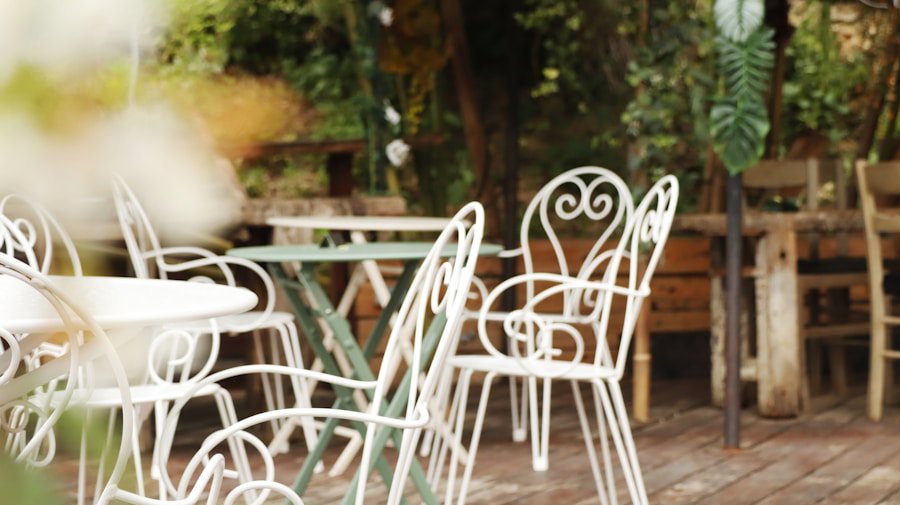
Photo by aurélie sgnl on Unsplash
What Are the Best Fabric Types for Outdoor Dining Chairs?
The best fabrics for outdoor dining chairs are solution-dyed acrylic, vinyl, and marine-grade faux leather, because all three offer a combination of UV resistance, spill resistance, and durability that standard upholstery fabrics simply can't match in an outdoor dining environment.
Here's a quick breakdown of how the main contenders compare:
Vinyl is the most forgiving material for outdoor dining, period. It's waterproof, wipes clean instantly, resists mildew, and holds color well. Modern contract-grade and marine vinyl fabrics have come a long way from the sticky, cheap-feeling versions of the past. If you're upholstering a banquette that's going to see kids and frequent entertaining, vinyl is a genuinely excellent choice. Look for options rated for outdoor use, since not all vinyl is UV stabilized.
Faux leather sits in a similar category to vinyl but often has a softer, more upscale feel. High-quality outdoor faux leather is typically polyurethane-based with UV stabilizers built in. It's a strong choice for covered outdoor dining areas where you want a polished, furniture-forward look without worrying about every drip.
Solution-dyed acrylic gives you the warmth and texture of a woven fabric with performance that rivals vinyl for many applications. It's breathable in a way that vinyl isn't, which makes it more comfortable in warm weather. It resists UV fading, moisture, mildew, and most food and beverage stains with basic cleaning. For outdoor banquette cushions where comfort during long meals matters, this is often the best all-around answer.
High-performance polyester wovens are worth mentioning because they've improved significantly. Many are now treated with moisture barriers and UV inhibitors at the fiber level. They won't match solution-dyed acrylic for raw UV resistance, but in shaded dining areas, a quality polyester woven is a practical and often more affordable option.
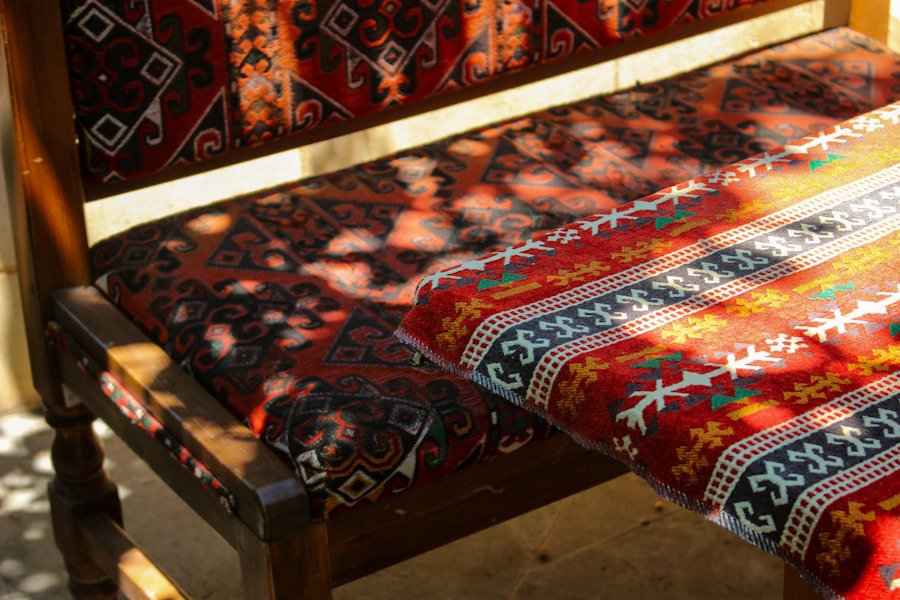
Photo by Ebru Doğan on Unsplash
Which Colors Hold Up Best in Outdoor Dining Settings?
Colors in the mid-tone range, including blues, greens, greys, and warm multi-colored patterns, hold up the best visually in outdoor dining settings because they balance UV fade resistance with the practical reality of hiding food and beverage stains between cleanings.
Lighter solids like white and cream look stunning but require fabrics with the highest level of inherent stain resistance to stay looking good through a summer season. On the other end, very dark solids like black and deep navy can show fading more visibly over time if the fabric isn't solution-dyed, because the contrast between faded and unfaded areas becomes apparent. Stripes and multi-colored patterns are genuinely the smartest choice for high-traffic outdoor dining situations. They camouflage small stains, they photograph beautifully in outdoor settings, and they tend to feel less "corporate" than a flat solid color. Blues and greens are especially strong right now in outdoor decor trends, and they pair naturally with wood, rattan, and metal dining furniture that's popular this season.
Troubleshooting Tips for Outdoor Dining Upholstery
If your fabric is fading unevenly, it's usually a sign that part of the fabric was protected by a chair cover, umbrella, or furniture placed on top of it. This is almost impossible to reverse once it's happened. Going forward, cover furniture consistently or switch to solution-dyed acrylic where color consistency through the fiber makes this far less likely.
If stains are setting despite having a "stain-resistant" fabric, check whether the topical treatment has worn off. Many stain-resistant finishes need to be reapplied seasonally. Products like 303 Fabric Guard can restore water and stain repellency to outdoor upholstery fabrics. This won't work on set-in stains, but it restores protection going forward.
If mildew appears, address it immediately. A solution of one cup of bleach per gallon of water works on most synthetic outdoor fabrics, but always test on a hidden area first. Natural fiber fabrics may not survive bleach treatment. Prevention is much easier than treatment, so store cushions in a dry location when they're not in use during wet stretches of weather.
If the fabric feels rough or develops pilling, check whether it's being cleaned with abrasive brushes or harsh cleaners. Outdoor fabrics should be cleaned with a soft brush or cloth. Pilling on a woven fabric typically indicates either low fiber quality or an abrasion issue that's been accelerating wear. A lint shaver can address pilling cosmetically, but if it's widespread, it may be time to reupholster.
Frequently Asked Questions
Q: What is the best upholstery fabric for outdoor dining chairs?Solution-dyed acrylic is the best upholstery fabric for outdoor dining chairs in most situations because it combines UV fade resistance, mildew resistance, and comfort in warm weather. Vinyl and marine-grade faux leather are also excellent choices, especially where maximum spill resistance and easy cleaning are the top priorities.
Q: How do I keep outdoor dining chair fabric from fading in the sun?Choose a solution-dyed acrylic fabric, where color is embedded into the fiber rather than applied to the surface. This type of fabric can resist fading through up to 1,000 hours of direct sun exposure. Covering furniture when not in use also extends the life of any outdoor upholstery fabric significantly.
Q: Can I use indoor upholstery fabric on outdoor dining chairs?Standard indoor upholstery fabric is not suitable for outdoor dining chairs because it lacks UV stabilizers, moisture resistance, and mildew protection. Indoor fabrics will fade, absorb stains, and break down quickly when exposed to sun and outdoor conditions. Use fabrics specifically rated and designed for outdoor use to get a result that lasts through a full season and beyond.
