
If your outdoor furniture lives a double life, sitting under a pergola one weekend and fully exposed on the deck the next, picking the right upholstery fabric for outdoor furniture gets a lot more complicated than just grabbing something that looks nice. Variable sun exposure, surprise summer showers, morning humidity, and the occasional spilled lemonade all add up fast. This guide walks you through how to choose a fabric that actually holds up to that kind of unpredictable summer life, so you're not reupholstering again next year.
Why Variable Sun and Weather Exposure Is Harder on Fabric Than You Think
Consistent shade is actually easier on outdoor fabrics than you'd expect. It's the back-and-forth that causes the most damage. Fabrics that repeatedly go from full UV exposure to damp, shaded conditions are fighting a two-front battle: UV degradation breaks down fiber structure over time, while repeated moisture absorption and drying causes fibers to swell and contract, which weakens them and invites mildew growth. Most fabrics that fail outdoors don't fail all at once. They fade in patches, go stiff in the seams, or develop that musty smell that no amount of outdoor spray can fix.
Here's the thing: the fabric you choose needs to be able to handle both conditions without compromising on either. That's a real performance ask, and not every fabric meets it.
Step-by-Step Instructions
- Start with fiber type, not color or texture. Before you fall for a pattern or a price tag, look at what the fabric is actually made of. For outdoor furniture that moves between covered and uncovered spaces, solution-dyed acrylic is the gold standard. In solution-dyed acrylic, the color is locked into the fiber at the manufacturing stage rather than applied as a surface dye. This means UV rays can't strip the color away because it's part of the fiber itself, not sitting on top of it. Brands like Sunbrella use this process, and their fabrics are rated to resist fading for up to 500 hours of UV exposure in testing conditions. That number matters when your cushions are spending real summer hours in direct sun.
- Check the double rub count for durability. A double rub count measures how many back-and-forth rubs a fabric can take before it starts to show wear. Think of it like a friction test. One "double rub" equals one back-and-forth motion across the fabric surface. For outdoor furniture that gets regular use, look for a minimum of 15,000 double rubs. Heavy-use pieces like a frequently moved deck chair or a bench that doubles as a kids' play perch should ideally have 30,000 or more. Fabrics marketed as "decorative" often fall below 10,000 double rubs and aren't built for this kind of use.
- Prioritize mold and mildew resistance. This one is non-negotiable for furniture that moves in and out of covered spaces. When a fabric gets damp under a pergola or during a summer storm and doesn't dry out quickly, mildew sets in fast. Look for fabrics that are either solution-dyed acrylic, vinyl, or treated with a mold-inhibiting finish. Many outdoor-rated fabrics will list "mold and mildew resistant" directly in the product specs. If that language isn't there, keep looking. Cleaning mildew out of upholstery fabric is possible but genuinely unpleasant, and it usually shortens the fabric's life anyway.
- Think about drying time and breathability. Fabrics that trap moisture are a problem outdoors. Vinyl, for example, is waterproof and easy to wipe down, but it doesn't breathe well. If your cushions sit in the sun after a rain, vinyl can trap heat and moisture underneath, which leads to the same mildew issues you were trying to avoid. A tightly woven synthetic fabric that repels water but still allows some airflow is usually a better choice for furniture that gets moved around a lot. Olefin (also called polypropylene) is a solid budget-friendly option here. It dries fast, resists staining, and holds up well in UV conditions, though it doesn't quite match solution-dyed acrylic for long-term fade resistance.
- Consider color strategy based on your sun exposure pattern. Lighter colors reflect UV radiation and tend to show heat damage more slowly, but they also show dirt and staining more obviously. Darker colors absorb heat, which can accelerate fiber breakdown in full-sun situations, but they hide everyday grime well. For furniture that moves between full sun and shade regularly, mid-tone colors in tightly woven patterns tend to perform best visually over time. A solid blue, a warm grey, or a multi-toned stripe will camouflage uneven fading better than a light solid or a high-contrast print.
- Test the fabric's hand feel and weight. Heavier, tightly woven fabrics generally outperform lightweight ones outdoors. A fabric that feels flimsy or loosely woven will allow more UV penetration and pick up more dirt in the weave. When ordering online, pay attention to the fabric weight listed in the specs. For outdoor upholstery, aim for at least 400 grams per square meter. Also, a fabric with a tight weave will resist snags better, which matters if you have kids or pets who treat outdoor furniture like an obstacle course.
- Factor in ease of cleaning before you commit. Outdoor furniture that lives in variable conditions is going to get dirty. Bird droppings, sunscreen residue, food spills, and general summer grime are just part of the deal. Look for fabrics that can be spot-cleaned with mild soap and water, or better yet, removed and machine-washed if the cushion covers are sewn that way. Solution-dyed acrylics and most vinyl fabrics clean up well with basic soap and water. Chenille and natural linen, while beautiful, absorb liquid quickly and are much harder to rescue once they've been saturated outdoors.
- Account for the covered area's specific conditions. A pergola with a solid roof behaves very differently from one with an open lattice top. An open lattice still lets in significant UV radiation and allows rain to come through at an angle. A solid patio cover creates shade but can trap humidity underneath. Know what your covered space actually provides before you assume a fabric is "protected" when it's under cover. If your pergola has open slats, your fabric still needs full outdoor UV resistance, not just moisture resistance.
- Match the fabric to the furniture's weight and portability. If your chairs and benches are being moved frequently, lightweight fabrics that don't add bulk are easier to manage. Heavy, padded cushion fabrics are great for stationary pieces but can become a chore to relocate. Also consider whether your cushion covers can be removed for storage. Fabrics that are stapled or tacked directly to frames without a removable cover are harder to protect when the weather turns serious.
- Order a sample before committing to yardage. This is the step most people skip and then regret. A fabric can look perfect on a screen and feel completely wrong in your hands or against your existing outdoor furniture. Order a physical sample, hold it in the actual sun and shade of your specific patio or deck, and assess the color in both lighting conditions. Summer light is bright and direct, and it changes how colors read. A fabric that looks warm and neutral indoors can look washed out or almost yellow in full afternoon sun.
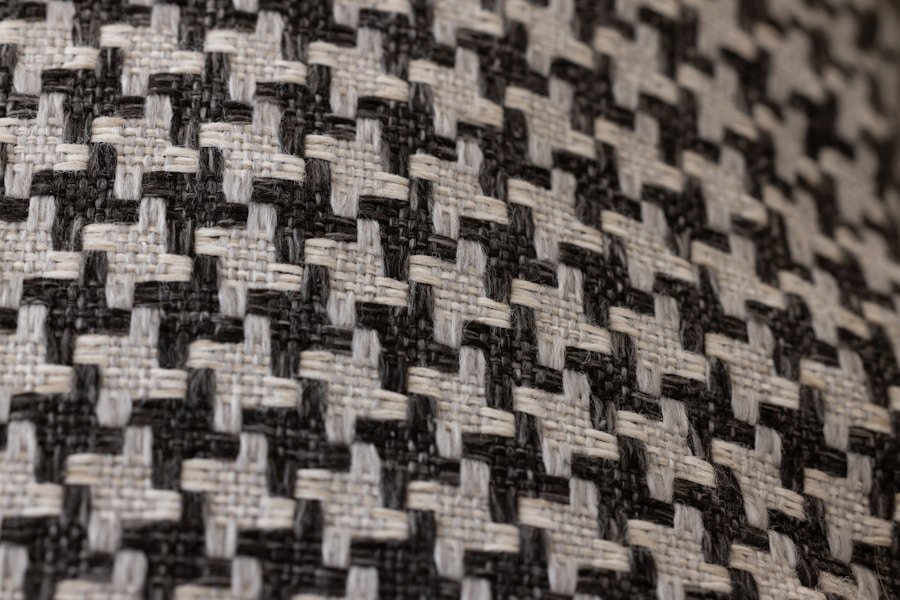
Photo by engin akyurt on Unsplash
What Are the Best Fabric Types for Furniture in Variable Sun Exposure?
Solution-dyed acrylic is the top performer for outdoor furniture that moves between sun and shade. Its color is locked into the fiber at the molecular level, giving it superior fade resistance compared to piece-dyed or yarn-dyed fabrics. For budget-conscious shoppers, olefin fabric is a strong second choice. It offers good UV resistance, dries quickly, and resists most common stains. Vinyl upholstery fabric is worth considering for pieces that need to be completely waterproof and easy to wipe down, such as dining chairs or benches in a high-traffic area. Avoid natural fibers like cotton and linen for fully outdoor applications. They can work beautifully in a covered, low-humidity environment, but they absorb moisture and break down under repeated UV exposure much faster than synthetic alternatives.
Which Fabric Colors Hold Up Best in Direct Summer Sun?
Mid-tone, solution-dyed colors hold up best under direct summer sun because the pigment is embedded in the fiber rather than applied as a surface coat. Deep saturated colors like navy, forest green, and terracotta tend to show fading first at the seams and on raised weave surfaces. Light neutrals like cream and white show dirt quickly but don't fade as visibly since there's less pigment to lose. For practical, everyday outdoor use, mid-range solids in grey, blue, or warm brown are your most reliable long-term performers. Stripes and multi-toned patterns are also smart because slight color variation naturally camouflages the uneven fading that happens when sun hits different parts of a cushion at different angles throughout the day.
Tips and Troubleshooting
- If your fabric develops mildew early: Clean it immediately with a solution of one cup of bleach and one gallon of water if the fabric is solution-dyed acrylic. Check your fabric's specs before using bleach on any other fiber type, as it will damage most natural and many synthetic fabrics.
- If your cushion colors are fading unevenly: This usually means your furniture is getting sun from a consistent angle. Rotating cushions 180 degrees every few weeks during peak summer helps distribute UV exposure more evenly.
- If you're buying fabric to reupholster existing outdoor pieces: Measure your cushion dimensions and add at least 10-15% extra yardage for seam allowances and any pattern matching. Outdoor fabrics are often stiff to work with, so having extra on hand saves a second order.
- If you're torn between two fabrics: Always go with the one that has the higher double rub count and confirmed mold resistance. You can make almost any color or texture work visually. You can't make a fabric more durable after you've bought it.
- If you want indoor-outdoor flexibility: Some solution-dyed acrylic fabrics perform well enough indoors that they've become popular for sunrooms and casual living spaces too. Honestly, that crossover versatility is one of the most underrated things about this fiber type. You're not stuck with something that looks strictly utilitarian just because it's built for the outdoors.
Frequently Asked Questions
Q: What is the best upholstery fabric for outdoor furniture that gets moved between sun and shade?Solution-dyed acrylic is the best upholstery fabric for outdoor furniture in variable sun and shade conditions. It resists UV fading because the color is embedded in the fiber itself, and it dries quickly, resists mold, and holds up to regular use. Olefin fabric is a good budget alternative with similar moisture resistance and UV performance.
Q: How do I know if an upholstery fabric is durable enough for outdoor use?Check the double rub count, which measures how much friction a fabric can take before showing wear. For outdoor furniture, look for at least 15,000 double rubs, and 30,000 or more for high-use pieces. Also confirm that the fabric is rated for UV resistance and mold and mildew resistance before purchasing.
Q: Can I use indoor upholstery fabric on a covered patio or pergola?In most cases, no. Even under a pergola or covered patio, fabrics are exposed to humidity, indirect UV radiation, and temperature swings that break down indoor upholstery fabrics quickly. Indoor fabrics typically lack the mold resistance and UV protection ratings needed to survive a full summer outdoors, even in a partially covered space.