
Choosing the right upholstery fabric for outdoor furniture is genuinely one of those decisions that pays you back, or punishes you, for years. If your cushions live outside through rain, sun, and humidity all year long, you need something built for that life. If you bring everything in each November, you have a little more flexibility, but you still need fabric that can handle temperature swings, moisture, and the occasional surprise thunderstorm. This guide walks you through how to choose upholstery fabric for outdoor furniture based on your actual storage situation, not just a generic "it's outdoor fabric, it'll be fine" answer.
Step-by-Step Instructions: How to Match Your Fabric to Your Outdoor Storage Situation
- Decide your storage type first, before you pick any fabric. This is the single most important step, and most people skip it. Ask yourself: do your cushions and furniture pieces come inside for winter, go into a covered garage or shed, or stay outside fully exposed year-round? Your honest answer to that question should drive every fabric decision that follows. A fabric that's perfect for covered winter storage might fall apart in 18 months if left outside in direct sun.
- Understand the two main outdoor fabric categories. There are fabrics designed for mild outdoor exposure, and there are fabrics engineered to survive actual outdoor abuse. Mild-exposure fabrics, like treated cottons or standard vinyls, can handle a covered patio or occasional rain but need protection from prolonged UV and moisture. Heavy-duty outdoor fabrics, like solution-dyed acrylics, are built to handle full sun, rain, and humidity without fading or breaking down. Knowing which category you need saves you from a frustrating and expensive mistake.
- If you store furniture indoors over winter, prioritize UV resistance and mildew resistance over extreme weatherproofing. Furniture that comes inside from November through March doesn't need the same armor as year-round outdoor pieces. For winter-indoors storage, a high-quality vinyl, a treated woven fabric, or even a solution-dyed acrylic at a mid-range weight will perform beautifully. You're protecting against the summer season, which mainly means UV rays, humidity, and the occasional spill. Fabrics in this category also tend to look better indoors during off-season use because they're not as visually industrial as heavy-duty marine-grade options.
- If your furniture stays outside year-round, solution-dyed acrylic is your best friend. Solution-dyed acrylic, which is the fiber type used in brands like Sunbrella, is made by adding color pigment to the fiber before it's spun, not printing or dyeing the surface afterward. That means the color lives all the way through the fiber, not just on the outside. The result is fade resistance that can last 5 years or more under direct sun exposure, and mildew resistance that holds up through wet seasons. For year-round outdoor use, look for a double rub count of at least 10,000. Double rub count measures how many back-and-forth abrasion cycles a fabric can handle before showing wear, and 10,000 is a solid baseline for high-traffic outdoor seating.
- Check for mildew treatment, especially if you live somewhere humid. Mildew is the silent killer of outdoor upholstery. It doesn't just look bad, it breaks down fabric fibers over time and can cause that musty smell to transfer to cushion fill. If your climate is humid, coastal, or prone to afternoon thunderstorms, mildew resistance isn't optional. Solution-dyed acrylic fabrics are naturally mildew-resistant. Vinyl and faux leather options are also good choices because they don't absorb moisture the way woven fabrics do. If you love the look of a woven texture, look specifically for fabrics labeled as having an antimicrobial or mildew-resistant finish.
- Factor in fade resistance using the Martindale or double rub count ratings. The Martindale abrasion test measures how many cycles a fabric withstands against a standard abrasive before showing visible wear. It's the European equivalent of the double rub test. For outdoor seating that gets regular use, aim for a Martindale rating of at least 15,000 cycles, or a double rub count above 15,000 for fabrics tested using the US standard. Year-round exposed fabrics should aim even higher, in the 25,000 range, to account for the added stress of weather and UV degradation.
- Choose your color with sun exposure in mind. Lighter colors like cream, beige, and white tend to show less heat stress and surface chalking over time, but they'll show dirt more readily. Darker colors like navy, charcoal, and forest green hide everyday grime but can fade more visibly if the fabric isn't solution-dyed. For year-round outdoor use, a medium-toned solid or a stripe pattern in a solution-dyed acrylic is often the smartest call. It hides dirt well, shows fading less obviously if it does occur, and tends to look intentional in outdoor spaces.
- Think about how the fabric cleans, not just how it looks new. Outdoor furniture sees sunscreen, food, pet paw prints, bird situations, and worse. Vinyl and faux leather wipe clean with a damp cloth and mild soap, which is genuinely hard to beat. Woven solution-dyed acrylics can usually be cleaned with a diluted bleach solution without damaging the color, which is something most indoor fabrics cannot tolerate at all. If you have kids or pets, that bleach-safe quality alone is worth its weight. Avoid any outdoor fabric that requires dry cleaning or that isn't labeled as water-resistant.
- Consider the visual crossover if cushions move between indoor and outdoor spaces. Some people bring outdoor cushions inside to a sunroom, a covered porch that doubles as a living space, or even into the main house during winter. If that's you, pick a fabric that looks at home in both settings. Solid colored vinyls in warm tones, woven fabrics in neutral stripes, and textured solution-dyed acrylics in earthy tones all cross over well. Overly industrial-looking or obviously plasticky fabrics tend to look out of place inside. The goal is a fabric that looks intentional wherever it lands.
- Buy with the full seasonal cycle in mind, not just what looks good in the store today. Summer is the obvious moment to think about outdoor furniture, but the fabric you choose in July needs to survive the storage conditions of October, the dry heat of next June, and everything in between. Think through the full year: where will the cushions be in December, what's the humidity situation in your region, and how much direct sun does your outdoor space actually get. That full-picture thinking is what separates a fabric choice you'll love in five years from one you'll be replacing by next spring.
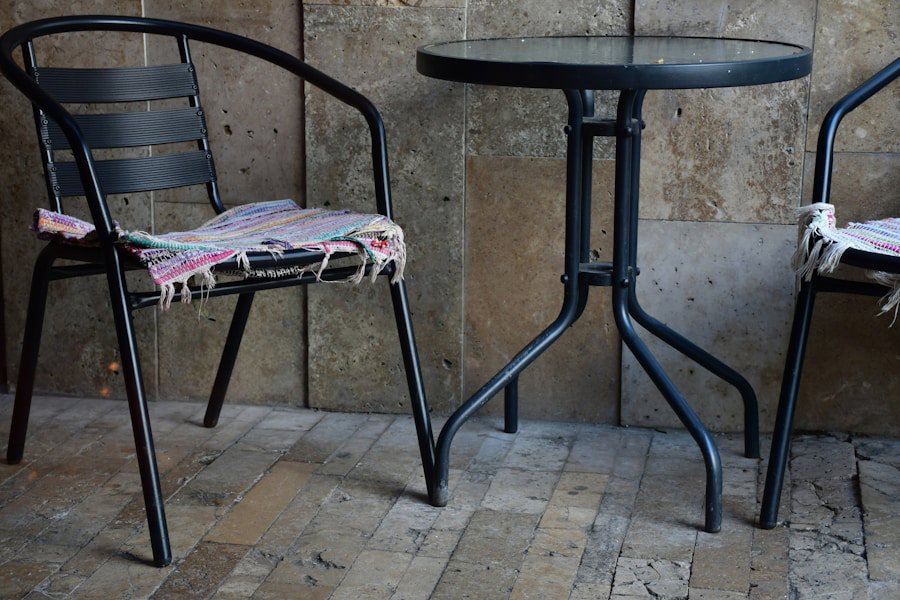
Photo by Anna Kharkivska on Unsplash
What Is the Best Upholstery Fabric for Year-Round Outdoor Furniture?
Solution-dyed acrylic is the most durable and weather-resistant upholstery fabric choice for furniture that stays outside year-round. It resists UV fading, mildew, moisture, and abrasion better than any other fabric type in its class, with quality options achieving double rub counts well above 20,000. It's not glamorous to say, but the science behind solution-dyed fibers, color added at the liquid stage before spinning, is what sets it apart from every coated or printed alternative. The color doesn't sit on top of the fiber waiting to fade. It is the fiber.
Vinyl is a strong second choice, particularly for climates that see heavy rain or coastal salt air. High-quality vinyl doesn't absorb water, resists mold and mildew naturally, and cleans up fast. The downside is that standard vinyl can crack in extreme cold, so if your furniture stays outside through freezing temperatures, look specifically for marine-grade or cold-crack-resistant vinyl formulations. Faux leather follows similar rules. It's a great option for covered outdoor spaces or winter-indoors storage situations, but it needs protection from prolonged freezing temperatures and shouldn't be left in standing water.
Which Fabrics Should You Avoid for Outdoor Use?
Standard cotton and linen are indoor fabrics. Full stop. They absorb moisture, fade quickly under UV exposure, and are essentially a mildew welcome mat if left in humid outdoor conditions. They don't have the fiber structure or any inherent chemistry to resist what outdoor environments throw at them. Some treated cottons can handle a covered porch situation, but even those have a significantly shorter outdoor lifespan than purpose-built outdoor fabrics.
Chenille and standard velvet are also not outdoor fabrics, despite how good they look on a covered patio in a magazine photo. Both fabrics trap moisture in their pile structure and are very difficult to clean once mildew sets in. Jacquard wovens in conventional fiber blends face similar challenges. The good news is that you can get the textured, layered look of these fabrics in outdoor-rated versions. Several woven and textured solution-dyed acrylics mimic the visual weight of jacquard or chenille without the vulnerability. You don't have to sacrifice style to get durability.
Tips for Getting the Most Life Out of Your Outdoor Upholstery Fabric
- Clean cushions before storing them, not after. Dirt and organic material sitting on fabric through winter storage is a mildew and stain accelerant.
- Store cushions in a breathable bag or container, not an airtight plastic bin. Trapped humidity is worse than open air for most outdoor fabrics.
- Apply a fabric protector spray at the start of each outdoor season, even on fabrics labeled as weather-resistant. It adds a measurable layer of stain and UV protection.
- If your outdoor fabric is starting to look chalky or faded but isn't yet damaged, a fabric restorer product can bring back some of the original vibrancy. It's not magic, but it buys time.
- Rotate cushions seasonally so all sides get equal sun exposure. It sounds minor, but uneven fading is one of the most common complaints with outdoor fabric and one of the easiest to prevent.
Frequently Asked Questions
Q: Can I use indoor upholstery fabric on outdoor furniture if I bring it inside for winter?You can use some indoor fabrics if your furniture spends winters indoors and summers in a covered or shaded outdoor space, but it's not recommended for exposed outdoor use. Indoor fabrics like cotton and linen aren't treated for UV resistance or moisture, so even a few months of summer sun and humidity can cause significant fading, stretching, and mildew. If you want a fabric that transitions well between indoor winter use and outdoor summer use, a mid-weight solution-dyed acrylic or a high-quality vinyl gives you durability outdoors and a clean look inside.
Q: How long does outdoor upholstery fabric typically last?A quality solution-dyed acrylic fabric used on outdoor furniture in full sun can last five to ten years before showing significant fading or fiber breakdown, depending on climate and care. Vinyl and faux leather in covered or semi-protected outdoor settings typically last three to seven years. Standard treated fabrics or indoor fabrics used outdoors may need replacing within one to three seasons. Proper cleaning, storage, and seasonal fabric protector application extend lifespan significantly regardless of fabric type.
Q: What does solution-dyed mean, and why does it matter for outdoor fabric?Solution-dyed means the color pigment is added to the fiber while it's still in liquid form, before it's spun into yarn. This is different from piece-dyeing or printing, where color is applied to the surface of an already-formed fabric. Because the color runs through the entire fiber rather than sitting on top, solution-dyed fabrics resist fading from UV exposure far longer than surface-dyed alternatives. For outdoor upholstery that will see direct sun, solution-dyed acrylic is the most fade-resistant option available in fabric form.