
Picking upholstery fabrics for outdoor lounging furniture and daybeds is one of those decisions that sounds simple until you're sitting on a soaking wet cushion in July, wondering where it all went wrong. The right fabric needs to handle direct sun, humidity, the occasional summer storm, and the general chaos of people actually using it. This guide walks you through how to make a smart choice, step by step, so you can enjoy your outdoor space all season without babying your furniture.
Step-by-Step Instructions
- Understand what "outdoor-rated" actually means. Not every fabric that looks tough is built for the outdoors. Outdoor-rated upholstery fabrics are specifically engineered to resist UV fading, moisture, mold, and mildew. The gold standard here is solution-dyed acrylic, a fiber where the color is locked in at the molecular level during production, not applied as a surface coating afterward. This means the color won't bleach out in the sun the way a printed or piece-dyed fabric would. Sunbrella is the most recognized brand name in this category, but solution-dyed acrylic fabrics are widely available. If a fabric doesn't specifically say it's outdoor-rated or UV-resistant, assume it isn't built for full sun exposure.
- Check the double rub count for your use case. A double rub count measures how many back-and-forth rub cycles a fabric survives before it starts to break down. Think of it as a wear test that simulates years of people sitting, shifting, and getting up. For outdoor lounging furniture that gets regular use, you want a minimum of 10,000 double rubs. For high-traffic daybeds where kids are jumping on and off all summer, aim for 30,000 or higher. Fabrics with counts below 10,000 are better suited for decorative pillows, not load-bearing seating. Always ask for this number before you buy.
- Prioritize fabrics that dry fast and resist mildew. This is the one that catches people off guard. Even a fabric that handles rain fine can turn into a mildew farm if it stays damp for days. Solution-dyed acrylic and vinyl are both naturally mildew-resistant. Olefin (also called polypropylene) is another solid performer here. It's hydrophobic, meaning water can't really soak in at the fiber level, it beads and rolls off or evaporates quickly. Avoid natural fibers like cotton or linen for primary outdoor seating. They absorb moisture, dry slowly, and will mold in humid summer conditions faster than you'd expect.
- Think about heat retention on sunny days. A dark vinyl daybed cushion on a 90-degree afternoon is not a place anyone wants to sit. Lighter colors in breathable woven fabrics stay noticeably cooler to the touch. Solution-dyed acrylic and olefin weaves both allow some airflow, which matters a lot on a hot Sunday afternoon. If you love the look of faux leather or vinyl for your outdoor furniture, go for lighter shades like cream, beige, or grey, and pair them with a loose woven textile cushion on top for comfort. The combination looks sharp and stays usable even in peak heat.
- Match the fabric weight to your furniture style. Daybeds and chaises with deep, plush cushions need a fabric that drapes well and holds up under extended contact. Medium to heavyweight woven fabrics in the 12 to 20 ounce per yard range are ideal. For sleek, modern outdoor loungers with thinner cushion profiles, a tighter weave with a slightly firmer hand feels appropriate and won't bunch. Boucle-style outdoor weaves are having a real moment in outdoor furniture right now. They add texture and warmth visually without trapping heat the way a plush pile fabric might.
- Consider how easy the fabric is to clean. You will spill something on your outdoor furniture this summer. Someone will. Solution-dyed acrylic can typically be cleaned with a mild soap and water solution, and some can even handle a diluted bleach solution without losing color. Vinyl and faux leather wipe down in seconds with a damp cloth, which makes them genuinely practical for families with kids or pets. Avoid anything with a raised pile or tight texture for outdoor use since dirt and pollen pack into those surfaces and are harder to remove without deep cleaning.
- Look for fabrics with UV inhibitors built in. UV degradation is the silent killer of outdoor upholstery. Fabrics without UV protection can lose significant color saturation within a single season. Solution-dyed acrylic fabrics retain color even after 1,000 hours of UV exposure in standard testing, which translates to several summers of real-world use. Some high-quality outdoor polyester weaves also carry UV inhibitors, but check the spec sheet. This is one area where paying a little more upfront saves you from replacing cushions every two years.
- Pick a color or pattern that hides real-world use. This is practical advice that doesn't get said enough. Multi-colored patterns, heathered textures, and mid-toned solids are forgiving. They hide pollen, dust, small stains, and the general accumulation of a busy summer far better than flat white or stark black. Stripes are a classic outdoor choice for good reason. They add visual interest, and because the eye is already busy following the pattern, minor spots are much less obvious. If you love a bold color like terracotta, navy, or sage green, lean into it. Those hues are trending heavily for outdoor spaces this summer and they're practical too.
- Factor in cushion closure and backing material. The fabric you choose for the cushion face matters, but so does how the cushion is constructed. Look for outdoor cushion covers with zipper closures so you can remove and wash them. The backing fabric (the underside of the cushion) should also be outdoor-rated, ideally with a water-resistant or quick-dry finish. A great face fabric paired with a cheap, absorbent backing defeats the whole purpose.
- Order swatches before you commit. Colors look different in sunlight than they do on a screen or even indoors under artificial light. A swatch that looks bright white on your monitor might look slightly cool or slightly warm in direct afternoon sun. Order physical swatches, hold them next to your furniture frame and your exterior color palette, and check them at different times of day. It's a small step that saves real regret.
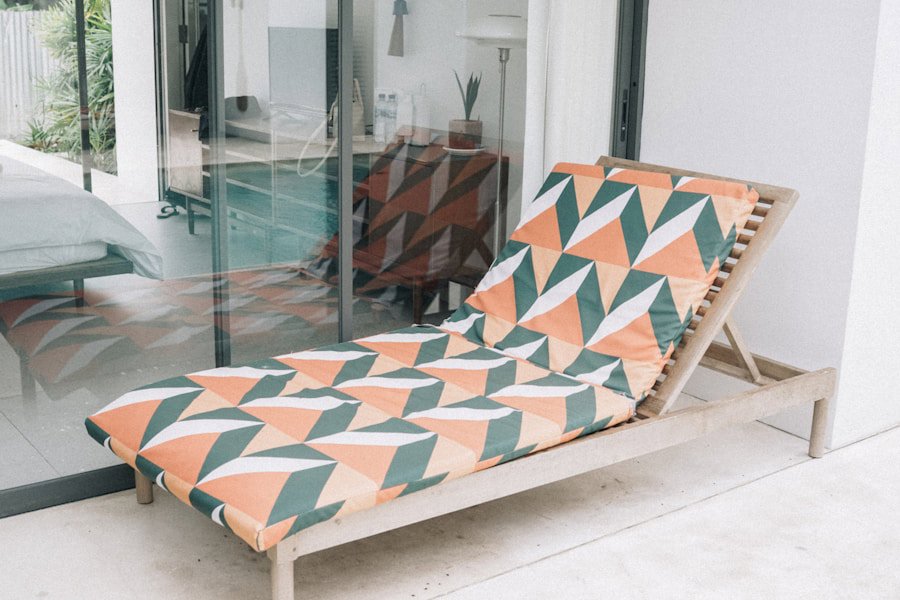
Photo by Asep Rendi on Unsplash
What Are the Best Fabrics for Outdoor Daybeds That Handle Rain?
Solution-dyed acrylic is the most reliable choice for outdoor daybeds that need to handle rain because the color is embedded into each fiber rather than applied to the surface, making it resistant to both moisture and UV fading simultaneously. For quick-dry performance specifically, olefin (polypropylene) is hard to beat since water cannot penetrate the fiber itself and cushions dry in hours rather than days.
Vinyl and faux leather are also excellent in wet conditions since they're fully impermeable surfaces. The trade-off is breathability. On a very hot day, they can feel warm and slightly tacky against bare skin. A practical workaround is using vinyl or faux leather on the back and sides of cushions where rain exposure is highest, and pairing it with a softer, breathable outdoor textile on the seating surface. This layered approach is something professional outdoor furniture designers use regularly because it optimizes for both weather resistance and comfort.
What you want to avoid for daybeds exposed to regular rain are natural fiber blends, including cotton canvas, untreated linen, and jute. Even water-resistant finishes applied to these fabrics eventually wear off with sun exposure, leaving you with a fabric that absorbs and holds moisture. Mold and mildew follow quickly in summer humidity.
What Is the Coolest-Feeling Upholstery Fabric for Hot Summer Outdoor Seating?
Lightweight solution-dyed acrylic weaves in lighter colorways are consistently the coolest-feeling option for outdoor seating in summer heat because they combine high breathability with low heat absorption. Open-weave outdoor textiles allow air to circulate under and through the fabric, which significantly reduces the surface temperature on hot days.
Fabric color plays a measurable role here too. Dark colors absorb more radiant heat from the sun than light colors. A charcoal vinyl cushion can reach surface temperatures well above the ambient air temperature on a sunny afternoon, while a cream or pale grey woven acrylic in the same conditions stays noticeably cooler. If you're reupholstering or buying new cushion covers for outdoor furniture this summer, lean toward lighter neutrals like beige, cream, soft grey, or white for seating surfaces.
Boucle-style outdoor weaves have become genuinely popular in outdoor furniture this season because they combine a tactile, cozy look with reasonable breathability. The looped texture creates small air pockets across the surface, which keeps things from feeling flat and hot the way a tight, dense weave might. Honest opinion: outdoor boucle is one of the most underrated fabric trends happening right now.
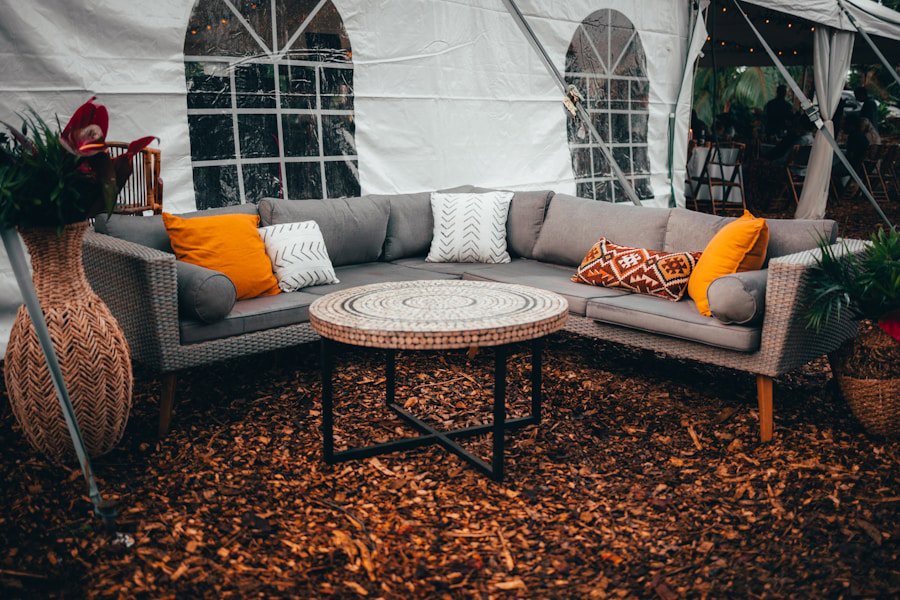
Photo by Zane Persaud on Unsplash
Quick Tips and Troubleshooting
- Mildew already forming on cushions? Mix one cup of bleach with one gallon of water and a small amount of mild dish soap. Scrub with a soft brush, rinse thoroughly, and let the cushion dry fully in the sun. This works on most solution-dyed acrylic fabrics without damaging color. Always test in a hidden spot first.
- Fabric fading after one season? It likely wasn't solution-dyed acrylic or didn't carry a UV inhibitor. This is unfortunately common with budget outdoor fabrics. For your next purchase, ask specifically for the UV test data or look for a product that lists "solution-dyed" in the fiber description.
- Cushions staying wet for days after rain? This usually points to either a non-quick-dry foam insert or an inadequately treated backing fabric. Replace the foam with an open-cell, outdoor-rated foam that drains and dries faster. It makes a bigger difference than most people expect.
- Fabric pilling after a few weeks? Pilling is a sign of fiber abrasion, often from a fabric that wasn't rated for upholstery use. Always confirm you're buying upholstery-weight fabric, not decorative or drapery fabric repurposed for seating.
- Not sure if your fabric is truly outdoor-rated? Ask for the Martindale abrasion test result (similar to the double rub count but uses a circular motion instead of back-and-forth) and the UV rating documentation. A legitimate outdoor fabric supplier will have both on hand.
Frequently Asked Questions
Q: What is the best upholstery fabric for outdoor daybeds?Solution-dyed acrylic is the best upholstery fabric for outdoor daybeds because it resists UV fading, moisture, mold, and mildew. It dries quickly after rain and holds its color through multiple seasons of sun exposure, making it the most durable long-term choice for outdoor lounging furniture.
Q: Can you use indoor upholstery fabric on outdoor furniture?Indoor upholstery fabric is not recommended for outdoor furniture. Most indoor fabrics lack UV protection and will fade within one season. Natural fibers like cotton and linen will also absorb moisture and develop mildew quickly in outdoor summer conditions. Always use fabric specifically rated for outdoor use.
Q: How do I keep outdoor cushion fabric from getting moldy?Choose a quick-drying, mildew-resistant fabric like solution-dyed acrylic or olefin, store cushions under cover or indoors during extended rain, and allow them to dry fully in the sun after getting wet. If mildew does appear, a diluted bleach and water solution with mild soap removes it effectively from most outdoor-rated fabrics.