
If you've got a screened-in deck or a covered gazebo, you already know the struggle. Your space isn't fully outdoors, but it's not exactly a living room either. Regular indoor upholstery fabric can mildew, fade, or warp after one humid summer. But a lot of true outdoor fabrics look, well, like they belong on a pool deck chair. This guide will help you choose upholstery fabrics for screened-in decks and covered gazebos that genuinely hold up to semi-outdoor conditions while still looking sharp enough to impress your guests at a summer dinner party.
Why Screened-In Porches and Covered Gazebos Are a Different Animal
These spaces get indirect sun, humidity, occasional wind-blown moisture, and temperature swings that indoor rooms simply don't experience. A fabric rated for indoor use will typically absorb ambient moisture over time, leading to mildew, odor, and premature fiber breakdown. At the same time, most heavy-duty outdoor fabrics are woven loosely or coated with materials that feel stiff and look industrial up close.
The sweet spot is a category of performance fabrics specifically engineered to handle moisture and UV exposure while maintaining the softness, texture, and visual warmth of indoor upholstery. Solution-dyed acrylic, high-performance polyester, and certain treated woven fabrics all fall into this category. The key is knowing which properties actually matter for your specific setup.
Step-by-Step Instructions
- Assess your actual exposure level. Before you buy a single yard of fabric, spend a few minutes honestly evaluating your space. A fully screened porch with a solid roof sees very little direct sun and almost no rain. A covered gazebo with open sides gets more wind, more humidity, and potentially some blown-in moisture on rainy days. Write down three things: how much direct sun hits your furniture, whether rain can reach the cushions, and how often you use the space. This will tell you exactly how aggressive your fabric choice needs to be.
- Understand the double rub count you actually need. Double rub count measures how many times a fabric can be rubbed back and forth before it shows wear. Think of it like a durability score for friction. For semi-outdoor furniture that gets regular summer use, look for a minimum of 30,000 double rubs. High-traffic pieces like a main sofa or dining seat cushions benefit from 50,000 or more. Many performance upholstery fabrics on the market now reach 100,000 double rubs, which means they'll outlast most of your other furniture decisions.
- Prioritize solution-dyed acrylic or high-performance polyester. Solution-dyed acrylic is widely considered the gold standard for semi-outdoor upholstery. In solution-dyed fibers, the color is built into the fiber itself during manufacturing rather than applied to the surface afterward. This means UV rays can't strip the color away the same way they can with surface-dyed fabrics. High-quality solution-dyed acrylic typically retains its color for 1,000 or more hours of direct UV exposure in standardized testing. For covered gazebos or screened porches where sun exposure is indirect but still present, this matters a lot over a three to five year period.
- Check for mildew and moisture resistance ratings. Humidity is the real enemy in semi-outdoor spaces, especially in summer. Look for fabrics that specify mildew resistance in their product details, not just water resistance. Water-resistant fabrics repel surface moisture, but mildew resistance means the fiber itself won't support mold growth when it stays damp. Solution-dyed acrylics and vinyl-backed polyesters typically offer both. For spaces in humid climates like the Southeast or Pacific Northwest, this single feature will determine whether your cushions smell fine after Labor Day or need to be replaced by October.
- Match your fabric weight to the furniture structure. Fabric weight is measured in ounces per yard. Lighter fabrics (under 10 oz) drape beautifully but can stretch or sag on furniture with wide seat spans. For outdoor-adjacent seating, stick to medium to heavy weights in the 12 to 18 oz range. These hold their shape across cushion spans, resist sagging from repeated sitting, and tend to have tighter weaves that resist moisture penetration more effectively than lighter options.
- Pick a texture that works visually indoors and outdoors. Here's the thing: your screened porch or gazebo is probably visible from your main living area. A fabric that looks completely out of place from inside the house will bother you every day. Woven textures, solid performance fabrics, and subtle jacquard patterns all translate beautifully between indoor and semi-outdoor settings. Chenille, honestly, is criminally underrated for this use case. Many performance chenilles now have solution-dyed cores and tight weave structures that handle humidity surprisingly well while giving your space that cozy, layered look that's all over home decor right now.
- Consider ease of cleaning before you fall in love with a color. Light neutrals look gorgeous in a sun-filled porch, but they will show every sunscreen handprint, coffee drip, and muddy paw mark your summer throws at them. Performance fabrics rated for bleach-cleanability, like solution-dyed acrylics, give you the most flexibility. A fabric you can spot clean with a mild soap-and-water solution is the minimum bar. If you have kids or pets using this space, honestly prioritize cleanability over aesthetics, and then find a color you love within that filter.
- Shop by category to narrow your options efficiently. Once you know your exposure level, durability needs, and preferred aesthetic, use fabric categories to filter your search. At Famcor Fabrics, categories like Woven, Vinyl, Solid, and Modern Textures are great starting points for semi-outdoor spaces. If you want pattern, Stripes and Designer Prints include options that hold up well in performance fabric constructions. Don't overlook the Faux Leather category either, since high-quality faux leather handles moisture, spills, and UV exposure extremely well in covered settings.
- Order samples before committing to yardage. Color on a screen and color in your actual space are genuinely different things. Most fabric decisions people regret come down to skipping the sample step. Order two or three fabric swatches and live with them in the space for a couple of days. Check how they look in morning light, afternoon sun, and under your porch or gazebo lighting at night. Also feel the texture, because a fabric that photographs beautifully can feel stiff or scratchy in person, and you'll be sitting on it all summer.
- Calculate your yardage before you order. Cushion and furniture reupholstery requires more fabric than most people expect, especially with patterned materials that need to be matched at seams. A standard loveseat typically needs 7 to 9 yards. A set of six dining chair pads can use 4 to 6 yards depending on size and construction. When in doubt, add 10 to 15 percent to your estimate to account for cutting errors and future repairs. Running out of fabric mid-project and ordering a second lot can result in a slight dye lot variation that's visible in finished cushions.
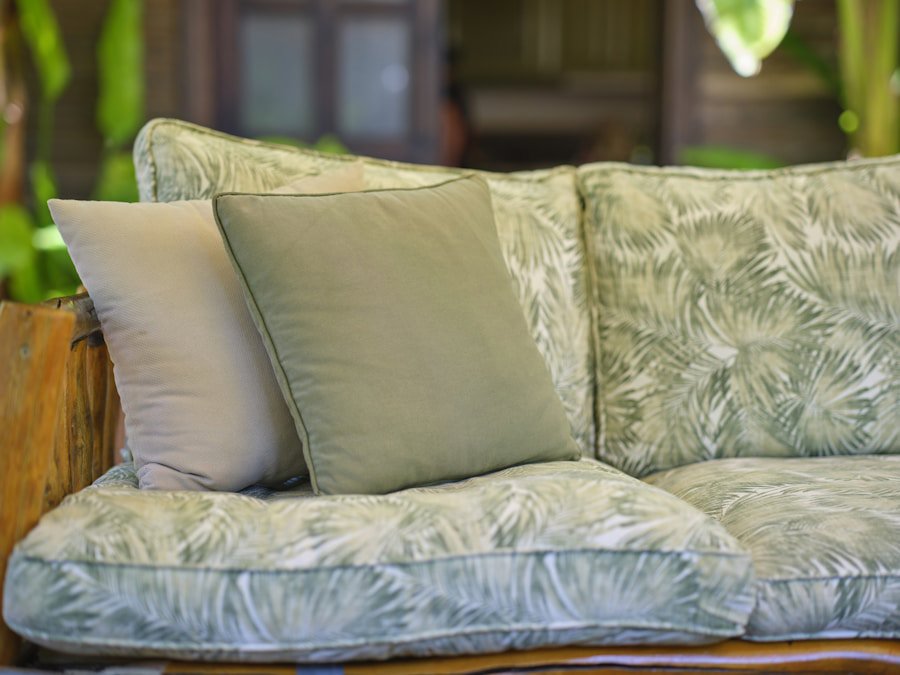
Photo by engin akyurt on Unsplash
What Are the Best Fabric Colors for Covered Outdoor Entertaining Spaces?
Warm neutrals, deep blues, and earthy greens are the strongest choices for covered gazebos and screened porches this summer. These tones are easy to style with natural materials like rattan, teak, and wicker, which are dominating the outdoor furniture trend cycle right now. Deeper saturated colors also tend to hide wear and environmental soiling better than pale options in semi-outdoor settings. If you want to bring in pattern, stripes and botanical prints in performance fabrics give you visual interest without committing to a trend that might feel dated in two seasons.
Which Fabric Types Should You Avoid in Semi-Outdoor Spaces?
Standard cotton, linen, and most natural fiber blends are poor choices for screened porches and covered gazebos without additional treatment. Natural fibers absorb moisture readily, dry slowly, and provide an ideal environment for mildew growth in humid conditions. Velvet, while beautiful indoors, is difficult to dry thoroughly once it gets damp and the pile can mat permanently from moisture exposure. Standard indoor polyester without UV treatment will also fade and weaken faster than you'd expect in a space with even indirect sun. The Martindale abrasion test, which measures fabric durability under simulated use conditions, typically reveals that untreated natural fiber upholstery fabrics fail significantly sooner than performance alternatives in high-humidity environments.
Tips for Getting the Most Out of Your Semi-Outdoor Fabric
- Store cushions inside during extended rain or when the space isn't in use through winter months, even if the fabric is performance-rated. This extends the lifespan significantly.
- Use zippered cushion covers instead of stapled construction wherever possible. You can remove them for washing and replace them if they eventually wear out without replacing the entire cushion form.
- Brush off debris regularly. Dirt and organic matter sitting on fabric surfaces accelerates UV degradation and gives mildew a foothold.
- If you're in a very humid climate, a fabric protector spray applied at the start of each season adds a meaningful extra layer of moisture resistance even on performance fabrics.
- Check the care label for your specific fabric before using any cleaning product. Some performance fabrics are bleach-safe. Others are not, and using the wrong cleaner can strip protective coatings or cause permanent discoloration.
Frequently Asked Questions
Q: What is the best upholstery fabric for a screened-in porch?Solution-dyed acrylic is generally the best upholstery fabric for a screened-in porch. It resists UV fading, mildew, and moisture while offering the softness and visual appeal of indoor upholstery fabric. High-performance polyester with UV treatment is a close second and is often available at a lower price point.
Q: Can I use regular indoor upholstery fabric in a covered gazebo?Standard indoor upholstery fabric is not recommended for covered gazebos. Even in covered semi-outdoor spaces, humidity levels, temperature swings, and indirect UV exposure will cause most indoor fabrics to fade, mildew, or degrade within one to two seasons. Performance fabrics engineered for semi-outdoor use will last significantly longer.
Q: How do I clean upholstery fabric on a screened porch?For most performance upholstery fabrics used on screened porches, a solution of mild dish soap and lukewarm water applied with a soft brush handles the majority of stains. Rinse thoroughly and allow the fabric to air dry completely before replacing cushions. For solution-dyed acrylic fabrics, a diluted bleach solution is safe for tougher mildew stains. Always check the specific care instructions for your fabric before using any cleaning product.