
Picking upholstery fabric for a screened porch or outdoor sunroom is one of those decisions that sounds simple until you're standing in front of a faded, mildew-spotted chair wondering where it all went wrong. The good news is that choosing the right fabric for these spaces isn't complicated once you know what to look for. This guide will walk you through the key properties that matter, the best fabric types for summer living spaces, and how to balance UV protection, moisture resistance, and breathability so your porch furniture still looks sharp when September rolls around.
Step-by-Step Instructions for Choosing Upholstery Fabric for Screened Porches and Sunrooms
- Understand what makes porch and sunroom spaces different. Screened porches and sunrooms sit in a tricky middle ground. They're not fully outdoors, but they're not fully indoors either. That means your fabric faces a combination of challenges that most standard upholstery fabric isn't built to handle: fluctuating humidity, filtered but still significant UV exposure, occasional moisture from rain blowing through screens, and the heat that builds up in a glass-enclosed sunroom on a July afternoon. Standard indoor fabrics like cotton velvet or untreated linen will degrade quickly in these conditions. You need fabric engineered for performance without sacrificing the lived-in comfort that makes a sunroom worth having.
- Prioritize UV resistance above everything else. UV radiation is the number one killer of porch and sunroom upholstery. Even filtered through screens or glass, UV rays break down fiber structure, cause color fading, and weaken fabric over time. The gold standard here is solution-dyed acrylic, a fabric where the color pigment is locked into the fiber during manufacturing rather than applied on top. This means the color can't be bleached out by the sun because it's part of the fiber itself. Solution-dyed acrylic fabrics typically retain their color and structural integrity for 500 to 1,000 hours of direct sun exposure, which translates to multiple seasons of heavy use. If a fabric isn't solution-dyed, UV protection should be your first question before buying.
- Look for moisture resistance and mold inhibition, not just water repellency. There's a difference between a fabric that sheds a quick splash and one that genuinely resists moisture absorption and mold growth. For screened porches especially, you want fabric with a tight weave and either a solution-dyed construction or a performance finish that prevents moisture from penetrating the fibers. Vinyl and faux leather are technically the most moisture-resistant options since they don't absorb water at all, but they get hot and sticky in summer heat, which makes them a tough sell for a space where you actually want to sit and relax. Woven performance fabrics, particularly those with synthetic fiber content, hit a better balance. Look for fabric labeled with a mold and mildew resistance rating, and avoid natural fibers like untreated cotton or linen for cushion fabric in these spaces.
- Don't ignore breathability, especially for sunrooms. Sunrooms can trap heat fast, and fabric that doesn't breathe makes every seat feel like a park bench in August. This is where the choice gets interesting. Vinyl and heavily coated fabrics score well on moisture resistance but poorly on breathability. Woven synthetics, particularly open-weave acrylics and performance polyester blends, let air move through the fabric and feel noticeably cooler against skin. For a sunroom where the primary concern is heat buildup, a lighter-weight woven fabric with some breathability is a smarter pick than a dense vinyl, even if the vinyl technically scores higher on waterproofing.
- Check the double rub count for durability. Double rub count is the industry standard for measuring how much friction a fabric can take before it starts to break down. One "double rub" means the fabric has been rubbed back and forth once in a testing machine. For a screened porch or sunroom with regular family use, kids, or pets, you want a minimum of 30,000 double rubs. High-traffic applications call for 50,000 or more. Performance fabrics designed for outdoor or semi-outdoor use routinely exceed 50,000 double rubs, and some hit 100,000 or higher. This number matters because porch furniture tends to get heavy use in summer, and a fabric that looks great in April can pill and wear thin by July if it's not built for the load.
- Consider your cleaning routine before you commit. Porch furniture collects sunscreen, dirt, bug spray, food, and whatever your dog tracked in from the yard. You want fabric you can wipe down or spot clean without a production. Solution-dyed acrylic and performance polyester blends are typically cleanable with a mild soap and water solution. Some can handle a diluted bleach solution without color loss, which is genuinely useful for mildew stains. Faux leather and vinyl clean up even more easily but come with the heat and breathability tradeoffs mentioned above. Whatever fabric you're considering, look for the cleaning code on the label: W means water-based cleaners are safe, S means solvent-based only, and WS means both work.
- Match the fabric weight to how the space gets used. A heavy boucle or thick chenille might feel luxurious, but in a sunroom that bakes in the afternoon sun, heavy fabric retains heat and takes forever to dry if it gets wet. Lighter-weight performance wovens, around 8 to 12 ounces per yard, are the sweet spot for most porch and sunroom applications. They're durable enough for daily use, dry quickly, and don't turn your chair into a heat trap. Save the heavier textures for indoor-facing pieces in the same space, like a side chair that rarely gets direct light or a throw pillow that's mostly decorative.
- Choose colors strategically for UV and heat management. Darker colors absorb more heat, which matters in a sunroom where temperatures can already climb. Lighter neutrals like cream, beige, and soft grey reflect heat and tend to show less sun damage over time. That said, if you love a deep blue or terracotta tone, solution-dyed fabrics in those colors will hold up far better than conventionally dyed alternatives. The good news for summer 2024 style is that the trending palette for sunrooms and transitional outdoor spaces leans heavily into warm naturals, sandy tones, and soft greens, all of which work beautifully in lighter-weight performance fabrics.
- Test a sample before committing to full yardage. Ordering a sample before buying full yardage is always smart, but it's especially important for porch and sunroom projects. Hold the sample up to sunlight and check how it looks in the actual light conditions of your space. Feel how it breathes. If possible, leave it in the space for a day or two and check it for any moisture it may have absorbed. A fabric that looks ideal on a website can read completely differently in a humid, sun-washed porch environment. Most fabric retailers, including famcorfabrics.com, offer sample swatches, and that small investment can save you a much bigger one.
- Layer with purpose for a pulled-together look. One of the best things about screened porch and sunroom spaces is that they invite a relaxed, layered aesthetic. You don't need every piece upholstered in the same fabric. Consider a performance woven for your main seating cushions, a striped or printed fabric for throw pillows that can be swapped seasonally, and a solid or subtle texture for any stationary pieces like a window seat or banquette. This approach also makes replacing worn pieces easier without having to redo the whole room.
What Is the Best Fabric for a Screened Porch or Sunroom?
Solution-dyed acrylic is widely considered the best upholstery fabric for screened porches and sunrooms because it offers superior UV resistance, moisture resistance, and colorfastness in a single fiber type. For most semi-outdoor living spaces, a solution-dyed acrylic or high-performance polyester blend with a double rub count above 30,000 will outperform virtually any standard indoor upholstery fabric in durability, ease of cleaning, and long-term appearance.
That said, "best" depends on how your space actually functions. A sunroom with climate control and low humidity sits closer to an indoor environment than a screened porch with full air circulation. In a conditioned sunroom, you have more flexibility. A performance linen-look fabric, a tightly woven polyester jacquard, or even a treated faux leather can work well if UV exposure is limited and moisture isn't a regular issue. The key is being honest about your conditions before you fall in love with a fabric that wasn't designed for them.
Vinyl gets overlooked for these spaces, and honestly, it deserves a second look for high-abuse areas like dining chairs or ottomans that see spills constantly. Modern vinyl upholstery fabrics have improved dramatically and don't all carry the cheap, sticky reputation of older versions. For a chair that lives next to the grill or gets constant foot traffic, a quality vinyl can be the most practical choice you make all summer.
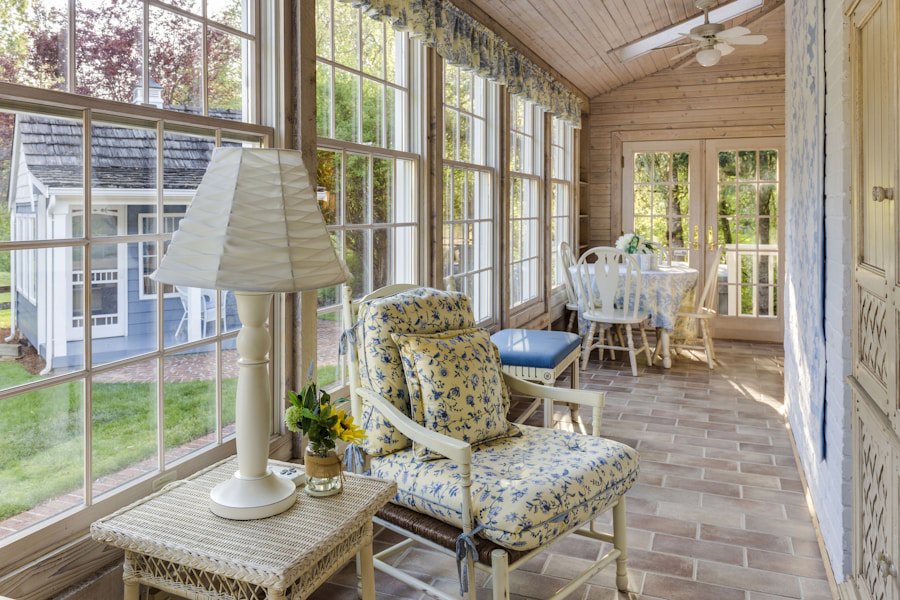
Photo by Francesca Tosolini on Unsplash
Which Fabric Properties Actually Matter for Summer Porch Living?
The three properties that matter most for screened porch and sunroom upholstery fabric are UV resistance, moisture management, and breathability. Every other consideration, including color, texture, and style, is secondary to getting these three right for your specific space.
UV resistance prevents the fading and fiber breakdown that makes outdoor fabrics look old before their time. Solution-dyed construction is the most effective protection available, and any performance fabric marketed for outdoor or semi-outdoor use should clearly state whether the color is solution-dyed or surface-applied. Moisture management covers both water repellency and mold resistance. A fabric can feel dry to the touch but still support mildew growth in humid conditions if its fibers absorb and hold moisture. Look for fabrics tested to ASTM standards for mold and mildew resistance. Breathability affects comfort directly, especially in summer, and is the property most often sacrificed in the name of waterproofing. The fabrics that do all three well tend to be performance wovens with synthetic fiber content, particularly acrylic and polyester blends.
Tips and Troubleshooting
- If your fabric starts to smell musty: This is almost always a mildew issue from trapped moisture. Clean with a diluted white vinegar solution or a fabric-safe mildew cleaner, then let the piece air dry completely in direct sunlight. Going forward, choose a fabric with a tighter weave or explicit mildew-resistant treatment.
- If colors are fading faster than expected: The fabric was likely conventionally dyed rather than solution-dyed. There's no reversing UV damage to surface-applied color, but you can slow further fading by treating the fabric with a UV-protectant spray and keeping the piece out of peak afternoon sun when possible.
- If the fabric feels hot and uncomfortable in summer: Swap heavily coated or vinyl-based fabrics for a lighter-weight woven performance fabric with a more open construction. Small changes in fabric weight make a surprisingly big difference in how a seat feels on a hot afternoon.
- If you're working with an existing piece of furniture: You don't have to reupholster the whole chair. Replacing just the cushion covers with a performance fabric is a cost-effective way to upgrade a piece for porch or sunroom use without a full project.
- If you're not sure which fabric to trust: Ask for a double rub count and a UV exposure rating before buying. Any reputable fabric supplier will have this data available. If they don't, that's a signal worth paying attention to.
Frequently Asked Questions
Q: Can I use regular indoor upholstery fabric on a screened porch?
Regular indoor upholstery fabric is not recommended for screened porches because it lacks the UV resistance and moisture management needed for semi-outdoor conditions. Standard fabrics like cotton, untreated linen, and decorative velvet will fade, absorb moisture, and degrade significantly faster than performance fabrics designed for these environments. For screened porches, choose a solution-dyed acrylic or performance polyester blend with mold and mildew resistance built in.
Q: What is solution-dyed acrylic and why does it matter for porch fabric?
Solution-dyed acrylic is a fabric where the color pigment is added to the fiber during manufacturing, making it part of the fiber itself rather than a surface coating. This means UV rays can't bleach out the color the way they would with conventionally dyed fabrics. Solution-dyed acrylic fabrics typically withstand 500 to 1,000 hours of direct sun exposure without significant color loss, making them the preferred choice for any space with regular UV exposure, including screened porches and sunrooms.
Q: How do I clean upholstery fabric on a screened porch?
Most performance fabrics used for screened porch and sunroom upholstery can be cleaned with a mild soap and warm water solution applied with a soft brush or cloth. For mildew stains, a diluted bleach solution (typically one cup of bleach per gallon of water) is safe for solution-dyed fabrics and won't affect color. Always check the cleaning code on the fabric label first. W means water-based cleaners are safe, S means use solvent-based cleaners only, and WS means both are acceptable. Rinse thoroughly and allow fabric to air dry completely to prevent mold growth.