
If you've got a covered patio, a lanai, or a Florida room, you already know the struggle. It's not quite outside. It's not quite inside. And the furniture fabric you pick has to survive both worlds without looking beat up, faded, or vaguely damp. The good news is that choosing the right upholstery fabric for transitional indoor-outdoor spaces doesn't require a degree in textile science. It just requires knowing what to look for and what to skip. This guide gives you exactly that.
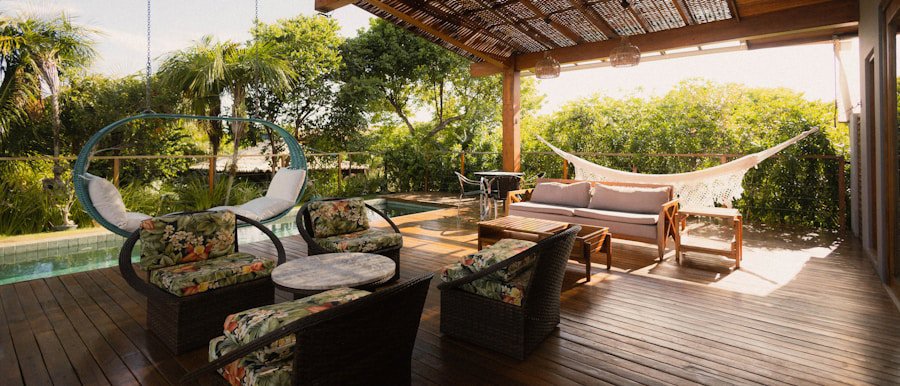
Photo by Alef Morais on Unsplash
Step-by-Step Instructions: How to Choose the Right Fabric for Your Transitional Space
- Assess how exposed your space actually is. Before you pick a single swatch, stand in your space on a bright afternoon. Is direct sunlight hitting the furniture for more than a couple of hours a day? Is the air humid, salty, or prone to rain blowing in? A fully enclosed Florida room with glass panels behaves almost like an interior room. A screened lanai with a roof but open sides is a very different situation. Your answer changes everything about which fabric makes sense.
- Prioritize solution-dyed fibers if any sun exposure is involved. Solution-dyed acrylic is the gold standard for transitional spaces, and here's why it matters: the color is baked into the fiber itself during manufacturing, not applied to the surface afterward. That means UV rays have nothing to fade. Standard printed or surface-dyed fabrics can lose color noticeably within a single summer season in bright conditions. Solution-dyed acrylic fabrics, by contrast, are rated to resist fading for 500 to 2,000 hours of direct UV exposure depending on the specific product. If your space gets real sun, this isn't optional.
- Check the double rub count for durability. Double rub count is the industry's way of measuring how well a fabric holds up to friction. One "double rub" simulates someone sitting down and standing up once. For a family room or living space, 15,000 double rubs is generally the minimum you'd want. For a transitional space that sees heavy use or has kids and pets in the mix, aim for 30,000 or higher. Many performance fabrics designed for indoor-outdoor use come rated at 50,000 double rubs or more, which means they're genuinely built to last.
- Choose fabrics with built-in moisture and mold resistance. Humidity is the silent fabric killer in transitional spaces, especially in the South and Southeast during summer. Natural fibers like untreated cotton or linen absorb moisture, which creates the perfect conditions for mildew. Synthetic performance fabrics, especially those made from solution-dyed acrylic or high-density polyester, don't absorb water the same way. Many are also treated with antimicrobial finishes that prevent mold and mildew from taking hold. If you live anywhere that gets humid summers, this is a non-negotiable.
- Think about texture and how it reads indoors. Here's where a lot of people trip up. They pick a fabric that performs beautifully outdoors but looks obviously "patio-ish" the moment they bring a chair inside. The trick is choosing textures and weaves that have genuine interior appeal. Woven fabrics with a subtle texture, boucle-inspired performance weaves, and even some solid-colored solution-dyed acrylics can look completely at home in a living room. Avoid fabrics with very loud tropical prints or plasticky surfaces if you want flexibility. Neutral tones in grey, cream, beige, and warm brown tend to transition most naturally.
- Verify the fabric is cleanable the way your life actually requires. Performance fabrics for transitional spaces should be easy to clean, but "easy" means different things depending on who's in your house. Most high-quality indoor-outdoor fabrics can be spot cleaned with mild soap and water. Some are bleach-cleanable, which is genuinely useful for white or cream fabrics. If you have dogs or kids, look specifically for fabrics with a tight weave that doesn't trap pet hair and a surface that wipes down without soaking up stains. A fabric that performs outdoors but requires dry cleaning defeats the entire purpose.
- Consider weight and how it handles structure. Lighter-weight fabrics can work beautifully as decorative accents or for cushion covers in low-traffic situations. But for furniture that's getting sat on daily, you want something with enough body to hold its shape. Heavier woven performance fabrics and upholstery-weight vinyls are both strong choices for seats and backs. Lighter options work fine for throw pillows or accent pieces where structure matters less.
- Match the color to your indoor palette first, outdoor palette second. If this furniture is ever going to live inside, even occasionally, it needs to look like it belongs there. Pull from your existing interior color story first. Soft greens, warm neutrals, earthy terracotta tones, and classic blue-grey combinations are all having a strong moment in home decor right now and work beautifully in transitional spaces. The outdoor context should influence your durability choices, not necessarily your color choices. A fabric that looks stunning in your living room and also survives the patio? That's the actual goal.
- Sample before you commit. This one sounds obvious, but it's skipped more often than you'd think. Order swatches. Hold them up in your space at different times of day. Put them near your existing furniture. Check how they feel, because some performance fabrics have a slightly stiffer hand than traditional upholstery fabrics. Most high-quality performance weaves have improved significantly in softness over the last several years, but there's still variation. A $5 swatch can save you from a $500 mistake.
- Think long-term about reupholstering versus buying fabric-covered furniture. If you're reupholstering existing pieces, you have full control over fabric selection and you can make exactly the right call for your space. If you're buying new furniture, check what fabric it comes in and whether the manufacturer used genuine performance fabric or a decorative fabric with a light protective coating. Coatings wear off. Built-in fiber performance doesn't. Buying the right fabric upfront, or reupholstering with it, is almost always the better long-term investment.

Photo by Erick Perez on Unsplash
What Is the Best Fabric for a Covered Patio or Florida Room?
Solution-dyed acrylic is the most reliable choice for covered patios, lanais, and Florida rooms because it combines UV resistance, moisture resistance, and interior-quality appearance in a single fiber. For spaces that are more enclosed and protected, high-performance woven polyester and certain vinyl upholstery fabrics are also excellent options that offer durability without sacrificing style.
The key distinction that separates genuinely good transitional fabric from fabric that just looks okay is whether the performance properties are built into the fiber or added as a surface treatment. Surface treatments, including many Scotchgard-style coatings applied to standard decorative fabrics, provide some protection but degrade over time with UV exposure, washing, and friction. Solution-dyed acrylic doesn't degrade the same way because the color and UV stability are intrinsic to the fiber itself.
Honestly, woven performance fabrics get overlooked way too often in this category. Homeowners sometimes assume that if something performs well outdoors it has to look industrial or basic. That's just not true anymore. Today's performance weaves include textures that rival traditional upholstery fabrics in visual richness, and many are soft enough to pass the "is this really outdoor fabric?" test easily.
Which Fabric Textures Work in Both Indoor and Outdoor Transitional Spaces?
Solid-colored performance weaves, subtle textured patterns, and woven stripes tend to transition most naturally between indoor and outdoor contexts because they don't read as exclusively "patio furniture" or exclusively "living room."
Here's the thing: the texture of a fabric communicates a lot about where it belongs. Slick vinyl and heavy canvas both read as "outdoor" to most eyes. Velvet and silk read as "strictly indoor." The sweet spot for transitional spaces is somewhere in the middle, and there are more options there than most people realize.
Woven fabrics with a slight texture, think a subtle horizontal weave or a low-key geometric pattern, work beautifully in both settings. Solid fabrics in linen-look or canvas-weight polyester are another strong choice. Stripes, especially in tonal or muted colorways, have serious interior credibility and also happen to be perennially popular in outdoor settings. Performance chenille, which exists and is genuinely great, brings a softness and interior appeal that's hard to beat for a Florida room or enclosed lanai.
Colors to reach for this summer: warm whites, soft sage green, sandy beige, dusty terracotta, and muted navy. These all photograph well, age gracefully, and coordinate with the kinds of natural material accents (rattan, wood, stone) that are everywhere in transitional space design right now.
Tips and Troubleshooting
- If your fabric feels stiff after purchase, give it time. Performance fabrics often soften slightly with use and washing. You can also try laying the fabric flat and running a warm (not hot) iron over it through a press cloth to relax the fibers before upholstering.
- If you're worried about mildew on existing fabric, a diluted white vinegar spray (one part vinegar to three parts water) is a gentle first-line treatment. For persistent mildew on bleach-safe fabrics, a diluted bleach solution works well, but always test a hidden area first.
- If your fabric fades unevenly, it's almost always because some areas are getting direct sun exposure while others aren't. Rotating cushions regularly and using UV-blocking window film or exterior shades can extend the life of even standard performance fabrics significantly.
- If you can't decide between two fabrics, go with the one that looks better inside. You can always add outdoor protection through shade and furniture covers. You can't make an awkward fabric look at home in your living room.
- If you're shopping on a budget, prioritize the seat fabric over the back or sides. That's where the most friction, moisture, and sun exposure happens, and it's where fabric quality makes the biggest visible difference over time.
Frequently Asked Questions
Q: Can I use regular upholstery fabric on a covered patio or screened lanai?You can, but it's not a great idea for anything but the most protected and dry enclosed spaces. Regular upholstery fabrics aren't engineered for UV exposure or humidity, which means they'll fade, weaken, and potentially mildew faster than a performance fabric would. For a fully enclosed Florida room with good climate control, you have more flexibility. For anything with real air circulation or any indirect sun, choose a fabric with built-in UV and moisture resistance.
Q: What double rub count do I need for transitional indoor-outdoor furniture?For transitional spaces with regular daily use, look for a minimum of 30,000 double rubs. A double rub count measures how many times a fabric can be rubbed back and forth before showing wear, so higher numbers mean longer life. Many performance fabrics designed for indoor-outdoor use are rated at 50,000 double rubs or more, which is genuinely suitable for high-traffic household use including kids and pets.
Q: What's the easiest upholstery fabric to clean in a humid transitional space?Solution-dyed acrylic and high-performance polyester fabrics are the easiest to clean in humid environments because they resist moisture absorption and don't provide the conditions mildew needs to grow. Most can be cleaned with mild soap and water, and many are bleach-safe for tougher stains. Avoid natural fibers like untreated cotton or linen in humid transitional spaces, as they absorb moisture and are significantly harder to keep clean and mildew-free.