
Summer brings a lot of good things: longer days, backyard cookouts, and the urge to finally refresh that tired patio furniture. But summer also brings humidity, and if your upholstered pieces live in a covered outdoor space, a screened porch, a sunroom, or even a basement storage area, you already know what humidity can do. Choosing upholstery fabrics that resist mildew and mold growth isn't just a nice-to-have for these environments. It's the whole game. The wrong fabric in a humid space can start showing mold growth within days of consistent moisture exposure, and once it's set in, it's very hard to fully reverse.
The good news is that the right fabric choice upfront will save you a lot of grief. Some materials are naturally inhospitable to mold and mildew. Others are treated to resist it. And a few popular choices, while beautiful indoors, really don't belong anywhere near a damp environment. Here's how to sort through all of it.
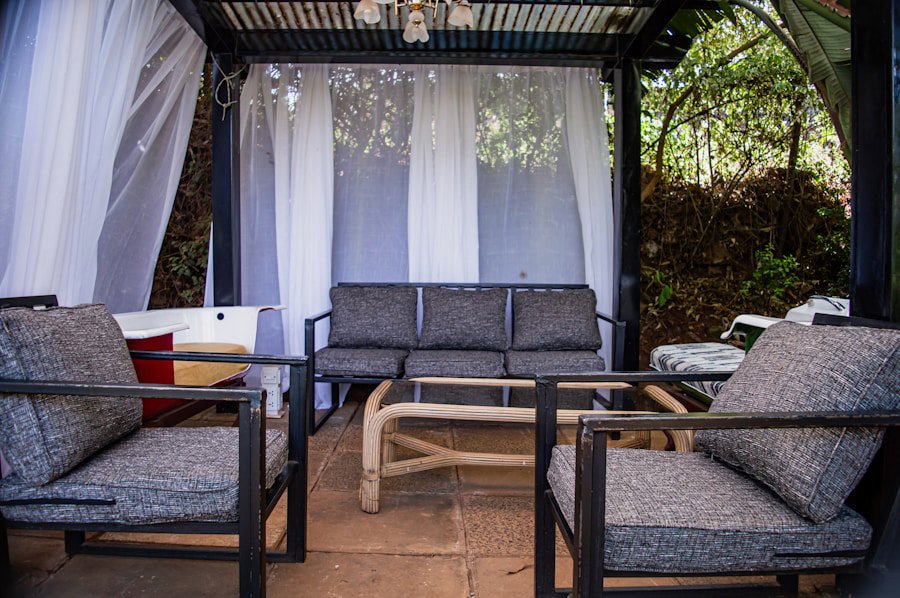
Photo by imsogabriel stock on Unsplash
Why Humidity Causes Mold and Mildew to Grow on Upholstery
Mold and mildew are fungi, and they need three things to grow: moisture, warmth, and an organic food source. Natural fibers like cotton, linen, and untreated wool are organic materials, which means they literally feed mold growth when they stay damp. Covered outdoor spaces and poorly ventilated storage areas are exactly the kind of environments where moisture gets trapped against fabric surfaces for hours or days at a time. That combination is what causes the musty smell, the dark spotting, and eventually the structural breakdown of the fabric itself.
Synthetic fibers don't offer that organic food source, which is why they perform so much better in humid conditions. A fabric like solution-dyed acrylic, where the color is baked into the fiber itself rather than applied to the surface, resists not just mildew but also fading, UV damage, and staining. That's why performance outdoor fabrics built on solution-dyed acrylic technology are widely considered the gold standard for humid and semi-outdoor environments.
What Are the Best Upholstery Fabrics for Humid and Mold-Prone Spaces?
The best upholstery fabrics for humid, mold-prone spaces are synthetic or coated materials that don't absorb moisture and don't provide organic material for mold to feed on. Vinyl, faux leather, and solution-dyed synthetic weaves are consistently the strongest performers in these conditions.
Here's a practical breakdown of your best options:
- Vinyl: Vinyl is essentially waterproof. It doesn't absorb moisture at all, which means mold has nothing to grip onto. It's easy to wipe clean with a damp cloth and mild soap, and it holds up well to heat and humidity. Modern vinyl upholstery fabric has come a long way from the sticky, crinkly stuff of the 1970s. Textured vinyl options now mimic leather convincingly and come in a wide range of colors. For a storage area or a covered porch that gets real weather exposure, vinyl is honestly one of the most practical choices you can make.
- Faux Leather: Similar to vinyl in its moisture resistance, faux leather (also called PU leather or polyurethane leather) has a soft, supple feel with a non-porous surface that mold can't penetrate. It's a great choice if you want the look of leather without the maintenance demands or the price tag. It cleans up easily and holds its shape well in warmer conditions.
- Solution-Dyed Acrylic Weaves: These are the fabrics used in high-end outdoor furniture and marine upholstery for a reason. The fibers are synthetic, the dye is locked into the fiber at the molecular level, and the resulting fabric resists mildew, UV fading, and moisture absorption simultaneously. If you're reupholstering a piece that will live on a covered porch or in a sunroom, a tightly woven solution-dyed acrylic fabric is worth every penny.
- Polyester-Based Wovens: Tightly woven polyester upholstery fabrics with a moisture-resistant finish resist mildew reasonably well. They're not as bulletproof as vinyl or solution-dyed acrylic, but they perform much better than natural fibers in humid conditions, and they tend to be more affordable.
Which Fabrics Should You Avoid in Humid Storage Areas?
Natural fiber fabrics, while genuinely beautiful in dry indoor settings, are the worst performers in humid conditions. Cotton, linen, untreated wool, and natural-fiber chenille should all be kept away from spaces where moisture is a regular factor.
- Cotton and Linen: Both are highly absorbent natural fibers. They hold moisture against the surface and deep into the weave, creating ideal mold conditions within 24 to 48 hours of sustained humidity. They're wonderful for dry living rooms, but they're not suited for covered porches, damp garages, or basement storage.
- Natural Chenille: Chenille has a beautiful texture and is extremely comfortable, but its looped pile construction holds moisture like a sponge. In a humid space, untreated chenille can develop a musty odor within days. Chenille with a synthetic fiber content performs better, but it still shouldn't be your first choice for high-humidity environments.
- Velvet: Velvet gets a bad rap for being delicate, and in this case, the reputation is mostly earned. The dense pile traps moisture and takes a long time to dry out, making it genuinely risky in humid conditions. Keep velvet indoors where it can be properly climate-controlled and appreciated.
- Untreated Jacquard and Brocade Weaves: These are typically woven with natural or blended fibers and have complex weave structures that trap moisture. Unless specifically treated for moisture resistance, they belong inside.
Photo by The New York Public Library on Unsplash
How to Evaluate Fabric Durability Before You Buy
Two industry measurements are worth knowing when you're shopping for upholstery fabric: the double rub count and the Martindale abrasion test score. A double rub count measures how many times a fabric can be rubbed back and forth before it shows wear. One "double rub" is one back-and-forth motion. For furniture that gets regular use, you want at least 15,000 double rubs. For heavy-use pieces, aim for 30,000 or higher. Commercial-grade fabrics typically start at 100,000 double rubs.
The Martindale abrasion test is the European equivalent, measuring wear cycles in a figure-eight pattern. A score of 20,000 Martindale cycles is considered suitable for general domestic use. High-performance vinyl and faux leather fabrics often exceed 100,000 Martindale cycles, which is one reason they're the go-to for humid, high-traffic settings.
For mold resistance specifically, look for fabrics labeled with terms like "mildew resistant," "moisture resistant," or "performance fabric." Some manufacturers treat synthetic fabrics with antimicrobial finishes that add an extra layer of protection. These treatments don't replace good ventilation and cleaning habits, but they give you a meaningful head start.
Practical Tips for Storing Upholstered Pieces in Summer
Even the most mildew-resistant fabric benefits from a little care. Here's what actually works:
- Ventilate the space. Trapped, stagnant air accelerates moisture buildup. If you're storing upholstered pieces in a garage, basement, or covered porch, make sure there's some airflow. A small fan running periodically can make a real difference.
- Use breathable covers, not plastic. Plastic covers trap moisture against the fabric surface, which is exactly what you don't want. Breathable fabric storage covers allow air circulation while keeping dust and debris off.
- Clean before storing. Any organic residue, food crumbs, body oils, or pet dander left on the fabric gives mold a food source. Wipe down and fully dry fabric pieces before putting them into storage.
- Consider a moisture absorber. Products like silica gel packets or room-sized desiccant bags placed near stored furniture can significantly reduce ambient humidity in an enclosed space.
- Dry thoroughly after rain exposure. If a covered porch piece gets hit by wind-driven rain, don't leave it damp. Blot the moisture out and let it air dry fully before covering or leaving it overnight.
What Colors and Styles Work Well in Outdoor and Semi-Outdoor Settings
Choosing a mildew-resistant fabric doesn't mean sacrificing style. Modern performance fabrics, especially vinyl and solution-dyed synthetics, come in a wide range of colors and patterns. Neutrals like beige, grey, and cream are perennially popular for covered porches and sunrooms because they read as clean and airy. Deep tones like navy blue, forest green, and charcoal hide wear well and translate beautifully into summer outdoor settings.
Stripe patterns in synthetic fabrics are a classic choice for covered porch and patio furniture, and they've had a real moment in interior design over the past couple of years as people started treating their outdoor rooms with the same intention as their indoor spaces. Solid, single-color fabrics in performance materials are also easy to style with pillows and accessories, and they tend to look clean and intentional rather than busy.
If you want something with a little more personality, there are designer-print performance fabrics that mimic the look of traditional indoor upholstery with the durability specs you need for humid environments. The fabric world has caught up with what homeowners actually want: beautiful AND practical.
Frequently Asked Questions
Q: What is the most mildew-resistant upholstery fabric for outdoor and humid spaces?Vinyl and faux leather are the most mildew-resistant upholstery fabrics because they have non-porous surfaces that don't absorb moisture and don't provide organic material for mold to feed on. Solution-dyed acrylic woven fabrics are also excellent, offering mildew resistance alongside UV stability and color fastness for covered outdoor and semi-outdoor environments.
Q: Can I use regular indoor upholstery fabric on a covered porch?Regular indoor upholstery fabrics made from natural fibers like cotton, linen, or untreated chenille are not suitable for covered porches or any space with regular humidity exposure. These fabrics absorb moisture and can develop mold or mildew within 24 to 48 hours of sustained dampness. Choose a performance synthetic fabric specifically rated for moisture resistance if the piece will live in a semi-outdoor setting.
Q: How do I remove mildew from upholstery fabric?For mildew on synthetic or performance fabrics, brush off any dry mold spores outdoors first, then clean the surface with a solution of mild dish soap and water, or a mixture of one cup white vinegar per gallon of water. Rinse and allow the piece to dry completely in the sun if possible. On natural fiber fabrics, mildew penetrates the fibers and is much harder to fully remove. If mildew has spread significantly into a natural fiber fabric, replacement is often more practical than remediation.