
Summer entertaining is one of life's genuine pleasures, right up until someone sits down on your cream linen sofa in a wet swimsuit with sunscreen still on their arms. If you're getting ready for backyard cookouts, pool days, and long afternoons with the kids, this guide will help you choose upholstery fabrics that actually hold up. We're talking about fabrics that resist sweat stains, shed sunscreen residue without a full cleaning operation, and still look sharp in your living room or on your patio furniture. No white-glove treatment required.
Step-by-Step Instructions: Choosing Summer-Ready Upholstery Fabrics
- Understand what "summer mess" actually does to fabric. Before you pick anything, get clear on the enemy. Sweat contains salt and body oils that break down fiber over time, especially in woven or loosely structured fabrics. Sunscreen, particularly spray formulas, leaves oily residue that attracts dirt and can cause yellowing on light-colored fabrics. Add in grass stains, food spills, and wet kids climbing on everything, and you need a fabric with a real defense strategy, not just good looks.
- Prioritize solution-dyed fibers for color that won't fade or stain. Solution-dyed acrylic is one of the most practical fabrics for summer use. In solution-dyed construction, the color is added to the fiber before it's spun, so it's locked in at the molecular level. This makes it significantly more resistant to fading from UV exposure and easier to clean with mild bleach solutions without damaging the color. Many outdoor performance fabrics like Sunbrella are solution-dyed acrylics, and they're rated to resist mold, mildew, and staining under real-world conditions. If your furniture lives near a door to the backyard or gets strong afternoon sun, solution-dyed acrylic should be near the top of your list.
- Check the double rub count before you buy anything. The double rub count is a fabric durability rating based on the Wyzenbeek abrasion test. One "double rub" simulates the friction of someone sitting down and standing up. A fabric rated at 15,000 double rubs is considered suitable for light residential use. For a family with kids and pets who use the furniture daily through an active summer, look for fabrics rated at 30,000 double rubs or higher. Performance fabrics and high-quality vinyls often exceed 100,000 double rubs, which is why they show up so often in commercial settings and family homes alike.
- Seriously consider vinyl or faux leather for the highest-mess zones. Vinyl and faux leather get dismissed as "cheap" options, but honestly, that reputation is outdated. Modern faux leather upholstery fabric has come a long way in texture, softness, and appearance. More importantly, it's completely non-porous. Sunscreen wipes off. Sweat doesn't soak in. Spills sit on the surface until you wipe them away. For dining chairs, bench seats, or any piece of furniture that sees heavy backyard traffic, faux leather or vinyl is genuinely one of the smartest choices you can make. Just make sure there's good airflow in the room, because vinyl can get sticky in high heat if air circulation is poor.
- Look at performance chenille and performance velvet if you want texture without sacrifice. Velvet gets a bad rap as precious and high-maintenance. And regular velvet, sure, treat it carefully. But performance velvet, which is typically made with a tightly woven synthetic backing and treated with a stain-resistant finish, is a different story. Same goes for chenille. Honestly, chenille is criminally underrated for family homes. It's soft, it hides minor texture variation from everyday use, and performance versions clean up well with a damp cloth. Look for chenille or velvet labeled as "performance" or "contract grade" and confirm it has a stain-resistant treatment applied.
- Avoid fabrics that trap heat or absorb moisture quickly. Some fabrics feel great in fall but become genuinely uncomfortable in summer heat. Heavily textured wovens and thick boucle, for example, can trap body heat and hold sweat longer than tightly woven or smooth-finish fabrics. Untreated cotton and natural linen absorb moisture fast, which means sweat and sunscreen soak right in. That doesn't mean you can't use these fabrics in summer, but if you're making a new purchase specifically for summer entertaining, keep comfort and moisture management in mind alongside looks.
- Match the fabric finish to how the piece will actually be used. A sofa that gets light use in a formal living room can handle more delicate fabric than the bench by your back door where everyone drops onto it after a game of cornhole. Be honest with yourself about the use case. High-traffic pieces need performance fabric, stain resistance, and a higher double rub count. Lower-traffic accent pieces have more flexibility. A decorative throw pillow in a linen blend looks beautiful and isn't asked to withstand much. The piece that everyone piles onto at the end of a long summer day is a different conversation entirely.
- Think about color strategy, not just fabric type. Light colors like cream and white show every smudge. Very dark colors like black and deep navy show sunscreen residue as a white-ish film. Mid-tones and multi-colored or patterned fabrics are genuinely more forgiving in high-mess situations. A blue and grey geometric pattern will hide a lot of what a solid cream fabric would put on full display. If you love light colors, lean into fabrics with built-in stain resistance and commit to a consistent spot-cleaning routine.
- Confirm the cleaning method before purchase, not after. Every upholstery fabric comes with a care code. "W" means water-based cleaning is safe. "S" means solvent-based only. "WS" means either works. "X" means vacuum only, no liquid cleaning at all. For summer use with kids and active entertaining, you want a fabric with a "W" or "WS" code at minimum. Fabrics coded "X" are beautiful in the right setting, but they're not the right call for a house where someone is going to track in sunscreen and grass clippings every other day.
- Test before you commit with fabric swatches. Most upholstery fabric retailers, including famcorfabrics.com, offer swatches before you commit to yardage. Order swatches of your top choices, then actually test them. Smear a small amount of sunscreen on a corner and let it sit for 30 minutes. Blot it with a damp cloth. See what happens. Check how the fabric feels in the actual room where it will live. A swatch test takes ten minutes and can save you from a very expensive regret.
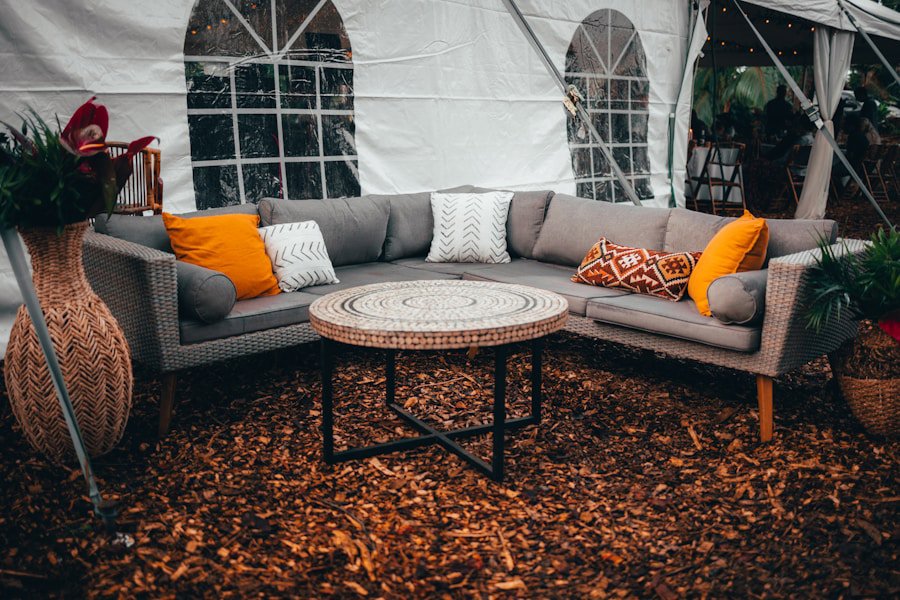
Photo by Zane Persaud on Unsplash
What Is the Most Durable Upholstery Fabric for Summer Family Use?
For summer family use, solution-dyed acrylic and high-quality vinyl or faux leather are the most durable upholstery fabric options available. Solution-dyed acrylic resists UV fading, mold, mildew, and most liquid stains, and can often be cleaned with diluted bleach without color damage. Vinyl and faux leather are non-porous, meaning nothing soaks in, which makes them ideal for any surface that regularly encounters sunscreen, sweat, or spilled drinks.
Performance-grade wovens and synthetic chenilles come in close behind those two. A performance chenille rated at 50,000 or more double rubs with a factory-applied stain-resistant finish will hold up through a full summer of regular family use with minimal fuss. The key is the "performance" designation, which signals that the fabric has been engineered for real-world use rather than showroom display.
Which Fabrics Should You Avoid for Summer Outdoor Entertaining?
Untreated natural linen, raw cotton, and standard velvet are the fabrics most likely to struggle with summer entertaining conditions. Untreated natural linen absorbs moisture quickly and can show sweat and sunscreen stains persistently. Raw cotton has similar limitations and is prone to shrinking if cleaned aggressively.
Standard velvet, while gorgeous, has a pile that can mat under the kind of repeated, energetic use that comes with summer gatherings. Once velvet pile mats unevenly, it's difficult to restore without professional help. Loosely woven decorative fabrics, including some boucle styles, can also snag on jewelry, rough clothing, or the general chaos of kids in motion. Save those for rooms that see lighter use and lower foot traffic.
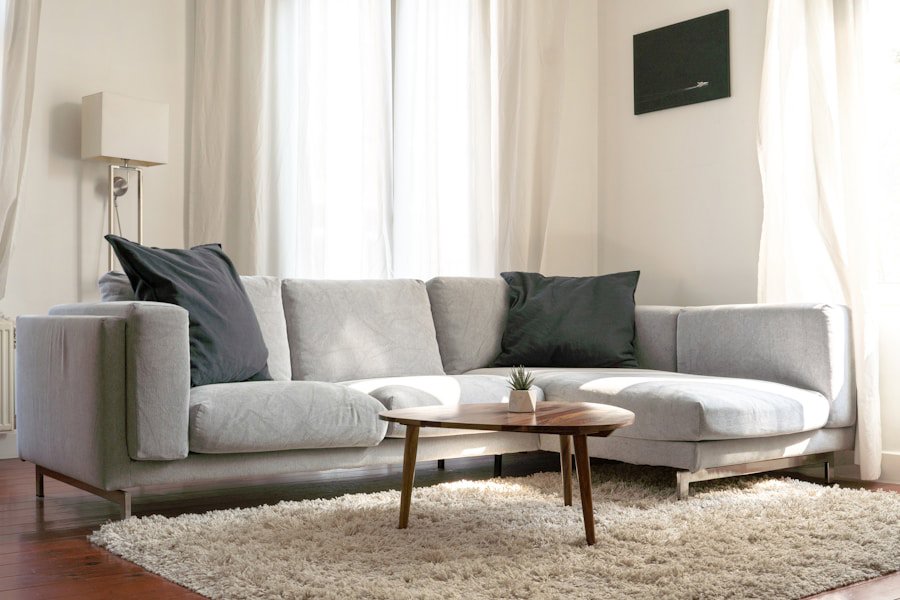
Photo by Michiel Annaert on Unsplash
Quick Tips for Keeping Summer Fabrics Fresh
- Blot, don't scrub. Scrubbing pushes stains deeper into the fiber. Blotting lifts them out. This applies to sunscreen, food, and anything else that lands on upholstery this summer.
- Deal with sunscreen fast. Sunscreen stains set quickly, especially in heat. Blot off excess, then treat with a small amount of dish soap diluted in water, using a clean white cloth. Rinse by blotting with plain water.
- Use slipcovers strategically. If you have a beloved piece that isn't performance-grade, a well-fitted slipcover in a washable fabric buys it real protection through the summer months without a full reupholstery project.
- Rotate cushions regularly. Even the most durable fabric wears unevenly if one spot takes all the traffic. Rotating cushions every few weeks extends the life of the fabric and keeps the piece looking more even.
- Keep a spot-cleaning kit close. A small container with a clean white cloth, a mild upholstery cleaner rated for your fabric type, and a spray bottle of plain water handles 90% of summer messes in under five minutes. Having it handy means you actually use it before a stain sets.
Frequently Asked Questions
Q: Can sunscreen permanently stain upholstery fabric?Yes, sunscreen can permanently stain certain upholstery fabrics if left untreated, especially light-colored or untreated natural fiber fabrics like linen and cotton. The oily components in sunscreen bond with fabric fibers and can cause yellowing over time. Acting quickly with a blotting technique and mild dish soap solution removes most sunscreen residue before it sets. For best results, choose fabrics with a built-in stain-resistant finish or a "W" or "WS" cleaning code if your furniture sees regular sunscreen exposure.
Q: What upholstery fabric is easiest to clean for families with kids?Vinyl, faux leather, and solution-dyed acrylic are the easiest upholstery fabrics to clean for families with kids. Vinyl and faux leather are non-porous, so spills and residue sit on the surface and wipe away with a damp cloth. Solution-dyed acrylic resists staining at the fiber level and can handle mild bleach cleaning without losing color. Performance synthetic fabrics like performance chenille or performance velvet with factory stain treatments are also strong options that combine easy cleaning with a softer, more traditional upholstered look.
Q: How do I know if an upholstery fabric will hold up to heavy summer use?Check the double rub count and the care code before purchasing. A double rub count of 30,000 or higher is suitable for heavy residential use, and counts above 50,000 are ideal for high-traffic family furniture. The care code tells you how the fabric can be cleaned: "W" means water-based cleaning is safe, and "WS" means water or solvent-based cleaners both work. Fabrics with a stain-resistant treatment, a tight weave, and a synthetic or performance fiber content are the most reliable choices for summer entertaining and everyday family life.