
Layering upholstery fabrics across a spring room is one of the best ways to give your space personality without a full renovation. The trick is knowing which fabrics play nicely together, and which combinations will make your room look like it's having an identity crisis. This guide walks you through the specific pairings, the design logic behind them, and exactly how to build a room that feels collected and intentional, not cluttered.
Why Mixing Upholstery Fabrics Works Better Than Matching Everything
A single fabric repeated across every piece of furniture tends to flatten a room. Texture is what gives a space depth. When light hits a smooth linen sofa differently than it hits a nubby boucle accent chair, your eye moves around the room naturally, and that movement is what makes a space feel alive rather than staged.
Spring is a particularly good time to think about this. After months of heavy wool throws and dark velvets, lighter fabrics like linen, cotton, and woven blends feel genuinely refreshing. Layering them with a single textural anchor, say a boucle chair or a chenille ottoman, keeps the room from feeling too thin or summery too soon.
The core principle here: vary texture, control color. If your textures are doing different things, your colors need to hold the room together. Pick two to three colors and let the fabrics interpret them in their own way.
Step-by-Step Instructions
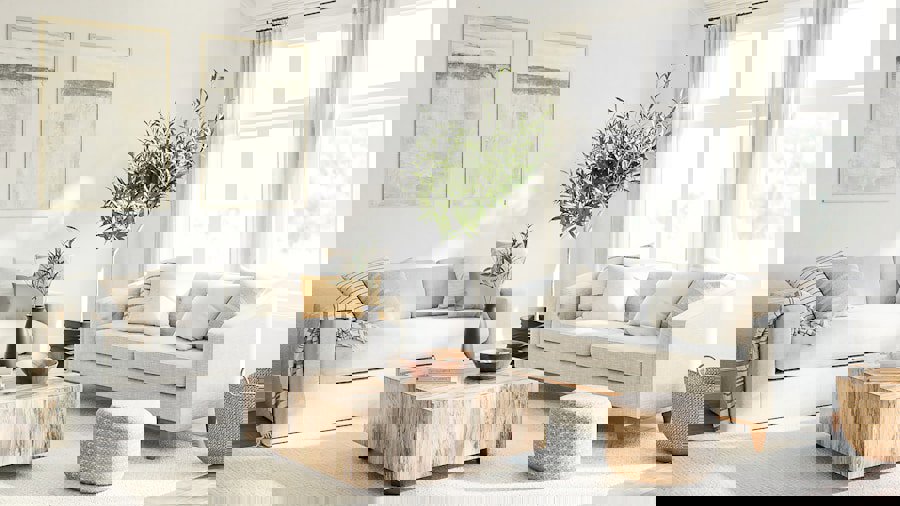
- Start with your largest upholstered piece and choose its fabric first. Your sofa is doing the heaviest lifting in the room, so it sets the tone for everything else. For a spring refresh, linen and woven fabrics are strong starting points. Linen has a natural breathability and a relaxed texture that reads as fresh without being fussy. A solid or subtly textured linen in a neutral like cream, warm beige, or soft grey gives you the most flexibility to layer on top of it.
- Choose a contrasting texture for your second-largest upholstered piece. If your sofa is smooth or woven, your accent chair should be something with more dimension. Boucle is having a real moment right now, and honestly, it earns it. The looped yarn construction creates a soft, tactile surface that photographs beautifully and adds warmth without adding visual weight. A cream or oatmeal boucle chair next to a linen sofa is one of those combinations that just works. The textures are clearly different, but the tonal relationship keeps them connected.
- Introduce pattern on a smaller scale piece. Ottomans, benches, and accent chairs are the right place to bring in a print. A floral or a designer print fabric on a smaller piece gives your eye a focal point without overwhelming the room. The key here is scale. A large, bold floral on a bench will compete with a patterned sofa. A smaller-scale floral or a stripe on that same bench will add interest while still letting the bigger pieces breathe. Spring florals in soft greens, blush pinks, or warm yellows work particularly well against neutral linen or boucle backgrounds.
- Use a solid to anchor the pattern. Every room with pattern needs at least one solid piece nearby to give the eye a rest. This is where velvet, chenille, or suede fabric earns its place. Velvet gets a bad rap for being high-maintenance, but a performance velvet with a double rub count above 30,000 (that's the industry measure of how many times a fabric can be rubbed back and forth before it breaks down) is genuinely durable for everyday use. A solid velvet in a deep green or warm terracotta next to a floral print creates contrast without conflict.
- Bring in a stripe or geometric on a throw pillow or cushion level. Pillows are where you can take a risk. A stripe in two of the colors already present in your room acts as a visual connector between pieces that might otherwise feel unrelated. Stripes are particularly useful in mixed-fabric rooms because they read as structured and calm, even when surrounded by more expressive textures like boucle or floral prints.
- Check the weight balance across your room. Fabric weight matters more than most people realize. Heavy fabrics like jacquard, velvet, and thick chenille have a visual density that lighter fabrics like linen or cotton don't. If all your heavier fabrics are on one side of the room, the space will feel lopsided. Step back and look at where your eye lands. Redistribute if needed. A heavy fabric piece on each side of the room, with lighter pieces in between, creates balance without making the room feel symmetrical or stiff.
- Consider durability when making final fabric choices. For anyone with kids or pets, this step is non-negotiable. Fabrics measured by the Martindale abrasion test (similar to double rub count but uses a circular motion) give you a sense of how well a fabric holds up to real friction over time. For high-traffic seating, look for ratings above 25,000 Martindale cycles. Linen, chenille, and performance velvet all perform well here. Boucle, while gorgeous, has a more open weave that can snag with pet claws, so it's better suited to lower-traffic pieces in homes with animals.
- Pull the room together with a rug that references at least two of your fabric colors. This isn't strictly about upholstery, but your rug is the floor-level anchor that ties every piece of furniture together. A woven or flat-weave rug that picks up two or more of the colors present in your upholstery creates a visual conversation between every piece in the room. For spring, natural fiber rugs in jute or cotton complement linen and boucle beautifully.
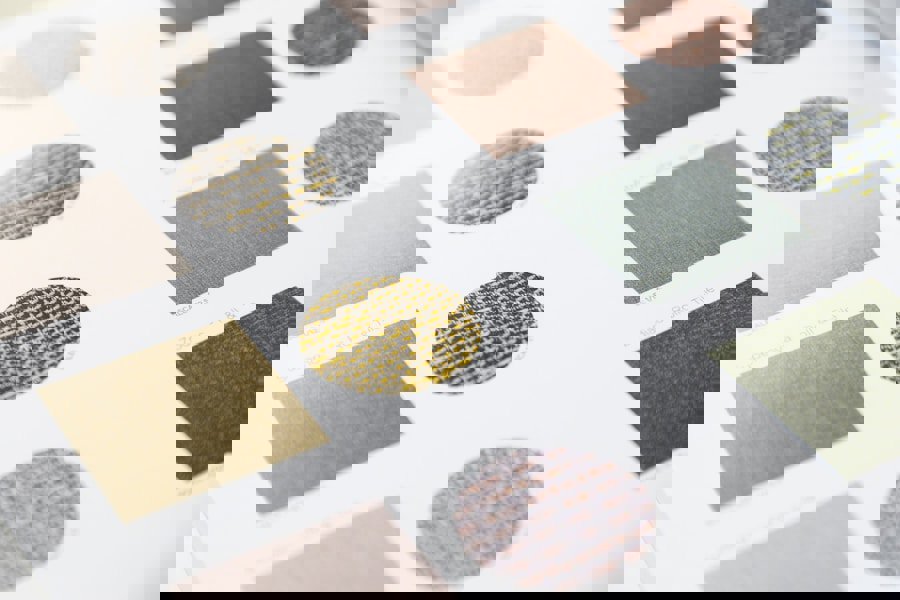
Photo by Jean-Philippe Delberghe on Unsplash
What Are the Best Fabric Pairings for a Spring Room?
The strongest fabric combinations for a spring room share a common logic: contrast in texture, harmony in color. Linen paired with boucle is one of the most reliable combinations available. Both are natural-feeling fabrics that share a relaxed, organic quality, but their surface textures are completely different, which creates visual interest without tension. A solid linen sofa with a boucle accent chair in a similar tone is a clean, current pairing that works across a wide range of room styles.
Solid with floral is another combination that's hard to get wrong if you follow one rule: let the solid take the larger surface and let the floral appear on the smaller piece. A solid chenille sofa in warm grey with a floral accent chair in blush, green, and cream is a classic spring combination that feels fresh rather than dated. Chenille, for the record, is criminally underrated. It's soft, it's durable, and it photographs like a dream.
For rooms that want a little more energy, try pairing a stripe with a texture. A corduroy ottoman in a vertical stripe next to a velvet sofa gives you pattern and texture working together. Because corduroy has both a textural and a visual stripe built in, it bridges the gap between pattern and texture naturally. Keep the colors closely related and you've got a combination that feels deliberate and confident.
How Do You Keep a Mixed-Fabric Room From Looking Chaotic?
The single most effective tool for keeping a layered room cohesive is a consistent color story. Three colors maximum. When every fabric in the room, regardless of its texture or pattern, shares at least one of those three colors, the room reads as intentional. Pattern and texture can vary wildly as long as the palette stays controlled.
Scale matters just as much. Don't mix two large patterns. One large-scale pattern, paired with one small-scale pattern or a solid, gives each piece room to register without competing. A large floral paired with a fine stripe in the same colors is a classic combination for exactly this reason. The stripe reads as almost-solid from a distance, which lets the floral do its work.
Also, repetition is your friend. If you use a boucle chair, echo that texture somewhere else in the room, even if it's just a boucle pillow on the opposite sofa. Repeating a texture in a different scale creates rhythm, and rhythm is what separates a room that feels designed from one that just feels busy.
Tips and Troubleshooting
If your room feels too busy, the problem is almost always too many competing patterns, not too many textures. Pull back on one pattern first before removing any fabric pieces entirely.
If the room feels flat despite multiple fabrics, you likely need more contrast in texture weight. Add something with real physical dimension, a chunky boucle, a ribbed velvet, or a jacquard with raised detail.
If fabrics look mismatched, check your undertones. A warm cream linen next to a cool grey velvet will always fight each other slightly. Stick to fabrics that share warm or cool undertones across the room.
For cleaning, always check the fabric care code before buying. W means water-based cleaner is safe. S means solvent only. WS means either works. These codes are your guide to whether a fabric survives real life in your home, not just the showroom.
You can find linen, boucle, velvet, chenille, floral prints, and all the fabrics mentioned here at famcorfabrics.com, where you can order samples before committing to a full yardage purchase.
Frequently Asked Questions
Q: Can you mix patterned and solid upholstery fabrics in the same room?Yes, and it often looks better than using pattern everywhere. The most reliable approach is to put your pattern on a smaller piece like an accent chair or ottoman, and use a solid fabric on your largest upholstered piece. This lets the pattern stand out without overwhelming the room.
Q: How many different fabrics can you use in one room without it looking cluttered?Most designers stick to three to four distinct fabric types per room. Beyond that, the room tends to lose cohesion. The key constraint isn't the number of fabrics, it's maintaining a consistent color palette across all of them so each piece feels like it belongs to the same room.
Q: Is boucle fabric durable enough for everyday use?Boucle is suitable for everyday use on lower-traffic pieces like accent chairs or decorative ottomans. Its looped construction is soft and resilient against regular sitting, but it can snag on pet claws, so it's best kept away from high-pet-traffic areas. For high-traffic seating, linen or performance velvet with a Martindale rating above 25,000 cycles will hold up better over time.