
Summer is supposed to be fun. It's not supposed to be the season where your beautiful patio cushions turn into a tie-dye experiment in sunscreen, bug spray, and sweat. If you've ever pulled a chair cushion out of storage and found mystery stains you can't explain, you know exactly what we're talking about. This guide covers how to prevent sweat, sunscreen, and insect repellent stains on outdoor upholstery fabrics, which materials are actually worth your money, and what to do when the damage is already done. You'll walk away with a real plan, not just vague advice to "spot clean immediately."
Why Summer Stains Are Harder to Deal With Than You Think
Sweat, sunscreen, and insect repellent are not your average spills. Each one has a different chemical makeup, and each attacks fabric in a different way.
Sunscreen is oil-based, which means it bonds with fabric fibers fast. Leave it for a few hours in the sun and the heat essentially bakes it in. DEET-based insect repellents are even more aggressive. DEET is a solvent, and it can break down synthetic fibers, cause color fading, and weaken the coating on treated fabrics. Sweat is sneaky because it seems harmless in the moment, but the salt and oils in perspiration cause a slow degradation of fabric over a full summer season, especially on lighter colors.
The good news is that the right fabric choice handles most of this automatically. The right pre-treatment handles most of the rest.
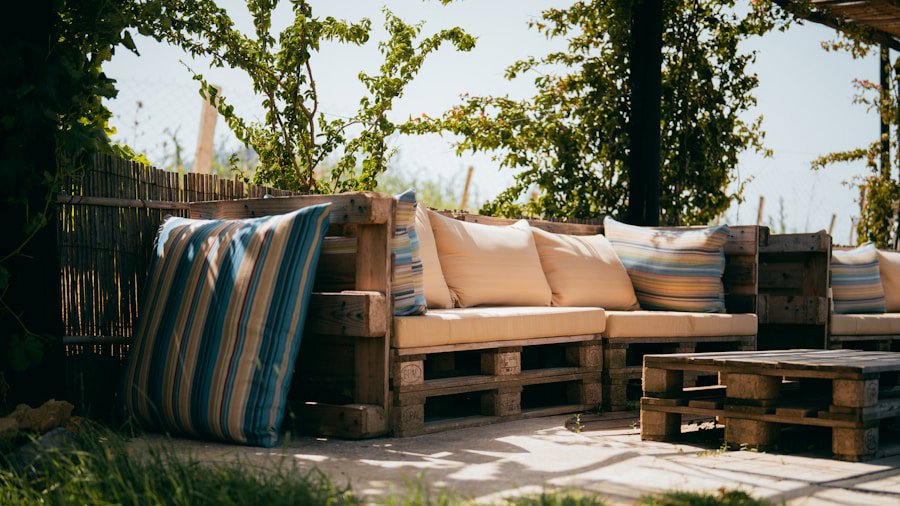
Photo by Othman Alghanmi on Unsplash
What Is the Best Fabric for Resisting Summer Stains Outdoors?
Solution-dyed acrylic is the single best fabric choice for outdoor upholstery if you're dealing with sweat, sunscreen, and bug spray regularly. The color is baked into the fiber itself during manufacturing, not applied to the surface, which means stains and UV exposure can't strip it away the same way they would a surface-dyed fabric.
Here's the thing: not all outdoor fabrics are created equal. There's a huge difference between a fabric that's labeled "outdoor use" and one that's genuinely built for the abuse of a real summer. Below are the categories that actually perform.
- Vinyl upholstery fabric. Vinyl is essentially waterproof, and because it has no fiber structure for stains to penetrate, sunscreen and bug spray wipe right off the surface. It's one of the most practical choices for high-traffic outdoor seating, especially with kids around. The downside is breathability: vinyl gets sticky in extreme heat. Look for a fabric-backed vinyl for more comfort.
- Faux leather. Similar to vinyl in its resistance to liquid penetration, faux leather offers a cleaner, more finished look. It's not as impervious as solid vinyl, but a quality faux leather with a protective coating handles summer stains well. Avoid anything with an embossed or textured surface if you're worried about sunscreen getting trapped in the grain.
- Solution-dyed acrylic. The gold standard for outdoor soft upholstery. Fabrics made from solution-dyed acrylic fibers resist mold, mildew, UV fading, and most stains. A quality outdoor acrylic typically carries a double rub count (that's a measure of how many times a fabric can be rubbed back and forth before showing wear) of 15,000 or higher for outdoor use applications.
- Woven outdoor fabrics. Many woven fabrics designed for outdoor use are treated with a fluorocarbon finish that causes liquids to bead up on the surface. These work well against sunscreen and sweat, but the treatment wears off over time and needs to be reapplied.
If you're shopping right now, the vinyl and faux leather categories at Famcor Fabrics are worth a look for anything that will see heavy summer use. They're easy to wipe down and hold up season after season.
Step-by-Step Instructions
- Choose the right base fabric before anything else. Stain prevention starts at the fabric selection stage, not after the cushion is already made. If you're recovering or building new cushions this summer, prioritize vinyl, faux leather, or a solution-dyed acrylic over cotton, linen, or chenille for any outdoor application. Indoor fabrics used outdoors will stain faster, fade faster, and wear out faster. Save the beautiful linen for indoor seating where it belongs.
- Apply a fabric protector spray to soft outdoor upholstery. Even if your fabric is marketed as stain-resistant, a fluorocarbon-based fabric protector spray adds a meaningful extra layer. Products like 303 Fabric Guard or Scotchgard Outdoor are widely available and easy to apply. Spray in light, even coats about six inches from the surface, let each coat dry fully, and apply two to three coats before the season starts. Reapply after heavy rain or at least once mid-summer.
- Pre-treat high-contact areas before outdoor gatherings. Before a party or a day at the pool, consider laying a thin cotton throw over the seat surface of upholstered chairs where people will be sitting in sunscreen. It sounds low-tech, but it works. You toss the throw in the wash instead of scrubbing cushions. This is especially useful on upholstered pieces that can't be fully removed or easily cleaned.
- Blot sunscreen spills immediately, don't rub. The moment sunscreen hits the fabric, blot with a clean white cloth to lift as much as possible before it sets. Rubbing spreads the oil deeper into the fibers. For vinyl and faux leather, follow with a damp cloth and a small amount of dish soap. For soft fabric cushions, use a dry-cleaning solvent or an enzyme-based cleaner to break down the oil.
- Treat insect repellent contact differently than sunscreen. DEET-based repellents need to come off fabric fast. Blot immediately, then flush the area with cold water to dilute the solvent. Follow with a mild soap solution. Do not use heat on a DEET-stained area until you've confirmed the stain is fully removed. Heat will set it and can accelerate any fiber damage the DEET caused.
- Handle sweat stains with an enzyme cleaner, not just water. Sweat stains are protein-based. Enzyme cleaners break down the proteins that cause discoloration and odor. Mix the enzyme cleaner according to the label instructions, apply to the affected area, let it sit for 10 to 15 minutes, then blot clean. For vinyl and faux leather, a solution of equal parts white vinegar and water does the job without needing a specialty product.
- Rinse thoroughly after any cleaning treatment. Soap residue left in fabric actually attracts more dirt and can degrade certain fabric treatments over time. After cleaning any stain, rinse the area with clean water and blot dry. On removable cushion covers, a full rinse under a garden hose is perfectly fine for most outdoor-rated fabrics.
- Allow cushions to dry completely before covering or storing. Trapping moisture under a patio cover or inside a storage bin is how mildew gets started. Even on a warm summer day, stand cushions upright or prop them at an angle to maximize airflow and let them dry fully before putting them away. This one habit prevents a lot of problems.
- Reapply fabric protector at mid-season. If your summer runs from Memorial Day to Labor Day, apply your second round of fabric protector around the Fourth of July. Heavy use, rain, and cleaning all wear down the protective coating. A mid-season reapplication keeps the beading action working through the back half of summer.
- Deep clean at the end of the season before storage. Don't put stained cushions away and hope for the best. A full end-of-season clean removes oils, salt residue, and any partial stains before they have months to set. Clean, dry cushions stored properly will look noticeably better when you pull them out next summer.
Which Fabrics Should You Avoid for Outdoor Use in Summer?
Cotton and linen are beautiful indoor fabrics, but they absorb everything. Sunscreen soaks in within minutes, sweat causes discoloration quickly, and neither fiber responds well to the repeated wet-dry cycles of outdoor use. They're also more vulnerable to mildew in humid summer conditions.
Velvet and chenille are non-starters for outdoor applications. Both have deep pile structures that trap oils and resist rinsing. Honestly, they're worth every bit of love indoors, but the moment you put them outside, you're fighting a losing battle. Same goes for most jacquard weaves with raised patterns, where sunscreen can settle into the texture and become nearly impossible to remove fully.
Suede upholstery fabric, real or faux, is also a poor choice for outdoor summer use. Suede is porous by design, and its nap will trap oils and flatten under moisture. If you love the look, use it inside and choose vinyl or faux leather for your outdoor pieces.
Quick Troubleshooting Tips for the Messiest Situations
- Set-in sunscreen stain on soft fabric: Apply a paste of baking soda and a few drops of dish soap directly to the stain. Let it sit for 20 minutes, then brush off the paste and treat with an enzyme cleaner. Repeat if needed before any heat exposure.
- DEET damage (color loss or texture change on synthetic fabric): Unfortunately, if DEET has already caused fiber damage or color loss, it cannot be reversed. The best response is to prevent it by asking guests to apply bug spray before sitting and letting it dry on skin before contact with fabric.
- Mildew smell after a wet summer: Mix one cup of white vinegar with one cup of water and spray generously on the affected area. Let it sit in direct sunlight for an hour, then rinse and dry completely. For persistent mildew on vinyl or faux leather, a diluted bleach solution (one tablespoon per quart of water) works well but test on a hidden area first.
- White residue after cleaning: This is usually soap residue. Rinse with plain water and blot dry. If the residue persists, a diluted white vinegar rinse will neutralize it.
Frequently Asked Questions
Q: What is the best upholstery fabric to prevent sunscreen stains on outdoor furniture?Vinyl and faux leather upholstery fabrics are the most resistant to sunscreen stains because they have a non-porous surface that prevents oil from penetrating the material. For soft fabric options, solution-dyed acrylic with a fabric protector treatment is the next best choice for outdoor summer use.
Q: Does DEET-based insect repellent actually damage upholstery fabric?Yes. DEET is a solvent that can break down synthetic fabric fibers, strip surface treatments, and cause irreversible color loss on certain materials. The best protection is preventing direct contact by letting insect repellent dry completely on skin before sitting on upholstered furniture.
Q: How often should I reapply fabric protector spray to outdoor cushions during summer?For most outdoor upholstery fabrics, fabric protector spray should be applied at the start of the season and reapplied every six to eight weeks during heavy use, or after any significant rain event or deep cleaning. Two to three coats at the start of summer give the best initial protection.