
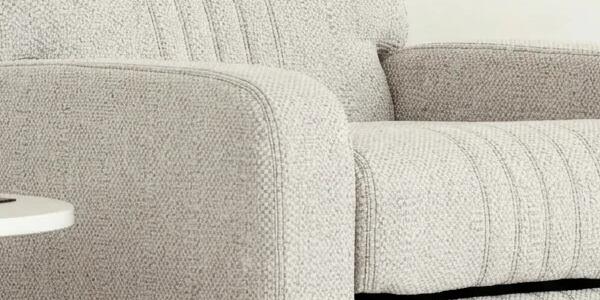
Fall is when cats move back onto the furniture. Days get shorter, the radiators kick on, and your cat claims every sunny perch and warm cubby in the house. That's also when you notice the carpet on the cat tree looks like a bad haircut. If you want to re-cover a cat tree instead of buying a new one, upholstery fabric is the smartest upgrade you can make. It costs less than a replacement tower, and it makes a better surface than anything the pet store stapled on at the factory.
This is a good Friday-afternoon project. Plan on a few hours, a staple gun, and a little patience. By Sunday, your cat will be napping on a perch that looks like it belongs in your living room.
Why Does Upholstery Fabric Outlast Pet-Store Carpet and Plush?
Upholstery fabric lasts longer because it's woven tightly from heavier yarns and tested for abrasion, while the carpet on most cat towers is a thin pile glued to particleboard. Upholstery-weight fabric is built to survive daily sitting, and your cat is basically a very small, very sharp sitter.
Here's a citable number: residential upholstery fabric is generally rated at 15,000 double rubs or more on the Wyzenbeek test, and heavy-duty fabrics climb past 30,000. A double rub is one back-and-forth pass of an abrasive cloth over the fabric. Pet-store plush has no meaningful rating at all, and in practice it mats, sheds, and bald-spots within a year or two.
Tight construction does another job too. Claws catch on loose fibers and loops. A dense, flat surface gives them nothing to hook, so your cat sinks in, kneads, and moves on.
Which Fabrics Hold Up to Claws, and Which Ones Snag?
Flat woven fabrics, microsuede, and vinyl hold up best against cat claws because they have no loops or long pile for a claw to grab. Boucle, shag, and loose chenille are the fabrics that snag.
Boucle is gorgeous, and it's everywhere in home decor right now. It's also made of looped yarn, which is basically a row of tiny hooks for a cat. Save it for the throw pillow your cat doesn't know about. These are the surfaces we'd actually use on a cat tree:
- Flat woven upholstery fabric. The interlaced threads sit flush and tight, so claws slide off. Pick a solid or small texture and skip anything with raised or looped patterning.
- Microsuede. It has a dense, brushed surface with no loops, and it's soft enough that cats love it. Fur wipes off with a damp cloth or a rubber glove.
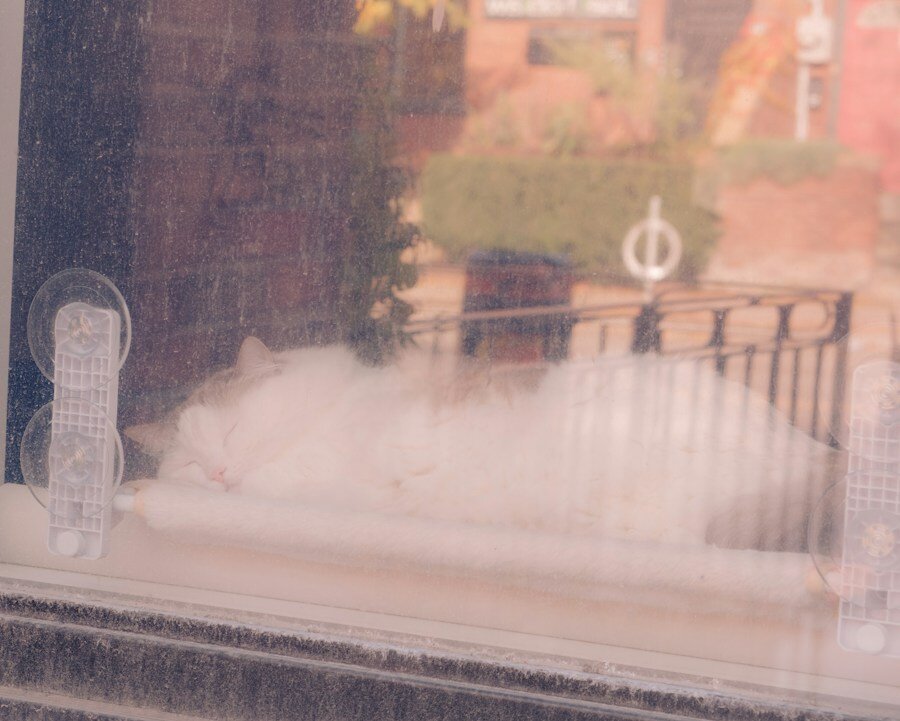
- Vinyl or faux leather. It's the easiest to clean and the hardest for a claw to penetrate. It's also great for window perches where sun and the occasional hairball are a given.
- Tight-pile velvet or flat chenille. These can work, but test a scrap first. If your fingernail pulls a thread, a claw will too.
Quick test: drag a fingernail across a swatch. If it catches, skip it. If it glides, you've got a candidate.
Color matters more than you'd think. Mid-tone browns, greys, and taupes hide fur between cleanings, which is a real perk if your cat sheds like it's paid by the hair.
How Much Fabric Do You Need to Re-Cover a Cat Tree?
Most three-level cat trees need 3 to 4 yards of 54-inch-wide upholstery fabric, including a 15 percent buffer. Measure every surface individually, because the math changes with each platform and post.
Here's the formula we use. Upholstery fabric typically comes 54 inches wide, which affects how many pieces you can nest across a single yard.
- Platforms. Measure length and width, then add the thickness of the board plus 3 inches on every side for wrapping and stapling. An 18 x 18 inch platform with 1.5-inch-thick edges needs a piece about 25 x 25 inches. Two of those fit side by side across a 54-inch width.
- Posts. Multiply the diameter by 3.14 to get the circumference, then add 1 inch for overlap. A 3-inch post needs roughly 10.5 inches of fabric around, plus 2 inches of extra length at each end.
- Condo boxes. Measure each wall and the roof as separate rectangles, and add 2 inches to every edge for tucking into the opening.
- Window perch. Usually one platform and a small side lip. Often a single yard does it.
Write down every piece and its cut size. Sketch it on paper, then arrange the rectangles inside a 54-inch-wide strip to total the length. Then add 15 percent. Solid colors and small textures save fabric because you don't have to match a pattern repeat, which is the distance before a design starts over.
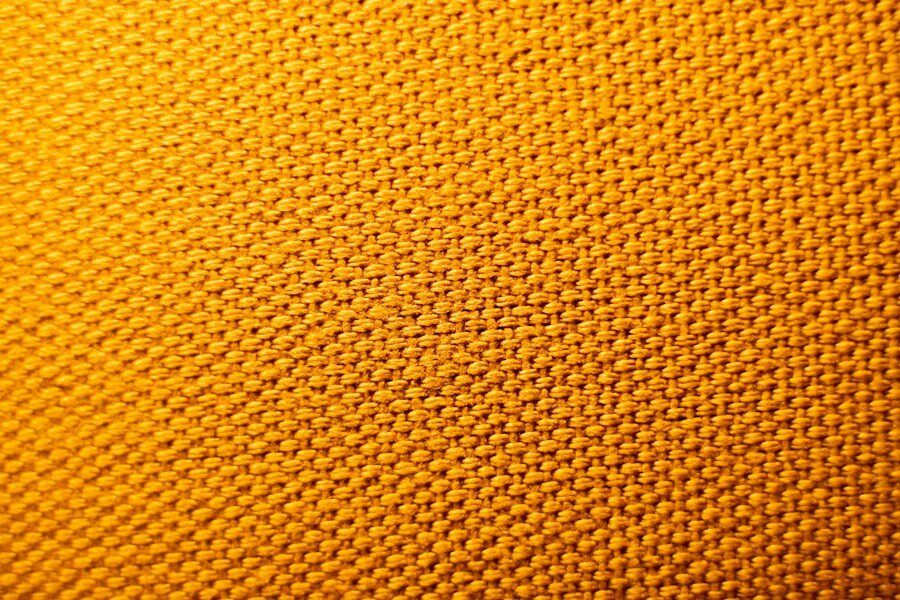
Photo by Marcus Urbenz on Unsplash
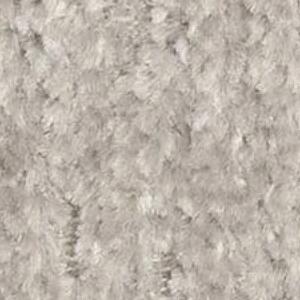
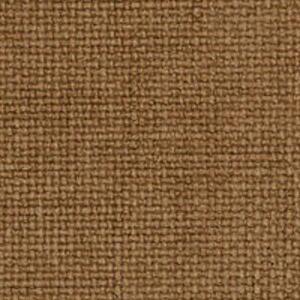
Ready to shop? Microsuede is the quiet hero of cat furniture, and our suede upholstery fabrics collection has plenty of dense, loop-free options. Brown suede upholstery fabric is especially good at disguising fur and paw prints. Here's a peek at what's available:
Shop All Upholstery Fabrics
Step-by-Step Instructions
- Strip the old covering. Pull out the staples with a flat screwdriver and pliers, then peel off the carpet. Scrape off dried glue and sand any rough spots. Check that the platforms are solid and the screws are tight, because there's no point dressing up a wobbly tower.
- Measure every piece. Use the formulas above and label each cut on a sketch. Add the wrap allowance to every platform and condo wall. Measure twice, because fabric doesn't grow back.
- Cut your fabric. Use sharp shears and a straight edge. Keep the grain, meaning the direction of the threads, running the same way across all pieces so the surface looks uniform. Cut a few extra swatches for patching later.
- Add padding if you want it. A layer of 1/2-inch foam or dense batting makes platforms cozier and softens the edges. Spray adhesive holds it in place. Skip this on posts.
- Glue the top surface. Lightly spray the board with an upholstery-grade adhesive, then lay the fabric on and smooth from the center outward. The glue stops the fabric from shifting while you staple and prevents ripples cats love to dig at.
- Staple the underside. Flip the platform over, pull the fabric snug, and fire a staple in the center of each side. Work outward toward the corners, placing staples about every inch. Use 3/8-inch or 1/2-inch staples, depending on the board thickness.
- Fold the corners flat. Pull the corner fabric into a neat triangle fold, like wrapping a gift, and staple it down. A bulky corner is a claw magnet, so trim excess fabric and keep each fold flat.
- Finish the edges so claws can't catch. Tuck raw edges under and staple through the fold, so no cut edge faces outward. Hammer down any raised staples, and cover the underside with a layer of felt or a scrap of the same fabric, glued flat. On vinyl, a clean cut edge won't fray, but still tuck it.
- Wrap the posts. Glue the fabric around the post with the seam running down the back, pull it tight, and staple at the top and bottom. Honestly, your cat will still want sisal to scratch, so leave one or two posts in sisal rope and fabric-wrap the structural ones.
- Reassemble and air out. Let the adhesive cure for at least 24 hours before putting everything back together. Then reattach the platforms and let the tree air out before your cat takes inspection duty.
Tips for Making It Last
- Choose by cleaning method. Vinyl wipes clean with a damp cloth. Microsuede cleans with a vacuum brush attachment and a little mild soap on a cloth. Tight wovens can be spot-cleaned according to the fabric's cleaning code.
- Match the room. This is where grey suede upholstery fabric shines. It reads as intentional in a living room and doesn't scream "pet furniture."
- Put the best fabric where the action is. Top perches and window platforms see the most use. If you're stretching a budget, use the toughest fabric there.
- Trim claws. A regular nail trim extends fabric life more than any product can.
- Keep spare fabric. A scrap of leftover fabric and a bit of adhesive fixes a nick before it spreads.
Frequently Asked Questions
Q: What is the best fabric to cover a cat tree?
The best fabric for a cat tree is a tight-weave upholstery fabric such as microsuede, flat woven, or vinyl. These fabrics have no loops or long pile for claws to catch, and they're easy to clean. Look for a rating of at least 15,000 double rubs.
Q: Will cats scratch upholstery fabric on a cat tree?
Yes, cats may scratch any surface, but tight-weave fabrics resist damage far better than carpet or boucle. Keep sisal rope on at least one post as a designated scratcher, and use dense fabrics like microsuede or vinyl on platforms and condos where cats mostly sit and sleep.
Q: How much fabric do I need to re-cover a cat tree?
A typical three-level cat tree needs about 3 to 4 yards of 54-inch-wide upholstery fabric. Measure each platform, adding the board thickness plus 3 inches per side, then add 15 percent extra. A single window perch usually takes about 1 yard.