

You can repair most common upholstery damage yourself in a single Saturday afternoon. Cat scratches, torn seat panels, split seams, sagging fabric and worn cushion covers are all fixable with basic tools and a small piece of matching fabric. Fall is the perfect time for it. The couch goes back into heavy rotation after summer, the football and movie nights start, and company is coming for the holidays. Let's get your furniture ready without paying for a full reupholstery job.
Should You Repair or Reupholster Your Sofa?
Repair when the damage is limited to one panel, one seam, or one cushion and the frame and foam underneath are still solid. Reupholster when the fabric is worn out everywhere, the frame wobbles, or the foam has collapsed.
Here's the quick gut check. A professional sofa reupholstery job commonly runs well over $1,500 once labor and 12 to 20 yards of fabric are counted. A targeted repair usually costs the price of a yard or two of fabric and a few supplies. That's a big gap, so don't jump to the expensive option until you've ruled out the cheap one.
- Repair it if: the damage is in one or two spots, the rest of the fabric is sturdy, the frame is tight, and the cushions still bounce back.
- Reupholster it if: the fabric is thinning or fraying across the whole piece, the springs or webbing are broken, or the foam is flat and crumbling.
- Replace instead if: the frame is cracked or the piece has no sentimental or quality value.
Expert rule of thumb: if the frame is hardwood and still solid, the furniture is worth repairing, because good frames outlast good fabric by decades.
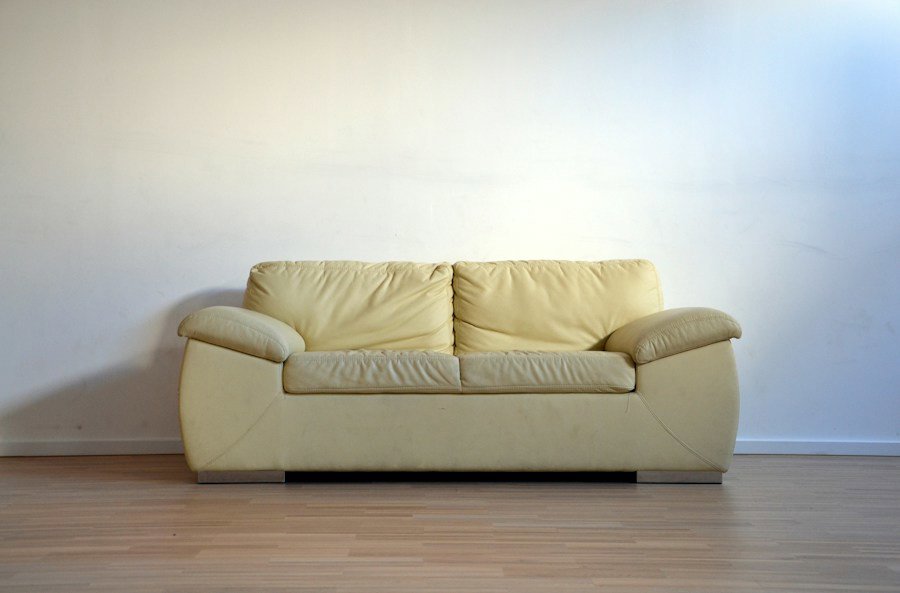
Photo by Christian Kaindl on Unsplash
How Do You Match Replacement Upholstery Fabric?
Match replacement fabric on three things in this order: weight, pile direction, and color. If the weight is wrong, the patch will pucker or tear. If the pile runs the wrong way, it'll look like a different color even when the dye is identical.
- Weight. Upholstery fabric is typically 10 to 20 ounces per yard. Matching the weight means your patch stretches and wears like the original. Heavy-duty upholstery fabric is the safest choice for high-use spots because it's built to last longer than the old cover did.
- Pile direction. Pile is the raised surface on fabrics like velvet upholstery fabrics. Stroke it with your hand. One direction feels smooth, the other feels rough. Cut your patch so the smooth direction runs the same way as the original, usually top to bottom on a seat back.
- Color. Compare in daylight, not under a warm lamp. Old fabric fades, so a perfect match to the original color often isn't possible. A solid upholstery fabric in a slightly deeper tone hides the difference better than trying to chase a faded shade.
Fun fact: a patch that's a touch darker looks intentional. A patch that's a touch lighter looks like a mistake. When in doubt, go darker.
Also, order a swatch first. Screens lie about color, and a swatch costs far less than a yard you can't use.
What Tools and Materials Do You Need?
You need a staple gun, a flathead screwdriver, needle-nose pliers, a curved upholstery needle, and upholstery-weight thread. That kit covers nearly every repair in this guide.
- Heavy-duty upholstery thread (bonded nylon or polyester, not regular sewing thread)
- Fabric adhesive or iron-on interfacing for small patches
- Upholstery staples, usually 3/8 inch
- Sharp fabric scissors and a tape measure
- A staple remover or tack lifter
- Your replacement fabric, with 10 to 15 percent extra for mistakes
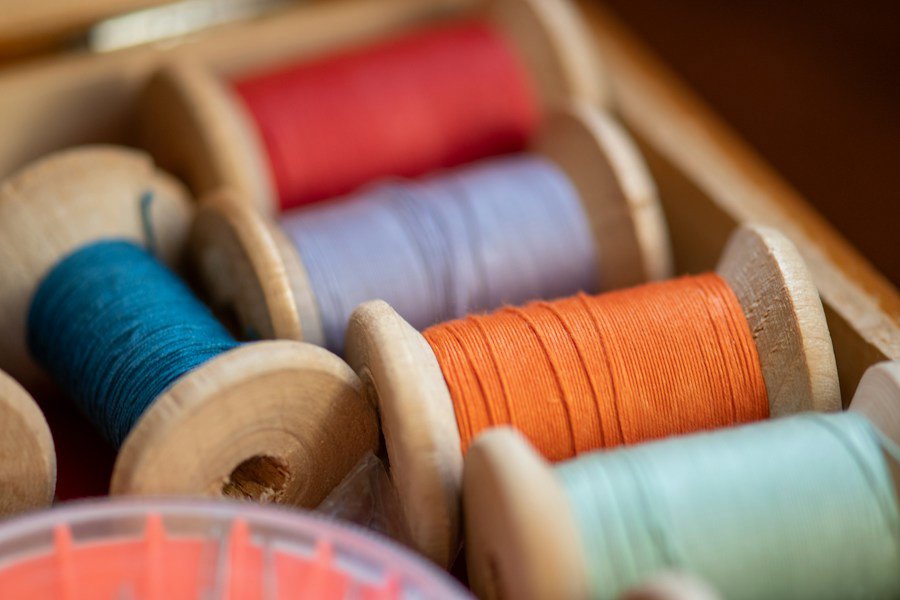
Photo by Bozhin Karaivanov on Unsplash
Step-by-Step Instructions
- Diagnose the damage and clean the area. Vacuum the whole piece, then spot clean around the damage so you can see what you're dealing with. Press on the cushion or seat deck. If the foam or webbing underneath is shot, fix that first, or your new fabric will fail too.
- Get your fabric and check the match. Hold your swatch against the old fabric in daylight. Check the weight by feel and the pile direction by stroking. Order enough for the repair plus extra. A single yard is usually plenty for a panel patch, and a cushion cover typically takes 1 to 1.5 yards.
- Patch a cat-scratched or torn spot. Trim loose threads and frayed edges. For a small tear, cut a patch about one inch larger than the damage on every side, then slide it under the tear, smooth side up. Glue it in place with fabric adhesive and press the edges down. For a bigger torn panel, remove the staples, use the old panel as a pattern, cut the new piece, and staple it down in the same spots.
- Fix a split seam. Turn the seam so you can reach both sides of the fabric. Thread a curved needle with doubled upholstery thread and knot the end. Use a ladder stitch (also called a blind stitch), picking up a bit of fabric on one side, then the other, and pull gently so the stitches disappear. Tie off with two knots and tuck the tail inside.
- Re-tack sagging fabric. Flip the piece and find the loose or missing staples along the bottom or back. Pull the fabric taut, keeping the weave straight so patterns don't skew, and staple about every inch. Trim any extra with scissors. A loose dust cover underneath often hides the problem, so check it too.
- Replace a single cushion cover. Unzip or unpick the old cover and lay it flat as a pattern. Cut your new fabric with a half-inch seam allowance, matching the grain and pile direction. Sew the panels together with a heavy needle, add the zipper if the old one is reusable, and slide the cover over the foam. A little spray adhesive on the foam keeps it from shifting.
- Finish and test. Brush the pile in one direction, vacuum the repair, and sit on it. Check that the seam and staples hold. If it feels good after a full day of use, you're done.
Why Does a Small Cut of Heavy-Duty Fabric Save Hundreds?
A small cut of heavy-duty upholstery fabric saves money because you pay for one or two yards instead of a full reupholstery job. Labor is the biggest cost in professional work, and a single-panel repair skips almost all of it.
Think of it like patching a pair of jeans instead of buying new ones. The rest of the piece is still good, so you're only replacing what failed. A single yard of quality fabric often costs far less than one hour of an upholsterer's shop time, and most DIY repairs take an afternoon.
Durability matters here, because you want the patch to outlast the original. Look for a Wyzenbeek rating of at least 15,000 double rubs, which is the industry guideline for heavy-duty residential upholstery. A double rub is one back-and-forth pass of an abrasive test cloth over the fabric. The Martindale abrasion test measures the same idea in cycles, and 20,000 or more is a strong mark for busy family rooms.
For pets and kids, tight constructions hold up best. Chenille upholstery fabrics are soft, forgiving and surprisingly tough, and a dense woven upholstery fabric resists snagging because there are fewer loose loops for claws to catch. Honestly, chenille is criminally underrated for family furniture. Here are some options worth browsing for your patch:
Shop All Upholstery Fabrics

Also keep an eye on the upholstery fabric sale page. Small repairs need small cuts, and sale fabric is a smart place to find a heavy-duty match for less.
Tips for Making Repairs Last
- Pre-wash nothing. Most upholstery fabric is spot clean only, so test cleaners on a hidden spot first.
- Trim cat claws and add a scratching post. The best repair is the one you don't need to repeat. A post placed next to the favorite scratching corner redirects most cats within a few weeks.
- Rotate cushions monthly. Even wear means your patch won't be the only new thing on a worn sofa.
- Use a fabric protector on the new piece. It helps the patch repel fall spills from game days and holiday dinners.
- Keep your leftover fabric. A spare piece saves you a color-matching headache next year.
- Work in good light. Seams and pile direction are easy to get wrong when you can't see them.
Frequently Asked Questions
Q: Can you repair a cat-scratched sofa without reupholstering it?
Yes. For light scratches, trim the loose threads and fix the spot with fabric adhesive. For deeper tears, slide a slightly larger patch of matching fabric under the damage and glue it in place. If the scratching covers an entire panel, replace just that panel and keep the rest of the sofa.
Q: Is it cheaper to repair or reupholster a couch?
Repairing is almost always cheaper when the damage is limited to one area. A DIY repair typically costs the price of a yard or two of fabric and a few supplies, while professional reupholstery commonly costs well over $1,500. Reupholstering only makes sense when the fabric is worn out everywhere or the frame is failing.
Q: How do you match upholstery fabric for a repair?
Match the fabric weight first, then the pile direction, then the color. Compare a swatch to your furniture in daylight, stroke both fabrics to find the pile direction, and choose a heavy-duty fabric with at least 15,000 double rubs. If you can't match the color exactly, choose a slightly darker shade so the patch looks intentional.