
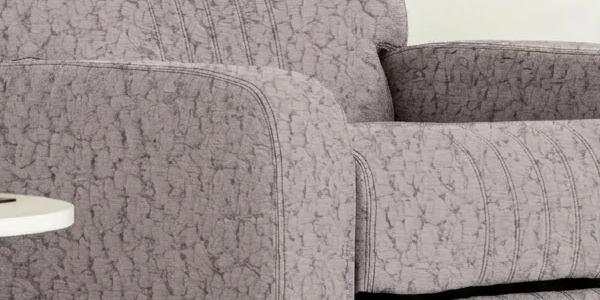
If you've ever tried to reupholster a chaise lounge after successfully recovering a dining chair, you already know the rules changed halfway through the project. Chaise lounges combine a curved frame, a single continuous seat-and-back panel, rounded bolster ends, and yards of welting into one piece of furniture. There's no clean break between "seat" and "back" the way there is on a sofa. It's all one flowing shape, and that shape is exactly what makes it beautiful and exactly what makes it hard to cover without puckers, gaps, or a fabric bill that blows past your budget.
This guide breaks the process into manageable steps, with real numbers for yardage and fabric weight so your new cover drapes over those curves the way it's supposed to.
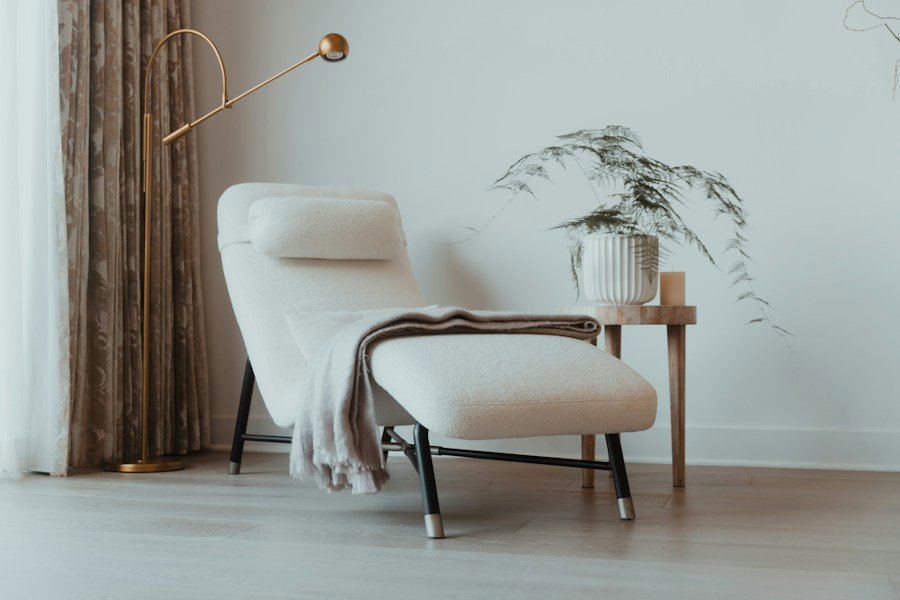
Photo by Oak + Motion on Unsplash
Step-by-Step Instructions
- Strip the old fabric and document everything. Take photos before you remove a single staple. Number each panel as you pull it off and note where the welting sits, where the bolster caps attach, and how the fabric wraps around the curve. This becomes your pattern template later.
- Order more yardage than the calculator says. Chaise lounges have almost no waste-free cuts because the seat and back are one continuous piece running over a curve. Add at least 15 to 20 percent extra yardage beyond a standard estimate, especially if your fabric has a pattern repeat that needs to match across the bolster ends.
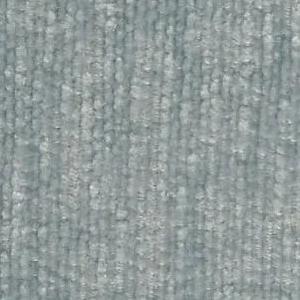
- Pick a fabric weight built for curves. Lightweight cottons and thin linens bridge across compound curves instead of hugging them, which is exactly how you end up with puckers at the bolster seams. Medium to heavy weight fabrics in the 14 to 18 ounce per linear yard range mold to the frame without bunching, and this is where a good chenille upholstery fabric earns its reputation. It has just enough body to hold shape but enough give to stretch over the curve.
- Cut the continuous panel with ease allowance built in. Lay your pattern paper over the frame from bolster to bolster and mark a centerline down the middle. Compound curves need extra ease, usually an inch or two of slack beyond the flat measurement, so the fabric has room to move without stretching thin at the tightest part of the curve.
- Handle the bolster ends as their own project. Bolster caps are essentially circles with a seam allowance, but they need ease-stitching (a loose running stitch pulled slightly tight) around the edge to gather the fullness evenly before you staple. Rushing this step is the number one reason bolster ends look lumpy instead of rounded.
- Work the curve in small increments, not one big pull. Staple from the center of the panel outward in short two-inch sections, alternating sides as you go. Pulling one long stretch of fabric tight in a single motion is what creates diagonal pull lines across a curved back.
- Add welting along every seam. Welting (that thin fabric-covered cord along the seams) does double duty on a chaise. It hides your staple line and it reinforces the seam where the fabric changes direction around the curve. Cut your welting strips on the bias so they flex around the curve instead of fighting it.
- Steam, inspect, and true up the symmetry. Once everything is stapled and trimmed, steam out travel wrinkles and stand back to check both bolster ends match. Curved furniture shows asymmetry more than straight-lined pieces, so this final check matters.
How Much Fabric Do You Need to Reupholster a Chaise Lounge?
Most chaise lounges need between 8 and 12 yards of 54-inch-wide fabric, roughly 30 to 50 percent more than a standard loveseat requires. The exact number depends on the length of the continuous panel and whether your fabric has a pattern repeat.
A plain solid can usually be cut efficiently along the length of the piece, but anything with a directional pattern or large repeat needs extra yardage so the design lines up correctly across the seat, back, and bolsters. If you're working with a designer and quoting COM, always round up rather than down. Running short mid-project on a discontinued dye lot is a headache nobody wants.
What's the Best Fabric Weight for a Curved Chaise Lounge?
Fabric in the 14 to 18 ounce per linear yard range gives you the best balance of drape and durability for a curved chaise frame. Anything lighter tends to bridge across the curve instead of following it, and anything much heavier gets difficult to ease around tight bolster ends without visible tension lines.
Durability matters just as much as drape here, since chaise lounges get sat and lounged on at odd angles more than a standard chair. Look for fabrics tested to at least 15,000 double rubs on the Martindale abrasion test for light residential use, or 30,000 plus for households with kids or pets putting the piece through daily wear. Solution-dyed acrylics and tightly woven chenilles both perform well in that range while still having enough softness to wrap a curve cleanly.
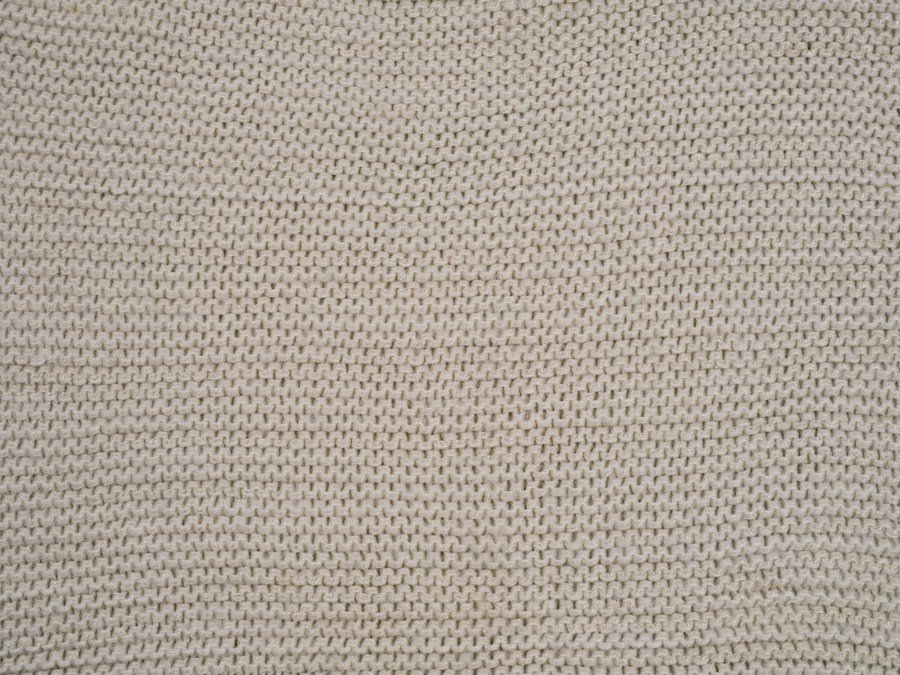
Photo by engin akyurt on Unsplash
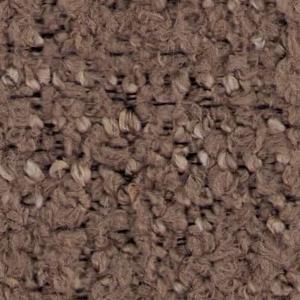
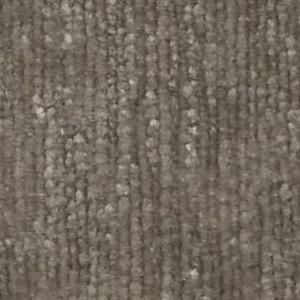
This fall, a lot of our customers are gravitating toward warm, textured neutrals for statement pieces like chaise lounges. Nubby, low-pile textures read as cozy without looking heavy in a room, which is part of why boucle upholstery fabric keeps showing up in fall reupholstery projects. It has enough loft to disguise minor frame imperfections but still has the structure to hold a clean line around a bolster.
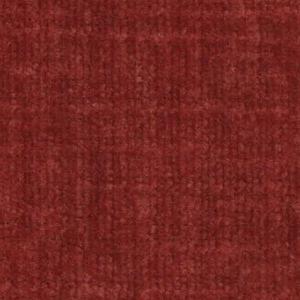
If you want something with a bit more sheen for a formal sitting room, a plush velvet upholstery fabric drapes beautifully over curves and catches light along the rounded bolster ends in a way flat fabrics just can't match. Honestly, velvet gets an unfair reputation for being fussy. Modern velvets with a synthetic backing clean up fine with a soft brush and a little fabric-safe cleaner.
Handling Welting and Seams Without Puckering
Welting is non-negotiable on a curved piece. It's the small cording that runs along every seam, and on a chaise it's doing structural work, not just decoration. Cut your welting strips on the bias grain so the fabric has natural stretch as it wraps the curve. Cutting welting strips straight along the grain is one of the most common mistakes we see, and it's the reason the cording pulls tight and puckers right where the curve is sharpest.
For families with pets or kids, a tightly woven suede upholstery fabric is worth a look for welting and trim, since it resists snagging better than looser weaves and wipes clean easily. Pair it with a heavier main fabric on the panels for contrast and extra durability where hands and paws land most.
Pro Tips for a Smooth Chaise Reupholstery Job
- Test drape before you buy the whole yardage. Order a sample and drape it over a curved cushion or a rolled towel to see how it behaves before committing to yards.
- Keep pattern repeats small. Large-scale patterns are gorgeous on flat panels but tricky to match across a continuous curved cut. Smaller repeats or all-over textures forgive more.
- Don't skip the ease-stitching on bolsters. It takes an extra ten minutes and it's the difference between a smooth rounded end and a lumpy one.
- Buy an extra half yard for trial and error. Curved cuts rarely go perfectly on the first attempt, even for experienced upholsterers.
Frequently Asked Questions
Q: How much fabric do I need to reupholster a chaise lounge?
Plan on 8 to 12 yards of 54-inch-wide fabric for a standard chaise lounge, adding 15 to 20 percent extra for pattern matching or a large repeat.
Q: What fabric weight is best for a chaise lounge with a curved frame?
Fabrics between 14 and 18 ounces per linear yard drape best over curved chaise frames, molding smoothly without bridging or puckering at the bolster ends.
Q: Can I reupholster a chaise lounge myself, or do I need a professional?
An experienced DIYer can reupholster a chaise lounge, but the continuous curved panel and bolster ends make it significantly harder than a standard chair, so first-timers should budget extra fabric and time for a learning curve.