

A bolster pillow cover is the friendliest upholstery project you can sew. It's a rectangle, two circles, and a few tricks for handling thick fabric. This guide covers three styles: a gathered-end "candy" cover, a flat-disc cover with piping, and a zippered cover that fits an insert you already own. You'll get exact cutting sizes, yardage for a pair, and the fabrics that look best on a fall sofa or bed.
Step-by-Step Instructions
- Measure and cut your pieces. Measure the insert's length and its circumference (wrap a tape around the fattest part). Circumference is diameter x 3.14. For flat-disc and zippered covers, cut the rectangle as circumference + 1" wide by length + 1" long, and cut two circles at diameter + 1" (that includes a 1/2" seam allowance). For the candy style, cut the rectangle as circumference + 1" wide by length + 6" long, which gives you a 3" tail at each end for gathering. Notch the circles at the quarter points so they match the tube later.
- 6" x 16" bolster: 20" x 17" rectangle, 7" circles (candy: 20" x 22")
- 7" x 18" bolster: 23" x 19" rectangle, 8" circles (candy: 23" x 24")
- 8" x 20" bolster: 26" x 21" rectangle, 9" circles (candy: 26" x 26")
- 9" x 24" bolster: 29" x 25" rectangle, 10" circles (candy: 29" x 30")
- Set up for thick fabric. Use a 100/16 or 110/18 needle, bonded nylon or polyester upholstery thread, and a walking foot so the layers feed evenly. Lengthen your stitch to about 3.5 mm. On corduroy or velvet, mark the nap direction on the back of every piece and keep it consistent. Use clips instead of pins, since pins can leave marks in pile.
- Sew the gathered candy cover. Fold the rectangle in half lengthwise with right sides together and sew the long edge with a 1/2" seam. Press the seam open, then turn the tube right side out. Slide the insert in and center it so a 3" tail extends past each end. Gather each tail with a doubled length of upholstery thread, pull tight, and tie off.
- Tame the bulk at the gathered ends. Thick fabric doesn't gather like quilting cotton, so shorten the tails to 3" and trim the inside seam allowance at the tie point. Wrap the cinched end with heavy cord or twill tape three or four times before knotting. Hide the knot with a covered button, a tassel, or a wide ribbon. If gathers still look like a fist, switch to four to six evenly spaced pleats instead.
- Sew the flat-disc cover with piping. Cut 1 3/4" bias strips, wrap them around 3/16" cord, and stitch close to the cord with a zipper foot. Baste the piping around the right side of each circle, clipping the seam allowance every 1/2" so it curves smoothly. Sew the rectangle into a tube, then pin the tube to one circle with the circle on top. Stitch just inside your basting line so no piping stitches show. Overlap the piping ends at a slight angle and trim the cord so the joint doesn't make a lump.
- Add a zipper for an existing insert. Use a 18" to 20" zipper (a #5 weight holds up best). Sew the tube's long seam, leaving the zipper section basted shut, then press open and install the zipper with a zipper foot. Open the zipper at least halfway before attaching the circles, or you'll be unable to turn the cover right side out. Attach the circles with a 1/2" seam, with or without piping.
- Finish and stuff. Grade the seam allowances (trim each layer to a different width) so the seam lies flat. Press with a pressing cloth, turn right side out, and insert the bolster. For flat-disc covers without a zipper, leave a 4" gap in one circle seam and close it with a ladder stitch.

Photo by Rohan Mathur on Unsplash
What Size Is a Standard Bolster Pillow?
Standard bolster pillows are typically 6" to 9" in diameter and 16" to 24" long. Sofa bolsters usually run 7" x 18" or 8" x 20", while bed bolsters commonly measure 9" x 24" or longer.
Here's the thing: bolsters are rarely exact, so measure your insert instead of trusting the label. Upholstery fabric doesn't stretch, so a cover cut to the insert's actual circumference gives you that firm, tailored look. A cover sized too small won't go on, and one sized too big looks sad and wrinkly.
How Much Fabric Do You Need for a Pair of Bolsters?
A pair of 8" x 20" bolster covers needs about 1 1/4 yards of 54" wide fabric for the flat-disc style with piping. The candy style takes about 7/8 yard, and the zippered style about 1 yard.
- Candy style: two 26" x 26" rectangles sit side by side across 54" fabric. Buy 7/8 yard, plus cord or a trim for the ends.
- Flat disc with piping: two 26" x 21" rectangles, four 9" circles, and bias strips for piping. Buy 1 1/4 yards.
- Zippered: same cuts as the flat disc without piping. Buy 1 yard, plus two zippers.
- Other sizes: use 1 yard for 6" x 16" pairs and 1 1/2 yards for 9" x 24" pairs with piping.
Corduroy and velvet need all pieces cut in the same nap direction, so buy an extra 1/4 yard for mistakes. Stripes and patterns need extra for matching.
Why Does a 50,000 Double Rub Fabric Outlast Store-Bought Covers?
A fabric rated at 50,000+ double rubs can handle several times more abrasion than the 15,000 double rubs that typically qualify as general residential use. Most store-bought bolster covers use lightweight decorative fabric that often has no published rating at all.
A double rub is one back-and-forth pass of an abrasive cloth across the fabric in the Wyzenbeek test (ASTM D4157). Europe uses the Martindale test instead, where roughly 40,000 cycles is commonly treated as heavy-duty. Bolsters take a beating because they get leaned on, tucked behind necks, and dragged around by kids and pets. Thicker, tightly woven upholstery fabric resists pilling, seam slippage, and snagged claws far better than a thin cover that's stitched in a hurry.
Plus, the cost works out in your favor. You'll spend less than you would on two quality store covers, and you pick the size, the color, and the trim.
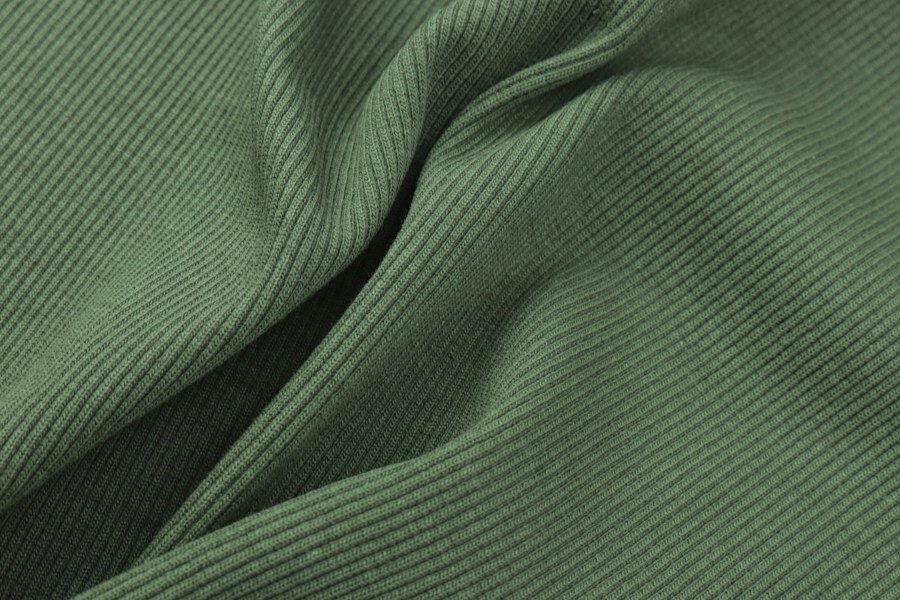
Photo by Divazus Fabric Store on Unsplash
Which Fabric Looks Best for Fall Bolster Pillows?
Corduroy, velvet, and textured woven fabrics look best for fall bolsters because their pile or weave adds depth in low autumn light. Pick corduroy for casual warmth, velvet for a dressier sofa, and woven for a tailored bed.
- Corduroy. Honestly, corduroy is having a moment, and its ridges (called wales) make a bolster look intentional. Run the wales along the length of the roll for clean lines. Warm tones like brown corduroy upholstery fabric suit rust, mustard, and camel throw blankets, while cream corduroy upholstery fabric brightens a dark leather sofa. Browse the full corduroy collection for wale widths and colors.
- Velvet. It reflects light so deep greens, burgundies, and navy look richer. Velvet gets a bad rap for being fussy, but a performance version is easy to vacuum and spot clean. Shop velvet upholstery fabrics for pieces that hold up with pets.
- Woven. A tight weave hides wear, resists snags, and keeps piping crisp. It's the easiest fabric to sew and the best choice for beds. Check out woven upholstery fabrics in oatmeal, charcoal, and olive.
Ready to pick? Here are some options that fit a pair of bolsters.
Shop Corduroy Upholstery Fabrics



Tips for Sewing Thick Upholstery Fabric
- Test on scraps first. Sew a sample seam and a piece of piping before cutting into your yardage.
- Hammer the bumps. Where seams cross, tap them flat with a mallet before sewing over them. Don't force the needle.
- Use contrast piping. Pairing a solid piping with corduroy or woven fabric hides seam wobbles and looks intentional.
- Plan for cleaning. Use the zippered style if you have kids or pets, so you can remove the cover. Vacuum with an upholstery brush weekly and check the fabric's cleaning code before using any spot cleaner.
- Pre-stage the ends. For candy covers, stuff the roll and tie one end before you do the other. It's much easier to keep both ends matching.
Frequently Asked Questions
Q: What size is a standard bolster pillow?
Most bolster pillows are 6" to 9" in diameter and 16" to 24" long. Common sofa sizes are 7" x 18" and 8" x 20", and a typical bed bolster is 9" x 24". Always measure your own insert before cutting.
Q: How much fabric do I need for two bolster pillow covers?
For two 8" x 20" covers, you need about 1 1/4 yards of 54" wide upholstery fabric with piping, 1 yard with a zipper, or 7/8 yard for the gathered candy style. Add 1/4 yard if you're using corduroy, velvet, or a pattern.
Q: Is corduroy a good fabric for bolster pillows?
Yes. Corduroy is durable, soft, and hides everyday wear better than smooth fabrics. Choose an upholstery-weight corduroy rated for 30,000 or more double rubs and keep the wales running along the length of the bolster for a tidy finish.