
A heavy-duty floor pouf takes more abuse than almost anything else in your living room. Kids sit on it, the dog drags it across the rug, and somebody always puts their feet up. Most free patterns online call for quilting cotton or a thin knit, and those fabrics give up within a season. Upholstery fabric is built for exactly this job. This guide walks you through how to sew a heavy-duty floor pouf in round or square, with a boucle version that fits the cozy fall look.
Why Does Upholstery Fabric Make a Better Floor Pouf?
Upholstery fabric lasts longer because it's woven dense and tested for abrasion. Quilting cotton isn't rated for seating at all.
Durability is measured in double rubs. In the Wyzenbeek test, a machine rubs cotton duck back and forth across the fabric, and one back-and-forth pass counts as one double rub. Fabric rated for 15,000 double rubs is generally fine for light residential seating, and 30,000 or more is classed as heavy-duty. The Martindale test counts cycles instead, and 20,000 or more is generally considered suitable for heavy domestic use. A floor pouf gets sat on, scooted, and kicked, so aim for the high end of those numbers.
Here's the quotable version: a pouf is a piece of furniture that lives on the floor, so it needs a furniture-grade fabric, not a craft-grade one. Plus, upholstery weights hold their shape. Your pouf won't sag into a sad pancake by November.
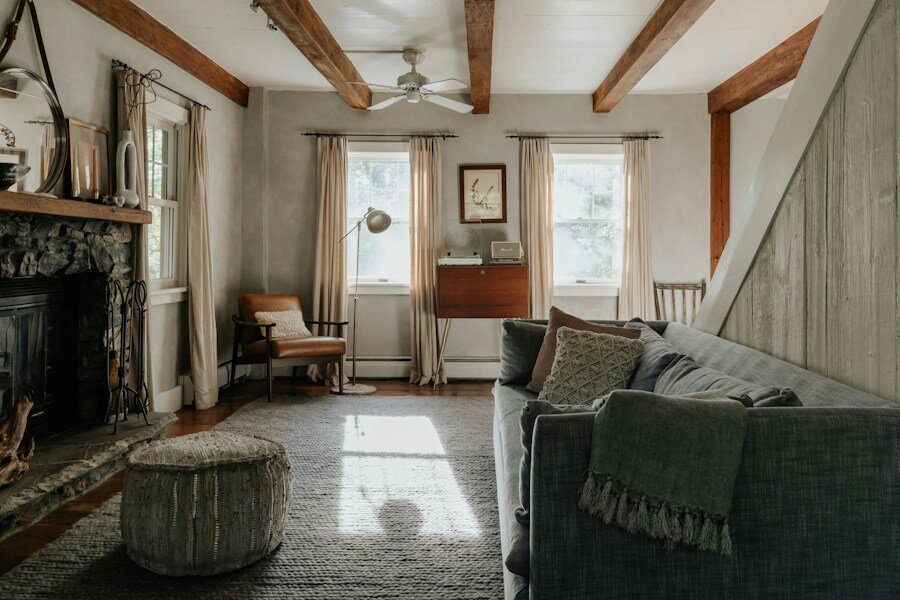
Photo by Clay Banks on Unsplash
What Fabric Is Best for a Floor Pouf?
The best fabric for a floor pouf is a tightly woven upholstery fabric rated at 30,000 double rubs or higher. Chenille upholstery fabrics and woven textures are the safest bets for families with kids and pets.
- Chenille. Soft, dense, and forgiving. Honestly, it's criminally underrated for floor seating.
- Woven and jacquard. Tight structure hides dirt and resists pulling.
- Velvet. Polyester velvet cleans easily and holds up well. It does show crush marks, which most people read as character.
- Faux leather and vinyl. Wipe-clean champions for playrooms. Use a leather or walking-foot needle.
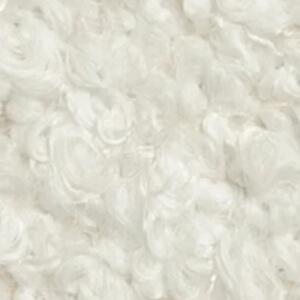
- Boucle. The fall favorite. Its looped, nubby surface looks like a teddy bear in sweater weather.
Making the Boucle Version
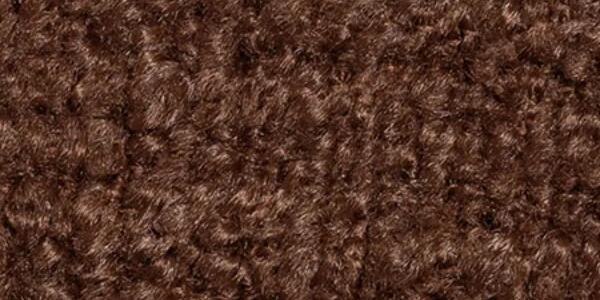
Boucle is the right pick if you want the cozy look. The loops are made from textured yarn, so choose a boucle with a tight loop and a stable backing. Long, loose loops snag on pet claws. Browse the full range of boucle upholstery fabrics, or go for warm fall shades like brown boucle, which reads like caramel and hides everyday wear nicely.
Sew boucle the same way as any other fabric, with two tweaks. Use a slightly longer stitch so you don't crush the loops, and skip the piping if the fabric is very bulky. A plain seam looks cleaner on a chunky texture.
How Much Fabric Do You Need for a Floor Pouf?
Most floor poufs need between 1.5 and 3 yards of 54-inch-wide upholstery fabric. The exact amount depends on diameter and height, and these figures include seam allowance.
- 18-inch round, 12 inches high: about 1.5 yards
- 24-inch round, 14 inches high: about 2.25 yards
- 30-inch round, 16 inches high: about 3 yards
- 18-inch square cube: about 1.75 yards
- 24-inch square, 16 inches high: about 2 yards
Add another half yard if you're making piping, a carry handle, or working with a pattern that needs matching. Also buy a little extra if your fabric has a nap or a directional texture, like velvet or boucle. Every piece should face the same way, or the shading will look off.
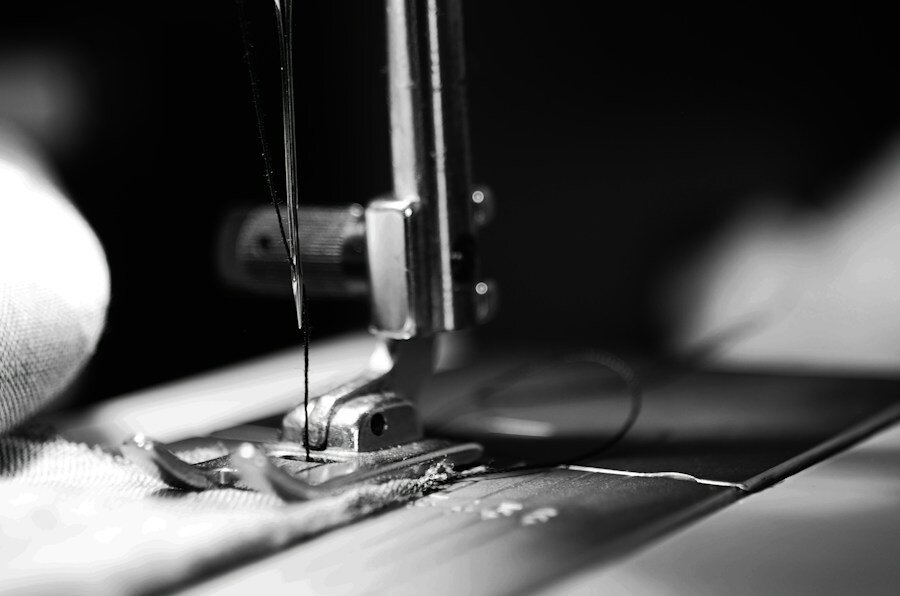
Photo by J Williams on Unsplash
Which Filling Works Best: Beads, Foam, or Fabric Scraps?
Shredded foam is the best all-around filling for a pouf people will sit on. It supports weight and keeps its shape. Beads are lighter and more squishy, and scraps are the cheapest option.
Volume matters here. A 24-inch round, 14-inch-high pouf holds about 3.7 cubic feet, so buy filling in that range and a little more to pack it firmly.
- Shredded foam. Firm and springy. It's the most seat-like, and it recovers well after a guest sits on it.
- Polystyrene beads. Very light and cheap, but they compress over time and need topping up. They make a floor pouf feel like a beanbag.
- Recycled fabric scraps. Free if you save old clothes, towels, and sheet scraps. It's heavier and a bit lumpy, so pack tightly and mix sizes.
- Polyfill. Soft but flattens fast. Better for decorative poufs than seating.
Whatever you choose, make a simple muslin inner bag first. It keeps filling from leaking if the outer zipper opens, and it makes washing the cover easy. Pet and kid households will appreciate that.
What Closure Should You Use?
A heavy-duty coil zipper (size #5 or #8) hidden in the boxing strip is the best closure for a floor pouf. It's strong, removable for cleaning, and nearly invisible.
Pick a zipper at least 20 inches long for a 24-inch pouf so the filling can pass through. For a square pouf, a lapped envelope closure on one side works without any hardware at all. Hand-stitching the opening closed is a fine option for a pouf you'll never wash, but a zipper pays off the first time the dog has an accident.
Ready to pick your fabric? These cozy textures are among the best performers for a seat-height pouf.
Shop Boucle Upholstery Fabrics
Step-by-Step Instructions
- Choose your size and draw the pattern. For a round pouf, pick a diameter and height. Tie a pencil to a string, hold the string at a center point, and draw a circle with a radius that is half the diameter plus a half inch for seam allowance. For a square, cut square panels instead.
- Cut your pieces. Cut two circles, one for the top and one for the bottom. Then cut a boxing strip (the side wall) that is as long as the circumference plus 1 inch and as wide as the height plus 1 inch. Circumference is the diameter times 3.14, so an 18-inch round needs a strip about 57.5 inches long. Cut the strip in two equal halves to make room for the zipper.
- Make the piping. Cut bias strips about 1¾ inches wide, wrap them around 5/32-inch cord, and stitch close to the cord with a zipper foot. You'll need roughly twice the circumference. Skip this step for chunky boucle if you prefer a clean edge.
- Baste the piping to the circles. Pin it around the right side of the top and bottom circles, raw edges aligned, and clip the seam allowance every inch on the curves. Stitch with a zipper foot, snug against the cord.
- Insert the zipper. Sew the two boxing strip halves together along one short end using a long basting stitch, press the seam open, and set the zipper face down over it. Stitch the zipper in place, then unpick the basting. Do the same at the other end to make a ring, leaving the zipper partly open.
- Mark your quarter points. Fold the top circle in half, then in half again, and nick the edge at each fold. Do the same to the strip. These notches stop you from stretching the strip as you sew around the curve.
- Attach the top, then the bottom. With right sides together, pin the strip to the top circle, matching notches, and sew with a half-inch seam. Repeat for the bottom. Open the zipper before sewing the last seam, or you'll have no way to turn it right side out.
- Turn, stuff, and close. Turn the cover through the zipper. Fill the inner bag firmly, since filling settles about 10 percent with use, then zip up and fluff.
Tips for Sewing Thick Upholstery Fabric
Thick fabric needs the right needle, thread, and stitch length, and it's not complicated. Get these three right and the rest is easy.
- Use a size 100/16 or 110/18 needle. A universal or denim needle works. Use a leather needle for faux leather or vinyl.
- Use bonded polyester or nylon thread. Cotton thread rots under strain. A heavier upholstery thread keeps seams from splitting.
- Set your stitch length to 3 to 4 mm. That's about 6 to 8 stitches per inch. Tiny stitches perforate fabric like a postage stamp.
- Use a walking foot. It feeds the top and bottom layers evenly, which stops the shifting that ruins boxing strips.
- Clip and notch curves. Cut small triangles from the seam allowance on circles so the fabric lies flat when turned.
- Hammer bulky seams. A light tap with a mallet flattens thick intersections so your needle doesn't snap.
- Add a handle. A 4-by-12-inch strip folded into a loop and sewn into the top seam makes the pouf easier to drag. Reinforce it with a box stitch.
- Check cleaning codes. Many upholstery fabrics carry a W (water-based) or S (solvent) cleaning code. Spot-test first, then vacuum weekly to lift pet hair and crumbs. For a heavy-traffic household, a solid woven upholstery fabric is the easiest surface to keep clean.
Frequently Asked Questions
Q: What is the best fabric for a floor pouf?
The best fabric for a floor pouf is a tightly woven upholstery fabric with a double rub count of 30,000 or higher. Chenille, woven textures, velvet, and tight-loop boucle all hold up to sitting, dragging, and pets much better than quilting cotton.
Q: How much fabric do I need to make a floor pouf?
A typical 24-inch round floor pouf needs about 2.25 yards of 54-inch-wide upholstery fabric. Smaller 18-inch poufs need around 1.5 yards, and a 30-inch pouf needs around 3 yards. Add half a yard for piping or a handle.
Q: What should I fill a floor pouf with?
Shredded foam is the best filling for a floor pouf that people will sit on, because it's firm and keeps its shape. Polystyrene beads are lighter and cheaper but compress, and recycled fabric scraps are a free, heavier option. Use a muslin inner bag with any of them.