
Picture a fall Sunday: a hot mug, a stack of unread books, and a weighted lap blanket that doesn't fall apart the third time the dog steals it. That blanket is very doable. You can sew a weighted lap blanket from chenille upholstery fabric in one afternoon, and it'll outlast anything cut from the quilting aisle. This guide covers the specs to check, the exact cuts, the stitching, and the laundering.
What Fabric Works Best for a Weighted Lap Blanket?
Dense chenille woven from polyester or a polyester blend is the best choice for a weighted lap blanket. It's built for furniture abrasion, it's soft against skin, and it survives dragging, folding, and repeated washing.
Quilting cotton weighs roughly 4 to 6 ounces per linear yard. Upholstery chenille typically runs 14 to 22 ounces per linear yard at 54 inches wide. That extra mass matters. A heavier cloth holds stitched channels without tearing, and it hangs on your lap instead of sliding off. Fleece feels cozy for about a month, then the loose short fibers ball up into pills.
Here's the quotable version: a fabric's double rub count is the number of back-and-forth passes a testing machine makes before the yarns visibly wear. Quilting cotton usually isn't tested at all, because it was never meant to be sat on. Upholstery chenille is tested, and it passes.
Chenille is also criminally underrated. The yarn is a fuzzy pile spun around a tough core, so you get the softness of a plush throw with a structure that doesn't give up. You can browse the full range of chenille upholstery fabrics to see how many weights and textures exist.
What Specs Should You Check Before Buying Chenille?
Look for at least 15,000 double rubs, a weight of 14 ounces per linear yard or more, a cleaning code of W or WS, and a flexible backing or none at all. Those four numbers tell you whether a chenille will behave as a blanket.
- Double rubs (Wyzenbeek test): 15,000 is the usual benchmark for general residential upholstery, and 30,000 or more is considered heavy-duty. For a blanket, anything above 15,000 is plenty.
- Martindale abrasion: 20,000 cycles or more suits heavy domestic use if the listing uses this European test instead.
- Weight per yard: Aim for 14 to 20 ounces. Above that, the fabric gets stiff and heavy before you've added a single pellet.
- Cleaning code: W means water-based cleaning, WS means water or solvent, S is solvent only, and X means vacuum only. Pick W or WS so you can actually wash your blanket.
- Backing: Some upholstery chenille has a latex or acrylic backing for stability. It's great on a sofa and stiff in a throw. Choose an unbacked or lightly backed chenille with a soft hand.
What You'll Need
- 1.5 yards of chenille, 54" wide, for the front
- 1.5 yards of lighter-weight contrasting fabric for the back, such as velvet upholstery fabrics in a deeper shade
- Bonded polyester or nylon upholstery thread (size 69 or T70)
- Size 100/16 or 110/18 denim needles
- A walking foot, plus sewing clips (pins leave holes and slip in thick pile)
- Fabric chalk, a long ruler, sharp shears or a rotary cutter
- 3 to 5 pounds of poly pellets or glass beads, a funnel, and a kitchen scale
Weight guidance: the common rule for full-size weighted blankets is about 10 percent of body weight. A lap blanket is a different animal, and 3 to 5 pounds is the sweet spot. Skip the pellets entirely if you just want a sturdy, cozy throw.
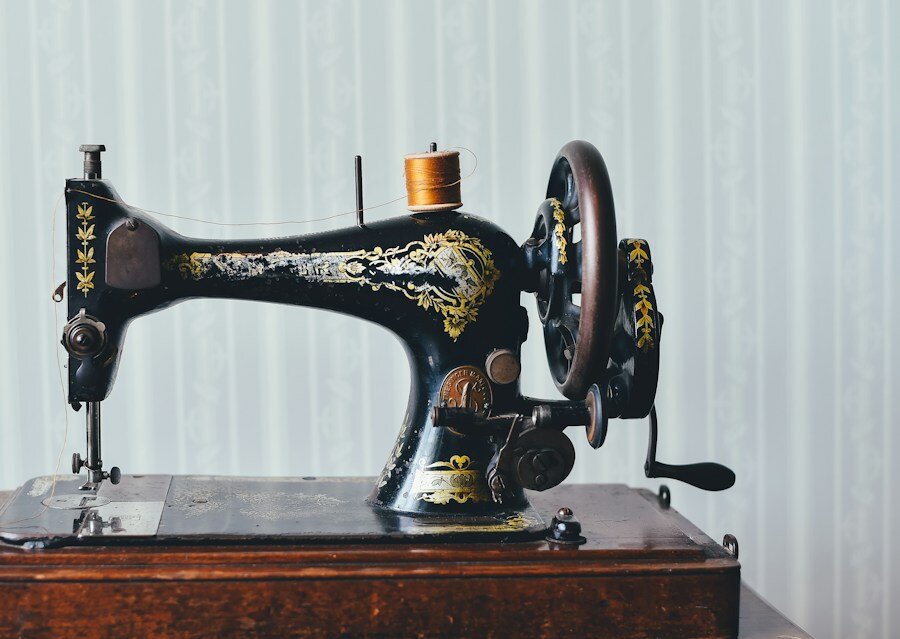
Photo by Annie Spratt on Unsplash
Step-by-Step Instructions
- Pre-treat both fabrics. Wash and dry them the way you plan to launder the finished blanket: cold, gentle cycle, air dry or low tumble. Any shrinking and first-wash shedding happens now, not after you've sewn 72 pockets.
- Cut the front panel. Cut a 36 x 48" rectangle from the chenille, single layer, face up. Run the pile direction along the 48" length so it feels smooth when you stroke it toward your knees. A 54" wide, 1.5 yard cut gives you this panel with scraps left over. Vacuum the cutting table afterward, because chenille sheds fluff.
- Cut the contrasting back. Cut the back panel 40 x 52". That's 2" extra on every side, and it's what becomes your mitered, self-bound border. Lighter fabric here keeps total weight comfortable.
- Layer and mark channels. Lay the back wrong side up, center the chenille face up on top, and clip every few inches. Chalk vertical lines every 4" across the width, giving you nine channels. Then mark crosswise lines every 6" along the length, which makes 72 pockets, each about 4 x 6".
- Stitch the vertical channels. Use a size 110/18 needle, T70 thread, a walking foot, and a stitch length of 3.5 mm. The walking foot feeds both layers evenly so the pile doesn't creep. Sew each line from bottom to top and leave the top edge open. Go slowly over thick spots and turn the handwheel if the needle struggles.
- Fill and close the pockets. For a 4-pound blanket, each pocket gets just under an ounce (64 ounces divided by 72). Weigh the first pocket, then eyeball the rest. Funnel pellets into each channel, push them to the bottom, and stitch across to seal that row of pockets. Repeat up the blanket. Double stitch each crosswise seam, since it takes the most strain.
- Fold the border. Fold the back fabric's raw edge in by 1/2", then fold it over the chenille edge by 1.5". Finger-press only. A hot iron crushes chenille pile, and you'll never get it back.
- Miter the corners. At each corner, fold the back fabric's point diagonally so the crease sits right at the chenille corner. Then fold one side in and over, then the other. The folds meet in a clean 45 degree diagonal. Clip, then hand-tack the miter with a few ladder stitches.
- Topstitch and finish. Edgestitch along the inner fold of the border with the same needle and thread. Trim loose threads, shake out the loose fluff, and brush the pile with a soft brush.
Which Chenille Colors Hide Pet Hair and Spills Best?
Mid-tone greys, browns, and oatmeal shades hide hair, lint, and little spills better than black or white, and a textured weave camouflages more than a flat one. That's the practical answer for a blanket that lives on the couch with a dog.
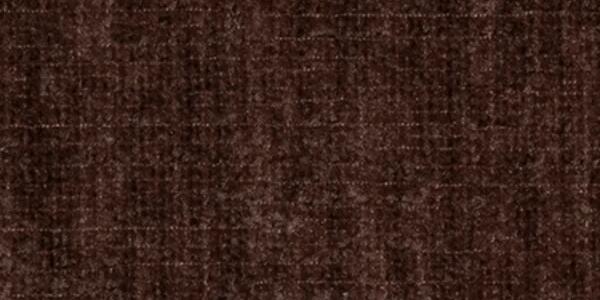
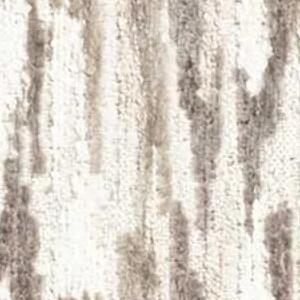
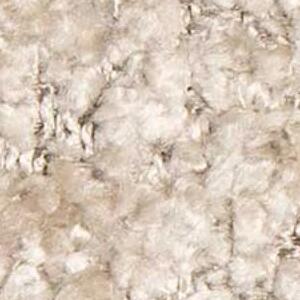
Fall palettes lean earthy right now, with chocolate brown, olive, rust, and warm neutrals everywhere. Grey chenille upholstery fabric pairs well with a rust velvet back for a modern look. If you want something warmer, brown chenille upholstery fabric hides almost everything and looks expensive doing it. A pile of colors is a good problem to have, so here are some real options to peek at:
Shop Chenille Upholstery Fabrics
How Do You Wash a Chenille Lap Blanket Without Ruining the Pile?
Machine wash it cold on a gentle cycle with mild detergent, skip fabric softener and bleach, then air dry or tumble on low heat. Brush the pile once it's dry to bring back the plush.
- Check your filling first. Glass beads handle a wider range of temperatures. Polyethylene pellets need low heat, so air drying is the safest bet for both.
- Wash it alone. A weighted blanket slams around in a machine, and a front-loader or a no-agitator top-loader is gentler on the channels.
- Support the wet weight. Wet pellets drag stitching hard. Dry the blanket flat or draped over two rack bars instead of hanging it by a corner.
- Expect some fluff. A little shedding in the first wash or two is normal. It settles down.
- Never iron the front. If you need to smooth something, steam lightly from the back.
Tips for a Blanket That Lasts
- Use a denim needle and replace it if it starts to skip. Dense weaves dull needles fast.
- Buy a swatch first and give it a hard test. Rub it, scratch it, and splash a little coffee on it.
- Match the thread color to the back fabric, since the bobbin side shows on the border.
- Add a 2" label loop or a hanging tab in the border if you like to display it over a chair.
- Sew a second blanket for a gift. Once you've done the first one, the second goes much faster.
Frequently Asked Questions
Q: How much fabric do I need for a 36 x 48" weighted lap blanket?
You need about 1.5 yards of 54" wide chenille for the front and 1.5 yards of a contrasting fabric for the back, so about 3 yards total. The extra width on the back panel lets you fold it over the front for a mitered border.
Q: Can you wash upholstery fabric?
Yes, if its cleaning code is W or WS. Wash it cold on a gentle cycle with mild detergent and air dry. If the code is S or X, the fabric needs solvent cleaning or vacuuming only, so don't put it in the washing machine.
Q: How heavy should a weighted lap blanket be?
Most weighted lap blankets weigh 3 to 5 pounds. For full-size blankets, the general guideline is about 10 percent of body weight, but a lap blanket sits on a smaller area, so it feels heavier. Ask a doctor before using any weighted blanket with a child.