
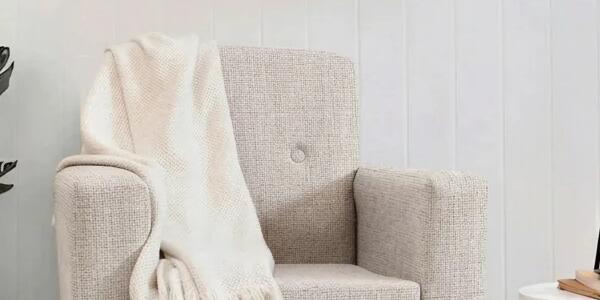
Cooler evenings mean more time on the couch, and more time with a tablet, laptop, or paperback balanced on your knees. A foam wedge fixes the posture problem. The right cover fixes the durability problem. This guide walks you through sewing an upholstery fabric tablet stand pillow and a larger floor reading cushion wedge, and the whole thing fits into a lazy Saturday afternoon. Most versions need a half yard of fabric or less.
Why Does Upholstery Fabric Beat Quilting Cotton for a Tablet Stand Pillow?
Upholstery fabric is built for abrasion, and quilting cotton isn't. A wedge gets slid across couch cushions, dragged across floors, and poked by tablet corners every day, so it needs a fabric with a rated rub count.
Here's the number that matters: the double rub count. In the Wyzenbeek test, a machine rubs the fabric back and forth, and each pass out and back counts as one double rub. Residential upholstery is commonly rated at 15,000 double rubs or more, and heavy-duty fabrics go past 30,000. Quilting cotton generally isn't tested or rated for seating at all. Europe uses the Martindale test instead, where about 20,000 cycles is a common benchmark for heavy domestic use.
Weight matters too. Quilting cotton runs roughly 4 to 5 ounces per square yard, while upholstery fabrics usually start around 10 ounces and climb from there. A heavier weave resists corner punctures, hides the edge of the foam, and keeps its shape after a few hundred lap sessions.
Plus, if you have kids or pets, the dense construction of upholstery fabric shrugs off claws and crumbs far better than thin cotton does. Quotable version: a pillow that lives on the floor and the couch needs a fabric rated for the couch.
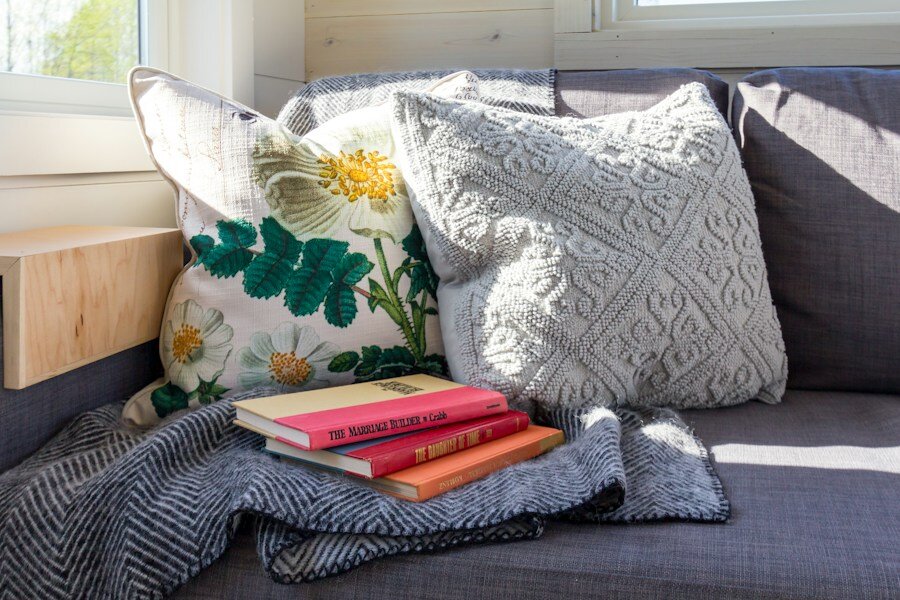
Photo by Calvin Hanson on Unsplash
What Size Should a Wedge or Bolster Cover Be?
Size the cover to match the foam, then add a half-inch seam allowance on every edge. Upholstery fabric has almost no stretch, so a cover cut to the exact foam dimensions plus seam allowance fits snugly without bunching.
For a wedge, you need the base depth (D), the back height (H), and the slope length (S). Calculate S as the square root of D squared plus H squared. Here are two sizes that work well:
- Tablet stand wedge (12" wide x 10" deep x 6" high): slope length is about 11.7". Cut one wrap strip 13" x 29" and two right triangles at 10" x 6", each with seam allowance added. This fits in a half yard of 54" fabric, with room to spare.
- Floor reading wedge (24" wide x 18" deep x 10" high): slope length is about 20.6". Cut one wrap strip 25" x 50" and two triangles at 18" x 10" plus allowance. Buy one yard to be safe.
- Bolster lap pillow (6" diameter x 18" long): circumference is about 18.9". Cut a rectangle 19.5" x 19" and two circles 6.5" across. A half yard covers it.
Use medium-firm foam for wedges, roughly 1.8 to 2.5 lb density. Softer foam collapses under a laptop and the angle disappears by week two.
Which Upholstery Fabric Grips Foam and Couch Cushions Best?
Textured fabrics like chenille and woven upholstery grip best, both against the foam inside and the cushion underneath. Smooth faux leather and tight velvet are tougher, but they slide more.
- Chenille: Honestly, chenille upholstery fabric is criminally underrated for small projects. The looped, tufted yarns create friction on couch cushions, feel soft on your lap, and hide dirt well.
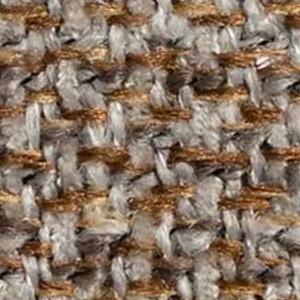
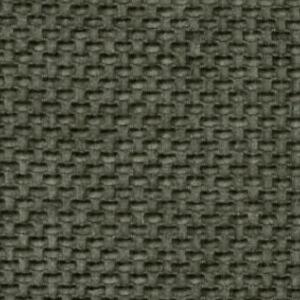
- Woven: A tight woven upholstery fabric is the sturdiest pick for tablet corners. The flat texture grips moderately, and the weave stands up to constant dragging. A neutral like grey woven upholstery fabric hides fingerprints and pet hair.
- Velvet: Velvet upholstery fabric gets a bad rap as delicate, but performance velvets are very durable. The pile can slide on smooth surfaces, so add a grip base (see tips below).
- Faux leather: It's the easiest to wipe clean, which suits kitchen-table and homework-station use. Expect it to slide on leather couches, and use a slightly longer needle and stitch length because needle holes can't close up.
Fall trend note: earthy rust, olive, camel, and chocolate tones are everywhere right now, and a small wedge is a cheap way to try one without committing a whole sofa.
Step-by-Step Instructions
- Gather your supplies. You'll need your foam wedge or bolster, a half yard or more of upholstery fabric, a zipper 2" shorter than your back seam (or extra fabric for an envelope closure), bonded polyester thread, a size 16/100 or 18/110 needle, and a walking foot if you have one.
- Measure the foam and work out your pieces. Use the sizes above, or measure your own foam. Add a half inch of seam allowance to every edge. Mark the grain line so the weave runs straight along the long side of the wrap strip.
- Cut the wrap strip and end pieces. Use sharp shears or a rotary cutter. If the fabric frays, nick the edges and finish them with a zigzag or serger stitch before sewing. Cut the wrap strip in two pieces if you're adding a closure to the back.
- Add the closure. For a zip, sew it between the two halves of the back panel with a zipper foot. For an envelope closure, hem one edge of two back pieces and overlap them by 4" so the opening stays shut. Zip is neater, while envelope is faster and keeps tablet corners from catching on metal teeth.
- Sew the wrap into a tube. With right sides together, stitch the wrap strip's short ends together using a 3 to 3.5 mm stitch length. Open the zipper halfway first if you're using one. Press seams open and flat.
- Attach the triangle ends. Pin one triangle to the tube opening, matching corners to the wrap seams. Sew slowly with the needle down at each corner to pivot. Repeat on the other end.
- Reinforce the stress points. Go back over each corner and the zipper ends with a second row of stitching, backstitching at least three stitches. This is where seams split under repeated use.
- Finish the seams. Zigzag or serge the raw edges. Clip corners at an angle and trim bulk from the points, so the corners turn out crisp rather than lumpy.
- Turn, stuff, and test. Turn the cover right side out, push the corners fully out, and compress the foam to slide it in. Place a tablet on the slope and give it a real shove. If a seam shifts, fix it now.
How Much Fabric Do You Need for a Wedge Pillow?
A half yard of 54" wide upholstery fabric covers a tablet wedge or bolster, and one yard covers a floor reading wedge. Add an extra quarter yard if the fabric has a directional pattern or stripe you want to match.
Because so little fabric is involved, you can afford to splurge on something nice. A project that uses half a yard of a premium chenille costs less than a takeout dinner.
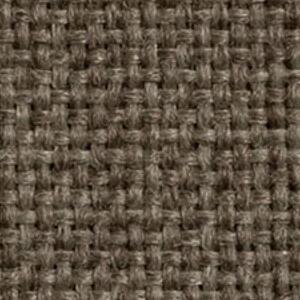
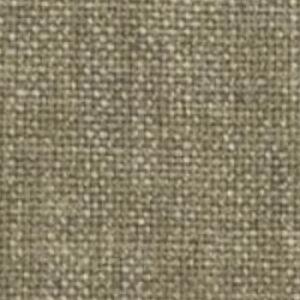
Ready to pick a fabric? Here's a selection of textured upholstery fabrics that suit this kind of project:
Shop Woven Upholstery Fabrics
Tips for a Wedge Cover That Lasts
- Use the right needle and thread. A 16/100 needle and bonded polyester thread handle dense weaves. Regular all-purpose thread wears through at stress points much sooner.
- Add grip to the base. Slide a piece of rubberized shelf liner under the base seam allowance, or stitch a strip of non-slip fabric on the bottom. This keeps smooth fabrics from creeping across the couch.
- Choose a forgiving color. Browns, greys, and creams hide everyday wear. A brown woven upholstery fabric looks great next to fall throws and never shows pet hair.
- Keep it washable. Use the zip or envelope closure so you can remove the cover. Spot-clean with mild soap and water, and check the fabric's cleaning code first. A "W" code means water-based cleaners are fine.
- Make two. Once you've got the pattern, a matching set (tablet wedge plus floor cushion) is a nice gift.
Frequently Asked Questions
Q: What is the best fabric for a tablet stand pillow?
A tight woven or chenille upholstery fabric rated at 15,000 double rubs or higher is the best choice. These fabrics resist tablet corners, grip the couch, and hold up to daily dragging far better than quilting cotton.
Q: How much fabric do I need to cover a reading wedge pillow?
A tablet-size wedge needs about half a yard of 54-inch upholstery fabric, and a larger floor reading wedge needs about one yard. Bolster-style lap pillows usually need a half yard or less.
Q: Can I sew upholstery fabric on a regular home sewing machine?
Yes, most home machines can sew mid-weight upholstery fabric for small projects like pillow covers. Use a 16/100 or 18/110 needle, bonded polyester thread, a longer stitch length around 3 to 3.5 mm, and a walking foot if possible, and sew slowly through thick seams.