
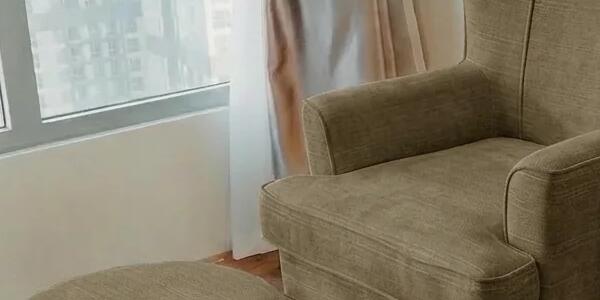
Fabric pumpkins from upholstery fabric look richer, hold their shape better, and last far longer than the thin cotton versions in craft stores. If you've got a pile of velvet, chenille, or corduroy scraps from a reupholstery job or a sample stash, you've got everything you need for a set that'll come out of the storage bin every fall for a decade. This guide covers cutting, gathering, stuffing, stems, yardage, and care.
Why Use Upholstery Fabric for Fabric Pumpkins?
Upholstery fabric is woven to survive daily friction, so it resists the sagging, fraying, and fading that ruin lightweight craft fabric. Residential upholstery is typically rated for at least 15,000 double rubs on the Wyzenbeek test, and heavy-duty fabrics reach 30,000 or more.
A pumpkin gets handled a few hundred times in its life, not tens of thousands. That's a huge safety margin. Here's the thing: the dense pile on velvet, chenille, and corduroy also does something cotton can't. It swallows your stitches. Wobbly seams, a slightly crooked gather, a knot you couldn't hide? The pile covers it.
Plus, these fabrics have weight. A velvet pumpkin sits on a mantel like it means it, while a quilting-cotton one slumps by November. Dogs and kids also tend to be rougher on décor than we'd like, and a pumpkin made from tightly woven upholstery cloth shrugs off a game of fetch much better than a flimsy one.
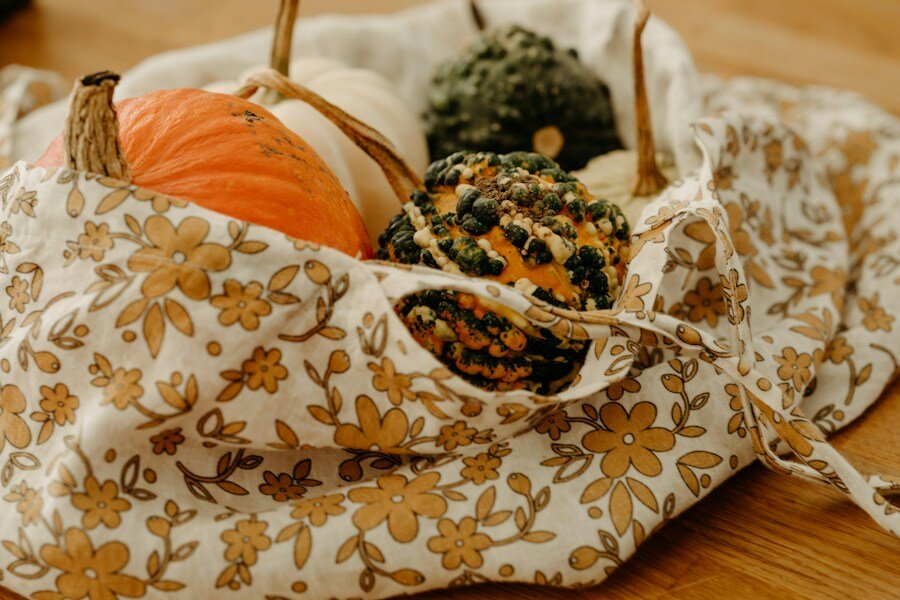
Photo by Annie Spratt on Unsplash
What Materials Do You Need?
You need upholstery scraps, strong thread, polyester fiberfill, and something for stems. That's the short list, and most of it is probably already in your sewing room.
- Upholstery scraps: velvet, chenille, corduroy, or a mix. Cut pieces should be at least as big as your segment pattern plus a half-inch seam allowance.
- Thread: bonded nylon or heavy polyester. Regular all-purpose thread can snap when you cinch the gathers.
- Needles: a size 16/100 or 18/110 denim or upholstery needle for the machine, plus a long hand-sewing needle for gathering.
- Stuffing: polyester fiberfill. A scoop of poly pellets in the base adds stability if you want weight.
- Stems: brown corduroy, green velvet, jute rope, or a real dried stem if you prefer.
- Extras: paper for the pattern, fabric chalk, clips (pins can leave marks in velvet), and a hot glue gun.
Which Upholstery Fabrics Make the Best Pumpkins?
Velvet gives the most polished look, chenille gives the softest and most forgiving texture, and corduroy gives built-in ribbing that mimics real pumpkin ridges. All three work, and mixing them in one set looks great.
Honestly, chenille is criminally underrated for this. Its fuzzy yarns hide seams completely, and a plump orange chenille pumpkin looks like it came from a high-end boutique. For a classic, glossy look, orange velvet catches the light beautifully. For the muted, heirloom pumpkin trend that's been everywhere lately, cream corduroy is hard to beat, since the wales (the raised ribs) follow the pumpkin segments naturally.
For a balanced fall palette, plan on four colors:
- Orange: the classic anchor of the set.
- Rust: a deep terracotta tone, which you can often find in brown velvet shades.
- Cream: for the neutral, farmhouse look.
- Green: for stems, leaves, and one or two moody green pumpkins. Green chenille works well for all three.
One quick rule: always cut with the pile (nap) running the same direction on every segment. Run your hand along the fabric. If it feels smooth one way and rough the other, mark the smooth direction with chalk. Mixed directions make one segment look darker than its neighbors.
How Much Fabric Do You Need for Fabric Pumpkins?
A set of three small pumpkins needs about half a yard, three medium pumpkins need about one yard, and three large pumpkins need about one and a half yards of 54-inch upholstery fabric. Stems come from leftovers.
- Small set (about 4 inches tall): segments cut 7 x 3.5 inches. Roughly 3/8 to 1/2 yard for three pumpkins.
- Medium set (about 6 inches tall): segments cut 10.5 x 5.5 inches. Roughly 7/8 to 1 yard for three pumpkins.
- Large set (about 9 inches tall): segments cut 14.5 x 7.5 inches. Roughly 1 1/2 yards for three pumpkins.
Those numbers include a half-inch seam allowance and a little buffer for pile direction. Alternate segments top to bottom (tip to base) on the fabric to nest them and save yardage, as long as your nap direction stays consistent.
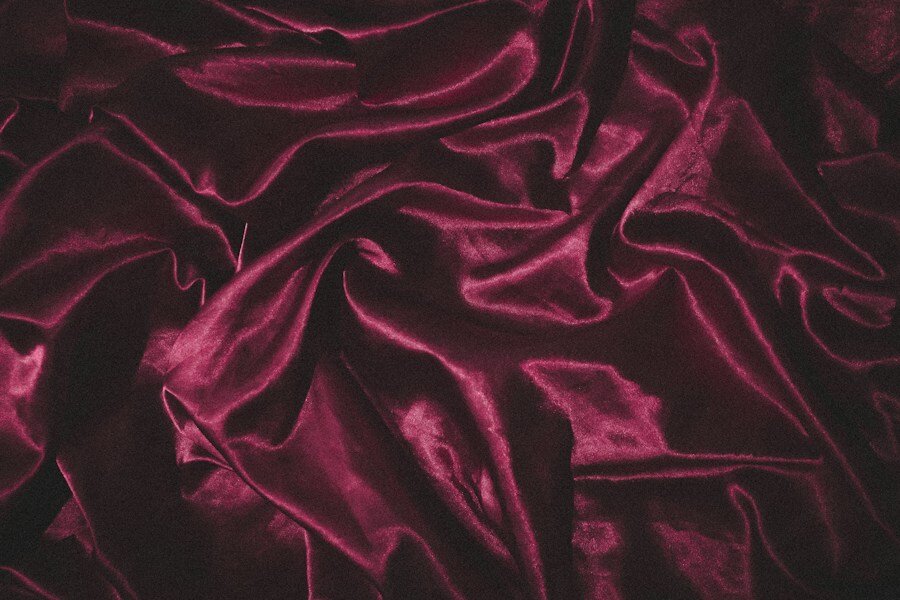
Photo by Kássia Melo on Unsplash
Step-by-Step Instructions
- Make your pattern. Draw a tall, plump oval on paper, wide in the middle and tapered at both ends with the tips cut flat about an inch across. For a medium pumpkin, aim for 9.5 inches tall and 5 inches wide before adding allowance. Cut it out and trace it on the back of your fabric with chalk.
- Cut six segments per pumpkin. Add a half-inch seam allowance and cut with sharp shears. Keep the nap direction consistent. Upholstery fabric frays and sheds, so clean the edges with a lint roller before sewing.
- Sew the segments together. With right sides facing, clip two segments and sew down one curved edge using a longer stitch (around 3 mm). Add the rest one at a time until you have a ball, leaving the final seam open at both ends. Clip into the curves so they lie flat.
- Close the final seam and turn. Sew the last seam, then turn the pumpkin right side out through the top opening. Poke the seams with a chopstick so they sit smoothly. Pile fabrics are thick, so take your time here.
- Gather the bottom. Thread a long needle with doubled thread and sew a running stitch around the bottom opening, about a quarter inch from the edge. Pull tight, knot firmly, and tuck the pucker flat. The pile will hide it.
- Stuff for firmness. Pack fiberfill in small handfuls, pushing into the sides first and filling the center last. Stuff more than feels right. Upholstery fabric has almost no stretch, and a pumpkin that feels slightly overstuffed settles into the perfect shape. Add a scoop of poly pellets at the base for stability if you like.
- Gather the top and cinch the ridges. Run another running stitch around the top opening and pull it closed. Then thread a long needle with strong thread, push it from the top center down through the base, wrap around the outside of one seam line, and return up through the top. Pull to create a deep dimple. Repeat for each seam to form the classic pumpkin ridges.
- Add the stem. Cut a 3 x 6 inch rectangle of corduroy or velvet, roll it tightly, and hand-stitch the long edge. Or wrap 3-inch pieces of thick jute cord with strips of green fabric. Glue or stitch it to the top, then add a leaf cut from green chenille or a curl of twine if you want extra personality.
Out of scraps, or want a specific color for the set? Browse a few cuts from the options below and you can sew a whole matching trio from a single yard.
Shop Velvet Upholstery Fabrics

How Do You Keep Fabric Pumpkins Looking Fresh Year After Year?
Dust them with a lint roller or soft brush, spot clean with a damp cloth, and store them in a breathable container away from sunlight. Following those three habits keeps upholstery pile crisp for years.
Check the cleaning code on your fabric if you still have the tag. "W" means water-based cleaners are fine, "S" means solvent only, "WS" allows either, and "X" means vacuum only. When in doubt, test a hidden spot. A pet-friendly tip: a rubber glove dragged lightly across the surface pulls up dog and cat hair from chenille and corduroy in seconds.
For storage, skip the vacuum bags. Compressing pile for 11 months crushes it. A cardboard box or lidded bin with acid-free tissue works best, and a few cedar blocks keep things smelling fresh. If a velvet pumpkin comes out with flat spots, hold a steamer a few inches away (never touch the fabric) and brush the pile gently back to life.
Sunlight is the real enemy. Even durable upholstery fabrics fade when they sit in a bright window all season, so rotate your display or keep them on a shaded mantel.
Tips for Better Fabric Pumpkins
- Use clips, not pins. Pins leave permanent marks in velvet.
- Mix sizes in odd numbers. Groups of three or five look more natural than pairs.
- Add texture contrast. A cream corduroy pumpkin beside a rust velvet one looks intentional and styled.
- Test your thread strength. Tug your gathers hard before stuffing. A snapped thread after stuffing is no fun.
- Use real hardware for hanging. If you're making a garland, add loops of twill tape before you close the top.
- Save your trimmings. Leftover strips make leaves, stem wraps, and mini pumpkins for place settings.
Frequently Asked Questions
Q: What is the best fabric for sewing fabric pumpkins?
Velvet, chenille, and corduroy upholstery fabrics are the best choices for fabric pumpkins. Their dense pile hides stitching, their weight holds the pumpkin shape, and they resist wear far better than thin craft cotton.
Q: How much fabric do I need to make three fabric pumpkins?
Three small pumpkins need about half a yard, three medium pumpkins need about one yard, and three large pumpkins need about one and a half yards of 54-inch upholstery fabric. Stems and leaves can come from scraps.
Q: How do you clean fabric pumpkins made from upholstery fabric?
Remove dust with a lint roller or soft brush, then spot clean with a barely damp cloth and mild soap if the fabric is water-safe. Let the pumpkin air dry fully before storing it, and avoid soaking because the stuffing holds moisture.