
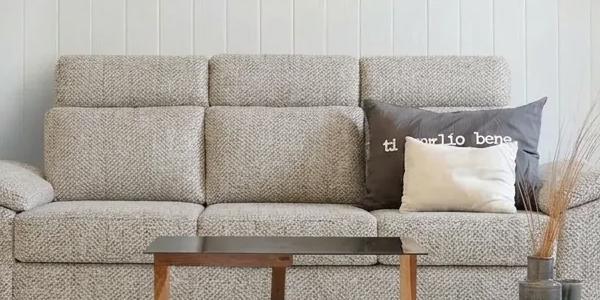
Sofa arm covers are the cheapest insurance policy in your living room, and you can sew a pair in one evening. All you need is a half yard of heavy upholstery fabric, a sewing machine, and a free Monday night. Now that fall has everyone back on the couch with blankets, football, and a dog who insists on the best seat, the arms take the beating first. A good cover protects them and washes clean when the season is done.
Why Do Sofa Arms Wear Out First?
Sofa arms wear out first because they take more friction, skin oil, and weight than any other part of the sofa. Hands, elbows, and pet claws hit the same few inches every single day.
Think about your own routine. You rest your coffee hand there, prop your elbow there, and your cat uses the arm as a scratching post and a lookout tower. Skin oils darken light fabric, and repeated rubbing breaks down fibers at the highest point of the curve. That's why you'll see a shiny, pilled, or threadbare patch on the arm long before the seat cushions look tired.
Durability is measured in double rubs. In the Wyzenbeek abrasion test, a machine rubs fabric back and forth, and each back-and-forth cycle counts as one double rub. Residential upholstery often starts around 10,000 double rubs, while 15,000 is a common minimum for heavy-duty use and 30,000 or more is considered commercial grade. The Martindale test counts differently, but 20,000 cycles or more is a typical benchmark for heavy domestic use. For arm covers, aim high. A cover only a half yard in size can afford the toughest fabric you own.
Weave matters as much as the number. A tightly woven fabric with a dense backing resists snagging, stretching, and seam slippage far better than a loose weave, even at the same double rub count.
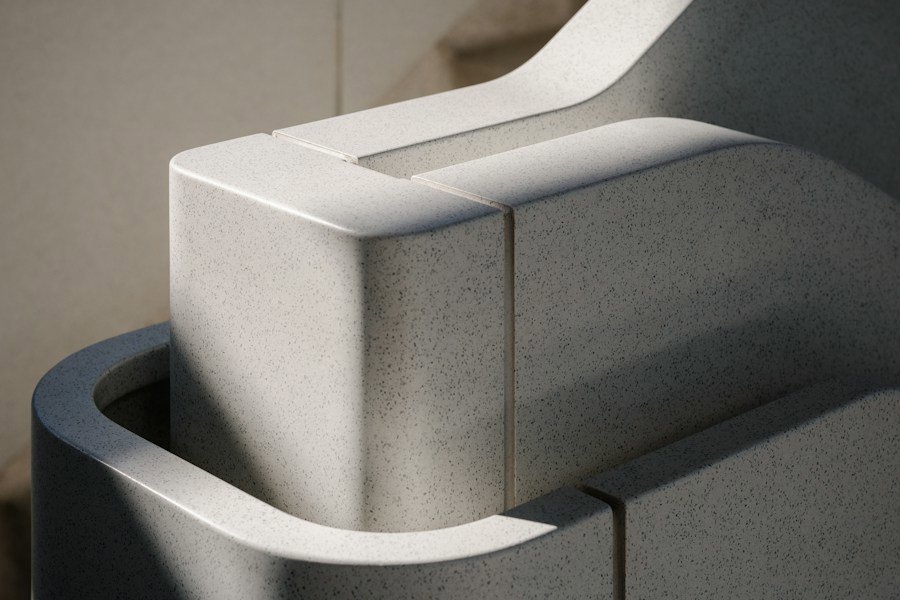
Photo by Jason Leung on Unsplash
What Fabric Is Best for Sofa Arm Covers?
The best fabrics for sofa arm covers are tightly woven upholstery weaves, dense chenille, and faux leather. Each one is durable, but they behave differently under hands, claws, and washing.
- Chenille: Honestly, chenille upholstery fabrics are criminally underrated. The soft, grippy pile keeps a cover from sliding, hides fingerprints, and holds up well to machine washing when you choose a polyester or polyester-blend yarn. Pick a dense, short-pile style if you have cats, since long loops can catch claws.
- Woven: A flat woven upholstery fabric is the most pet-resistant choice. There are no loops to snag, and the tight interlock of yarns stands up to claws and daily friction. Woven fabrics also sew cleanly and press crisp, which is a bonus for beginners.
- Faux leather: Faux leather upholstery fabric wipes clean in seconds and shrugs off spills and dog drool. Here's the catch: it isn't machine washable, and sharp claws can puncture it. Use it where you want a wipe-and-go surface, and use a Teflon or roller foot on your machine so it doesn't stick.
Fun fact: grip comes from texture, not weight. A medium-heavy fabric around 10 to 14 ounces per yard with a slightly textured surface stays put better than a slick, heavier one. Avoid slippery satin-style weaves on arms, no matter how pretty they are.
Polyester-based fabrics are the safest bet for washing. They resist shrinking, dry fast, and hold color through repeated cycles.
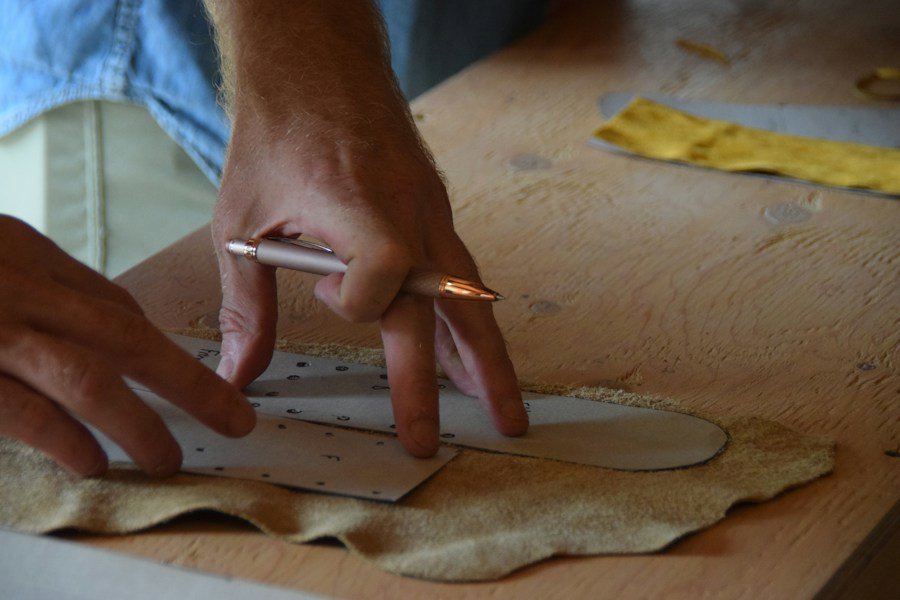
Photo by Cohen Berg on Unsplash
What You'll Need to Sew Sofa Arm Covers
You need about a half yard of upholstery fabric, strong thread, and a few basic sewing tools. A half yard is 18 inches long by roughly 54 inches wide, which is enough for two small caps.
- 1/2 yard upholstery fabric, or two scrap pieces at least 27 by 18 inches
- Polyester or bonded nylon thread
- Heavy-duty needle, size 90/14 or 100/16
- 3/8 inch or 1/2 inch elastic (optional, for the elastic hem version)
- Kraft paper or newspaper for the pattern
- Measuring tape, fabric chalk, clips, and scissors
- Non-slip shelf liner or silicone grip tape (optional)
Scraps work beautifully here. If you don't have any on hand, check the upholstery fabric sale for a half yard at a friendlier price.
Step-by-Step Instructions
- Prewash your fabric. Wash and dry the fabric exactly how you'll launder the finished cover, usually cold water, gentle cycle, and low heat or air dry. Fabric that's going to shrink should do it before you cut, not after you've sewn.
- Measure the arm. Measure the width across the top of the arm, then the drop down each side to where you want the cover to end. Also measure how far along the arm you want it to reach. For a typical arm that's 7 inches across the top with an 8-inch drop on each side, you need about 23 inches of width and an 18-inch length.
- Make a paper pattern. Cut a rectangle from kraft paper using your measurements, plus 1/2 inch seam allowance on every edge. Drape it over the arm and adjust. If you want a tuck-in flap, add 3 extra inches on each long side. Tuck the extra into the crease between the arm and the seat cushion.
- Cut the fabric. Pin the pattern to the fabric with the grain running along the length of the arm. If the fabric has a pile or a directional pattern, make sure the nap runs the same direction on both covers. A half yard fits two 27 by 18 inch pieces side by side.
- Finish the raw edges. Serge or zigzag all four edges before you do anything else. Upholstery fabric frays eagerly, and finished edges keep the cover intact through many washes.
- Hem the front and back edges. Fold each short edge under 1/2 inch, then again 1/2 inch, and stitch with a 3 mm stitch length. Backstitch at both ends. Rounded front corners look neater, so trim them gently if you like.
- Add the tuck flap or elastic hem. For the tuck flap, hem the long edges the same way and leave the extra 3 inches loose to push into the seat crease. For the elastic hem, fold each long edge over 1 inch to make a channel and stitch it, leaving a 2-inch gap. Thread elastic through, pull it to about 80 percent of the edge length, overlap the ends, and sew them together. Then close the gap.
- Reinforce, test, and grip. Stitch a second row 1/8 inch from the first on every hem, since arms get tugged. Slip the cover on and check the fit. If it creeps, glue or sew a strip of non-slip shelf liner to the underside.
How Do You Pick a Color That Matches Your Sofa?
Choose an arm cover color that's one shade darker than your sofa, or a solid that picks up an accent in the room. Darker tones hide skin oils and paw prints, which matters on arms.
Fall decor leans warm right now, with rust, olive, chocolate brown, and creamy neutrals. On a light cream sofa, brown or caramel looks intentional and rich. On a charcoal sofa, a grey woven upholstery fabric in a slightly deeper shade gives a clean, tailored look. Tone-on-tone is the safest approach, while a contrasting color reads as a design choice instead of a patch.
Texture can do the work of color. A chunky chenille over a smooth sofa creates interest without clashing, and a quiet woven over a bold sofa calms it down. Hold your scrap against the arm in daylight and evening light before you cut.
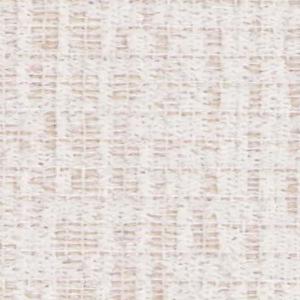
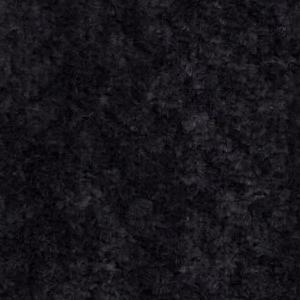
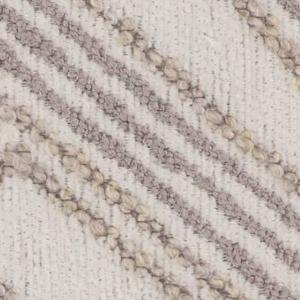
Ready to match your own couch? Here are a few durable options worth browsing.
Tips for Covers That Stay Put and Last
- Use a longer stitch on thick fabric. A 3 to 3.5 mm stitch length puts less strain on heavy fabric than a tight, perforating stitch.
- Clip, don't pin, thick layers. Pins can leave permanent holes in faux leather and distort chenille.
- Make two sets. One covers the sofa while the other is in the wash, so the arms are never bare.
- Wash cold and air dry. Cold water protects color, and air drying protects elastic.
- Brush off pet hair first. A quick pass with a lint roller or rubber glove before washing keeps the washer filter happy.
- Re-check the fit after washing. If the elastic relaxes, snip one end and tighten it.
Frequently Asked Questions
Q: What is the best fabric for sofa arm covers?
Tightly woven polyester upholstery fabric or dense chenille is best for sofa arm covers. Look for a rating of at least 15,000 double rubs on the Wyzenbeek test. Faux leather works too if you prefer wiping to washing.
Q: How much fabric do I need to make two sofa arm covers?
A half yard of 54-inch-wide upholstery fabric makes two arm covers for a standard sofa. Cut two rectangles about 27 by 18 inches. Larger or wider arms may need three-quarters of a yard.
Q: How do I keep sofa arm covers from sliding?
Add a tuck-in flap, an elastic hem, or a strip of non-slip shelf liner under the cover. A textured fabric like chenille or a tight woven also grips better than a slick, smooth weave. Tucking the extra fabric into the crease between the arm and the cushion holds the cover firmly in place.