
You've picked a fabric online, it looked incredible on your screen, you ordered it, and then it arrived looking nothing like what you expected. Sound familiar? You're not alone, and it's one of the most common frustrations in any reupholstery project. The fix is simple: order upholstery fabric swatches first. Testing fabric samples in your actual home lighting before committing to a full reupholstery project this spring saves you money, headaches, and the very real possibility of a sofa you can't stand looking at. This guide walks you through exactly how to do it, step by step.
Why Fabric Swatches Matter More Than You Think
A swatch is a small sample of fabric, usually around 4 by 4 inches or larger depending on the supplier, that lets you see, feel, and test the real material before buying yards of it. Screens show you a color profile. A swatch shows you the truth.
Lighting is the big variable here. Natural daylight, warm incandescent bulbs, cool LED lighting, and evening lamplight can all make the same fabric look like four completely different colors. A warm greige chenille can read as tan under daylight and shift toward pink under a warm-toned lamp. A grey velvet can look soft and silvery in the morning and almost blue by evening. You genuinely can't predict this from a product photo alone.
Plus, texture is something you have to feel. A fabric described as "soft" online might feel stiff or scratchy in person. A "textured weave" might have more visual movement than you wanted. A swatch lets you catch all of that before you're committed to 10 or 15 yards of the wrong thing.
Ordering swatches is also smart budgeting. Most fabric swatches are inexpensive or even free, and comparing a few samples side by side in your actual room is the closest thing to a guarantee you're going to get that the final result looks great.
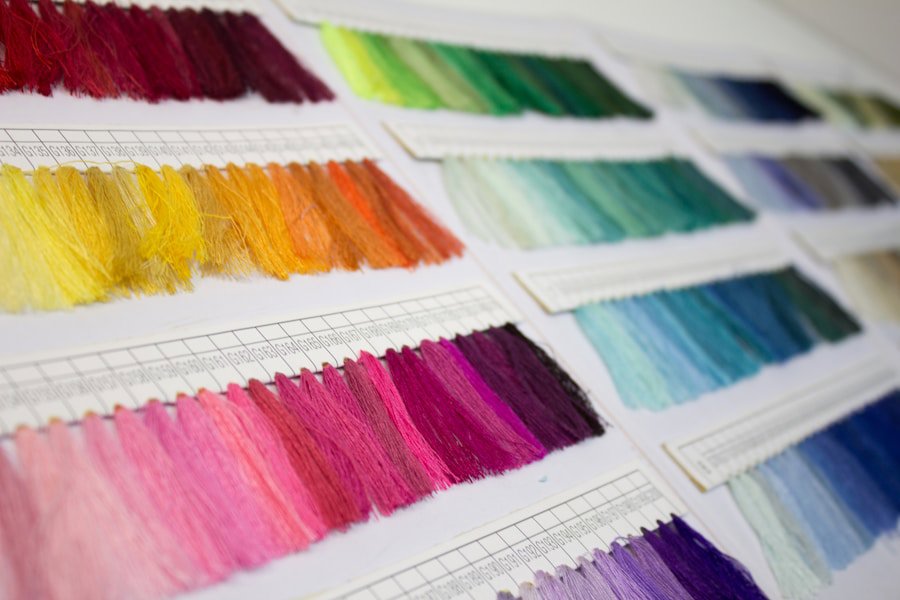
Photo by Ekaterina Grosheva on Unsplash
Step-by-Step Instructions
- Identify the fabrics you're seriously considering. Before you order anything, narrow your list to three to five real contenders. Think about your priorities: do you need something that holds up to kids and pets, or is this a guest room chair that barely gets used? High-traffic pieces need fabrics with a double rub count of at least 15,000, which is the industry measure of how many back-and-forth rubs a fabric can withstand before showing wear. For heavy family use, aim for 30,000 or higher. Chenille, velvet, and woven fabrics often perform well here. Once you know your durability needs, start narrowing by color and texture.
- Order swatches in every color you're considering. Don't just order the one color you think you want. Order two or three variations around it. If you're leaning toward a dusty blue, also grab the slate grey and the soft teal. Colors shift dramatically depending on undertones, and having neighbors to compare them against helps you see what's actually happening. At famcorfabrics.com, swatches are available across categories like velvet, chenille, linen, boucle, and faux leather so you can compare textures alongside colors at the same time.
- Place swatches on the actual piece of furniture. When your swatches arrive, don't just hold them up in the air. Lay them directly on the sofa, chair, or ottoman you're planning to reupholster. Drape them over the seat cushion or across the arm. The way a fabric sits against your existing furniture, flooring, and wall color tells you so much more than holding it under a lamp does.
- Observe each swatch at different times of day. This is the step most people skip, and it's the most important one. Leave your swatches on the furniture for at least a full day, ideally two. Check them in the morning with natural light, midday, late afternoon, and again in the evening with your artificial lighting on. Take a quick photo at each stage. You'll often be genuinely surprised how much a fabric shifts, and the photo comparison makes it easy to see the differences clearly.
- Test swatches under your specific light sources. Turn on every light you normally use in that room and observe the swatches together. If you have a mix of warm and cool bulbs, that matters. If the room gets strong direct sunlight through a west-facing window in the afternoon, test for that too. Fabrics with a high sheen, like velvet or faux leather, will pick up and reflect light differently than matte textures like linen or cotton. Solution-dyed acrylic fabrics, where the color is baked into the fiber rather than applied to the surface, tend to stay more color-stable across different lighting conditions and are worth considering for bright or sunny rooms.
- Compare textures side by side with your hands. Color gets all the attention, but texture is just as important for how a room feels. Run your hand across each swatch and notice the pile direction on velvet, the looped surface of boucle, the ridged channels of corduroy, and the smooth or grainy hand of faux leather. If you have pets, drag your fingers lightly against the grain to see how the fabric responds to friction. Chenille, honestly, is criminally underrated for its softness and durability combination. Boucle is having a serious moment in spring 2025 interiors and brings warmth without feeling heavy.
- Hold swatches against your wall color and flooring. Take each swatch and hold it up next to your wall paint and near your floor. The three-way relationship between your wall color, flooring, and fabric is what creates a cohesive room. A fabric that looks perfect on its own might fight with your warm oak floors or disappear against a similar-toned wall. You want contrast where you want visual interest and harmony where you want calm. This step takes two minutes and regularly saves people from a very expensive mistake.
- Consider the practical care requirements for each fabric. Before you fall in love with a swatch, check what it takes to clean. Some fabrics are spot-clean only. Others are machine washable or can handle upholstery cleaner. Fabrics with a "W" cleaning code can be cleaned with water-based products. Those marked "S" need solvent-based cleaners. If you have kids or pets, a fabric with a "W" or "W-S" code gives you the most flexibility. Faux leather and vinyl are also worth considering for high-mess households since they wipe clean with almost no effort.
- Photograph your top two or three choices in the space. Once you've tested your swatches across different lighting conditions and checked them against your existing room elements, take a deliberate photo of your top contenders laid on the furniture. Use your phone's natural photo mode, no filters. Send it to a friend or family member who knows your style and whose opinion you trust. A fresh set of eyes often catches something you've stopped seeing after staring at the same swatches for three days.
- Make your final selection and calculate your yardage before ordering. When you've landed on a winner, measure your furniture carefully before placing your fabric order. Seat width, seat depth, back height, arm dimensions, and any cushion thickness all factor into your total yardage. A standard armchair typically uses 5 to 7 yards. A three-seat sofa can require 14 to 18 yards depending on the design and pattern repeat. If your fabric has a pattern repeat, you'll need extra yardage to match it up, so factor that into your order.
Photo by Clay Banks on Unsplash
What Fabrics Work Best for Spring Reupholstery Projects?
Spring reupholstery projects tend to pull toward lighter, fresher palettes and textures that feel alive rather than heavy. Linen and cotton blends are perennial spring favorites because they're breathable, relatively easy to work with, and available in the soft neutrals and botanical greens that are trending hard right now. A high-quality linen blend can achieve a double rub count of 15,000 to 25,000, making it genuinely practical for everyday furniture and not just decorative pieces.
Velvet gets a bad rap for being high-maintenance, but modern performance velvets are far more durable than their reputation suggests. Many are rated at 30,000 or more double rubs and can be cleaned with a damp cloth. They also photograph beautifully, which matters if you ever want your living room to look as good in photos as it does in person.
Boucle fabric, with its looped, textural surface, has moved from designer showrooms into mainstream spring interiors this year. It adds visual warmth without adding visual weight, which makes it a smart choice for pieces you want to feel cozy but not heavy. Pair it with natural wood tones and warm whites for the kind of room that looks effortless.
Faux leather and suede remain excellent choices for households with kids or pets. Quality faux leather is constructed with a polyurethane or vinyl coating over a fabric backing, and many options carry a double rub count exceeding 50,000, which puts them among the most durable upholstery materials available. They clean with a damp cloth, don't trap pet hair the way woven fabrics can, and have genuinely improved in look and feel over the last decade.
How Do You Know a Fabric Swatch is Actually Representative of the Full Yardage?
A swatch from a reputable supplier is cut from the same dye lot and production run as the fabric you'll receive when you order full yardage. The color, texture, and weave structure should be identical. The main thing to watch for is dye lot variation, which can occur if you order swatches and then wait several weeks before placing your full order. If time passes, confirm with the supplier that the dye lot is still available or request a fresh swatch before committing.
Also, check the fabric's fiber content and any performance certifications when you're reviewing swatches. Fabrics tested using the Martindale abrasion method, which measures wear by simulating circular rubbing motion across the surface, give you a standardized durability number you can compare across different fabric types. A Martindale rating of 20,000 cycles is considered suitable for general domestic use. Anything above 30,000 is appropriate for heavy-use furniture.
Tips and Troubleshooting
- If two swatches look identical at home but one is significantly cheaper, check the fiber content. Natural fibers like linen and cotton behave differently than synthetics over time, and the price difference usually reflects real performance differences.
- If you can't decide between two colors after testing, go with the one that looks better in your evening lighting. Most people spend more time in their living rooms after dark than they do in full daylight.
- If a swatch feels stiffer than you expected, that doesn't always mean the fabric is uncomfortable. Some upholstery fabrics have a factory finish or backing that softens with use. Ask the supplier about this before ruling it out.
- If you're testing a patterned fabric, order a swatch large enough to see at least one full repeat of the pattern. A tiny swatch of a large floral or geometric print tells you almost nothing about how it'll read on a full piece of furniture.
- Keep your swatches organized. If you're comparing five fabrics across three different furniture pieces, label the back of each swatch with the fabric name and colorway so you don't lose track of what's what.
Frequently Asked Questions
Q: How many fabric swatches should I order before choosing an upholstery fabric?
Order at least three to five swatches per project, including color variations within your preferred palette. Testing multiple options side by side in your actual room lighting gives you a reliable comparison and significantly reduces the risk of ordering the wrong fabric. Most suppliers, including famcorfabrics.com, offer swatches at low or no cost, so there's no reason to limit yourself to one.
Q: Can fabric swatches accurately show how a color will look on a full sofa?
A swatch gives you an accurate read on color, texture, and hand feel, but the scale of a full sofa will intensify the visual impact of any color or pattern. A fabric that looks subtly patterned on a 4-inch swatch may feel bolder when it covers an entire three-seat sofa. If you're unsure, order the largest swatch available or request a sample yard to drape over your furniture before placing your full order.
Q: What is the minimum double rub count I should look for in an upholstery fabric for a family living room?
For a family living room that gets daily use, look for a minimum double rub count of 15,000, which is the standard threshold for residential upholstery fabric. For homes with kids or pets, aim for 30,000 or higher. Faux leather and performance fabrics often exceed 50,000 double rubs and are among the most durable choices for high-traffic furniture. The double rub count measures how many back-and-forth abrasion cycles a fabric can withstand before showing visible wear.