
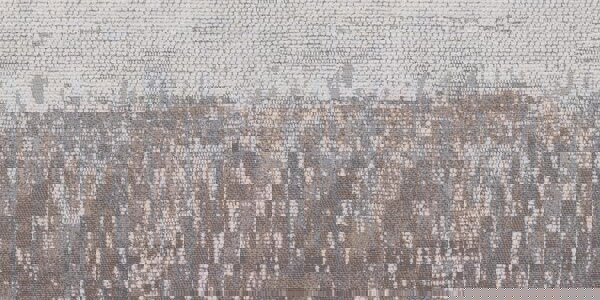
Jacquard upholstery fabric is one of those materials that rewards a closer look. The pattern isn't printed on top of the surface. It's actually woven into the structure of the fabric itself, which changes everything about how it wears, how it feels, and how long it lasts. If you're shopping for upholstery this spring and want something that brings visual interest without sacrificing durability, jacquard deserves serious consideration. Honestly, it's one of the most underestimated categories in the entire upholstery world.
What Exactly Is Jacquard Fabric?
Jacquard fabric is any woven textile produced using a Jacquard loom, a mechanical weaving system invented by Joseph Marie Jacquard in 1804 that allows individual warp threads to be controlled independently. This produces complex, multi-dimensional patterns directly within the weave structure rather than applied as a surface print. The result is a fabric where the design has real depth and texture you can feel with your fingertips.
Because the pattern is structural, it doesn't fade, peel, or crack the way printed or coated fabrics sometimes can. That's a meaningful advantage when you're putting fabric through years of daily use on a sofa or chair. Jacquard is a weaving technique, not a single fiber type, so you'll find it in polyester, cotton, velvet, and blended constructions, each with its own performance profile.
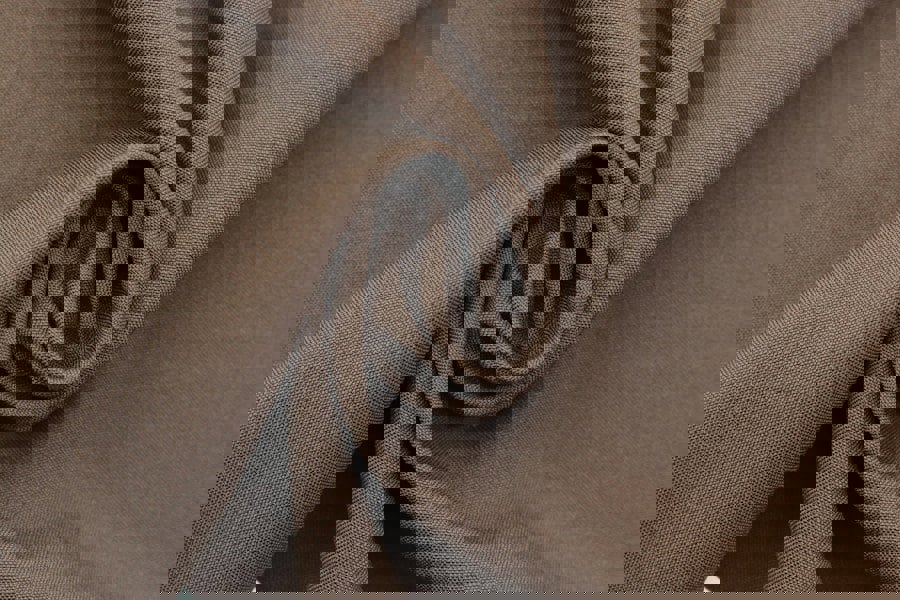
Photo by Divazus Fabric Store on Unsplash
Is Jacquard a Durable Choice for Upholstery?
Yes. Jacquard upholstery fabrics are among the more durable options available, with quality residential grades typically registering 30,000 to 50,000 double rubs on the Wyzenbeek abrasion test, and commercial or contract-grade jacquards often exceeding 100,000 double rubs. Double rub count measures how many back-and-forth abrasion cycles a fabric withstands before showing visible wear, and anything above 15,000 is generally considered suitable for heavy residential use.
The woven construction contributes directly to that durability. Because the yarns are interlaced under tension rather than sitting on a surface, the fabric holds its structure well over time. Polyester-blend jacquards tend to outperform pure cotton versions on abrasion resistance, while cotton-rich jacquards offer a softer hand and better breathability. For families with kids or pets, a tight-weave polyester or poly-cotton jacquard blend is typically the smarter long-term investment.
Here's the thing: a lot of shoppers overlook jacquard because they associate it with formal, old-fashioned furniture. That reputation is outdated. Contemporary jacquard designs include geometric patterns, abstract motifs, and clean botanical prints that fit perfectly in modern and transitional interiors, especially with the nature-influenced palettes trending this spring.
What Types of Furniture Work Best with Jacquard Upholstery?
Jacquard upholstery fabric works exceptionally well on structured furniture pieces where the fabric can be seen without distortion. Sofas, accent chairs, ottomans, and headboards are all strong candidates. The woven pattern reads beautifully on flat or gently curved surfaces, and because the design has built-in visual weight, jacquard can make even a simple furniture silhouette feel intentional and finished.
- Accent chairs: A single jacquard accent chair in a neutral living room does more decorating work than almost any accessory you can buy.
- Sofas and loveseats: Geometric or tonal jacquard works especially well on larger seating pieces where you want pattern without the visual chaos of a bold print.
- Ottoman and bench seating: Jacquard holds up well to the compressive wear these pieces receive, and the texture adds an elevated look at floor level.
- Headboards and bed benches: In the bedroom, jacquard upholstery brings a quiet luxury that works with both maximalist and understated design schemes.
- Dining chairs: A tight-weave jacquard is a practical choice for dining chairs, where you want something that cleans easily but still looks polished.
What jacquard is less suited for is very loose or draped applications, like cushion covers with heavy gathering or casual slipcovers. The structured weave performs best when it's pulled taut and upholstered cleanly.
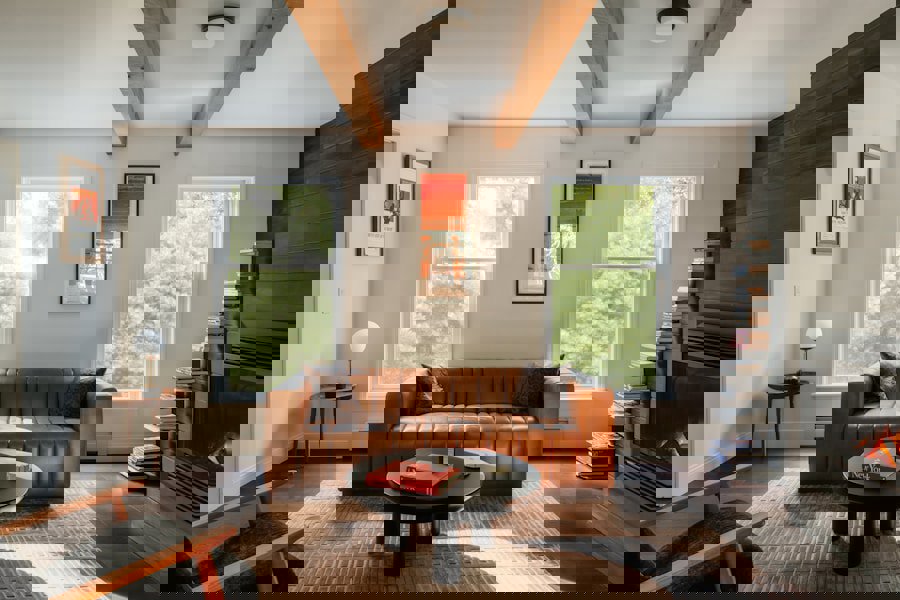
Photo by Clay Banks on Unsplash
How Do You Care for Jacquard Upholstery Fabric?
Most jacquard upholstery fabrics are best maintained with regular vacuuming using a soft brush attachment, which prevents dust and debris from working into the weave. For spot cleaning, a small amount of mild detergent diluted in cool water applied with a clean white cloth is the standard approach. Always blot, never scrub, and work from the outside of the stain inward to avoid spreading.
Polyester-blend jacquards are generally more stain-resistant than cotton versions because polyester fibers are less absorbent. If you're choosing jacquard for a high-traffic household, look for options labeled with a cleaning code of "W" (water-based cleaner safe) or "S/W" (both solvent and water-based cleaners safe). Avoid prolonged direct sunlight on cotton-heavy jacquard, since natural fibers can experience UV degradation over time, a consideration worth keeping in mind for south-facing rooms this time of year.
Also, if your jacquard fabric has a pile component (like a jacquard velvet), follow the same directional care practices you'd use for standard velvet. Brushing against the pile can permanently alter the sheen and texture.
Jacquard vs. Other Patterned Upholstery Fabrics: What's the Difference?
The clearest distinction between jacquard and other patterned fabrics is structure. Printed fabrics have their pattern applied to the surface after weaving, which means the design can wear away or crack under friction over time. Embroidered fabrics have decorative stitching added on top of a base textile. Jacquard, by contrast, creates pattern through the weave itself, so the design runs all the way through the fabric structure.
Compared to chenille (which is genuinely great, and also underrated), jacquard tends to have more defined pattern capability. Chenille excels at tonal texture, while jacquard delivers more intricate, graphic designs. Compared to woven stripes or plaids, jacquard allows far more complex imagery, including curves, florals, and detailed geometric forms, that simple over-and-under weaving can't replicate.
For designers, jacquard offers a unique advantage: you can get the visual complexity of a printed fabric with the structural longevity of a woven textile. That's a combination that's hard to beat when you're specifying for a client who wants something beautiful and built to last.
Frequently Asked Questions
Q: What is jacquard upholstery fabric?
Jacquard upholstery fabric is a woven textile where the pattern is created directly within the weave structure using a Jacquard loom, rather than being printed or embroidered on the surface. This makes the design more durable and dimensionally textured than surface-applied patterns.
Q: How many double rubs should a jacquard upholstery fabric have for home use?
For residential upholstery, look for a jacquard fabric with at least 15,000 double rubs on the Wyzenbeek abrasion test. Quality residential jacquards typically range from 30,000 to 50,000 double rubs, which is well suited for everyday furniture use including sofas and accent chairs.
Q: Can jacquard fabric work in a modern or contemporary home?
Yes. Contemporary jacquard designs include geometric, abstract, and minimal botanical patterns that fit naturally in modern and transitional interiors. The old association with formal or traditional furniture doesn't reflect the range of jacquard styles available today, especially in the neutral and earth-toned colorways trending this spring.