
If you work from home, your home office upholstery is doing serious heavy lifting. You're sitting on it for eight or more hours a day, you're probably eating lunch on it, and it's showing up in the background of every video call you take. Spring is a natural moment to reassess what's working and what isn't, and the right fabric choice can genuinely change how your space feels to work in. This guide is about finding spring upholstery fabrics for home offices that look polished, hold up to daily use, and actually make it easier to get through a long workday without feeling like you're trapped in a waiting room.
Why Your Home Office Fabric Choice Is Different from the Rest of Your House
Most upholstery decisions are about looks first and durability second. A decorative throw pillow on a guest bed doesn't need to survive much. Your office chair or work sofa is a completely different situation. It needs to handle friction, body heat, and repeated contact every single day, which puts it closer in demand to a commercial seat than a living room accent piece.
Fabric durability is typically measured in double rubs. One double rub equals one back-and-forth motion across the fabric, simulating wear. A fabric rated at 15,000 double rubs is considered suitable for light residential use. For a home office where you're sitting and shifting constantly, you want a minimum of 30,000 double rubs, and honestly, 50,000 or higher is a smarter target. Performance fabrics in that range exist at accessible price points, so you don't have to sacrifice your budget to get real durability.
Beyond wear ratings, think about what daily contact does to a fabric over time. Oils from skin, friction from clothing, and the occasional coffee spill all accumulate. A fabric that's easy to spot-clean is not a luxury in a home office. It's a necessity.
Photo by Rafael Sales on Unsplash
What Are the Best Upholstery Fabrics for a Home Office?
The best upholstery fabrics for a home office combine durability, easy maintenance, and a look that reads as intentional rather than accidental. Chenille, linen blends, performance velvet, and woven textiles all work well depending on your aesthetic and how hard you are on furniture.
Here's a closer look at the top options and what makes each one worth considering:
- Chenille: Honestly, chenille is criminally underrated for home offices. It has a soft, slightly textured surface that reads as sophisticated without trying too hard. It's woven from short fibers looped around a core yarn, which gives it that plush feel and also makes it more forgiving on seams and high-contact areas. Look for chenille blends that include polyester or nylon for added durability. Many chenille fabrics reach 30,000 to 50,000 double rubs, making them genuinely suitable for daily use.
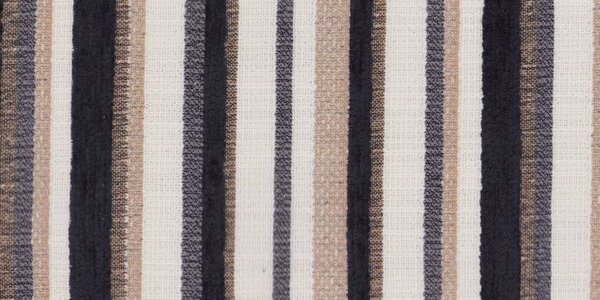
- Woven fabrics: A tightly woven upholstery fabric in a solid or subtle stripe is one of the most professional-looking choices you can make for an office space. Woven construction means the color and pattern are built into the structure of the fabric rather than printed on top, so they resist fading much better over time. Woven fabrics in neutral tones like grey, cream, or blue are particularly popular for spring home office refreshes right now.
- Linen blends: Pure linen wrinkles and stains easily, but linen blended with polyester or cotton gives you that clean, airy look associated with spring while adding enough resilience for regular sitting. Linen blends breathe well, which matters if you run warm during long work sessions. They photograph beautifully for video calls, too. No one's going to miss that your background reads effortlessly put-together.
- Performance velvet: Velvet gets a bad rap for being high-maintenance, but performance velvet is a different product entirely. It's typically made from solution-dyed polyester or a polyester-nylon blend, which means the color is locked into the fiber itself rather than sitting on top. That makes it significantly more stain-resistant and easier to wipe clean. A good performance velvet can reach 100,000 double rubs. For a home office, a deep blue, soft grey, or muted green velvet chair reads as refined and works well against most wall colors.
- Faux leather and vinyl: These are the easiest to clean, full stop. A damp cloth handles most spills immediately. They don't absorb odors and they don't trap pet hair. The trade-off is breathability. If you live somewhere warm or run hot, faux leather and vinyl can feel uncomfortable during extended sitting. For shorter workdays or cooler climates, they're a completely practical choice, and modern faux leather options look genuinely elegant.
How Do You Reduce Visual Fatigue with Fabric Color and Texture?
Visual fatigue is real, and your surroundings contribute to it. Choosing the right fabric color and texture for your home office can meaningfully reduce the mental drain that accumulates over a long workday.
High-contrast, highly saturated colors in your immediate field of vision pull on your attention constantly. Your brain registers them as something to respond to, even when you're trying to focus on a screen. Softer, muted tones in the mid-range of the color spectrum, think sage green, warm grey, dusty blue, soft cream, are far easier for your eyes to rest on without triggering that low-level stress response.
Spring is a natural season to bring in those softer tones. Current home decor trends are leaning into what designers call "quiet luxury," which translates practically to fabrics in organic, understated hues with subtle texture rather than bold pattern. A woven grey, a muted sage green chenille, or a warm cream linen blend all fit that direction and work hard in a home office environment.
Texture matters too. A fabric with a light surface variation, like a low-pile chenille or a woven with a slight cross-grain texture, is visually softer than a flat, shiny surface. Shiny fabrics like high-gloss vinyl or certain synthetic blends can create subtle glare that adds to eye strain when you're sitting near a window or under overhead lighting. Matte and semi-matte finishes are a better call for a workspace.
- Colors to prioritize: Sage green, warm grey, dusty blue, soft cream, warm white, muted taupe
- Colors to use carefully: Bright red, high-contrast black and white patterns, saturated orange or yellow (great as accents, tough as a primary seating fabric)
- Textures that help: Low-pile weaves, chenille, linen blends, brushed performance fabrics
- Textures to be cautious with: High-gloss vinyl near windows, heavily reflective synthetics
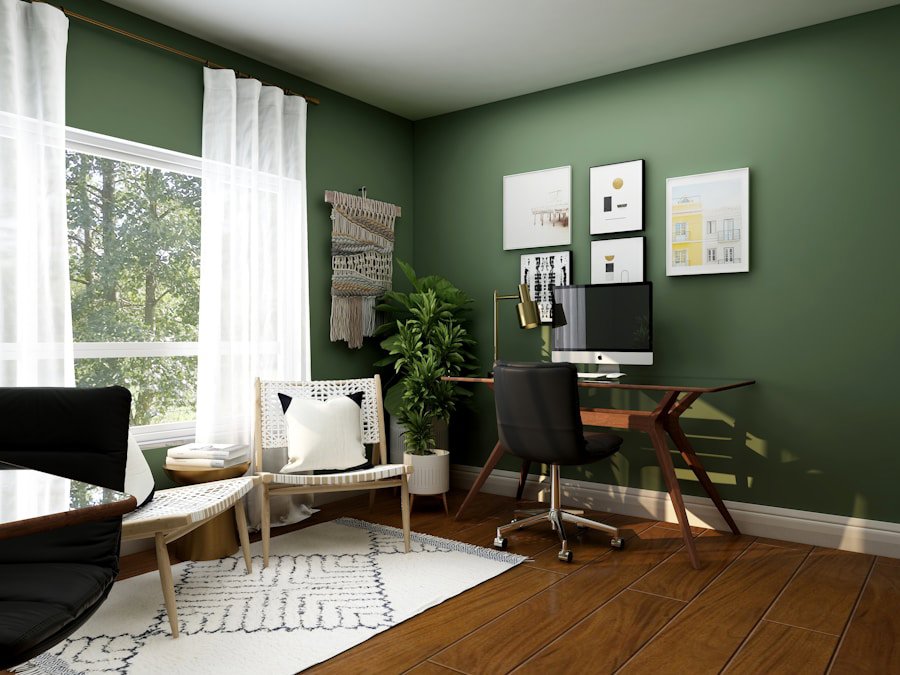
Photo by Collov Home Design on Unsplash
Practical Durability Considerations for Work-from-Home Spaces
Durability in a home office isn't just about the fabric holding its shape. It's about how the fabric behaves with the specific stresses your workday creates.
Pilling is a common issue with lower-quality chenille and some velvet blends. It happens when short fibers work loose and tangle on the surface, creating those small fuzzy balls that make upholstery look worn fast. Look for tightly woven constructions and fabrics that specify "anti-pill" finishing if this is a concern for you.
Color retention matters more than most people expect. A fabric that fades within a year of sun exposure from a nearby window is going to look tired long before it wears out structurally. Solution-dyed fibers, where color is added during the manufacturing of the fiber rather than applied afterward, offer significantly better UV resistance. This is especially true for solution-dyed acrylic and solution-dyed polyester, both of which are common in higher-performance upholstery lines.
Cleanability is the other big one. Upholstery fabrics typically carry cleaning codes: W (water-based cleaner safe), S (solvent cleaner only), WS (either), or X (vacuum only). For a home office where you're eating, drinking coffee, and using hand lotion regularly, a W or WS rating is strongly preferable. Check the cleaning code on any fabric you're considering before you buy it.
- Minimum 30,000 double rubs for daily home office use, 50,000+ is better
- W or WS cleaning code for easy spot treatment
- Solution-dyed fibers for better fade resistance near windows
- Anti-pill construction if you're choosing chenille or velvet blends
How to Pull the Look Together for Spring
A home office refresh doesn't require reupholstering everything at once. Sometimes one well-chosen fabric on a key piece, your desk chair, a small sofa, or even a window seat cushion, is enough to change how the whole room feels.
For spring specifically, the most versatile direction is adding softness and a little life without making the space feel like a living room that forgot its purpose. A woven fabric in warm grey or dusty blue on your main chair, paired with a linen blend cushion in cream or soft green, keeps things professional while still feeling like spring happened in there.
Stripes are having a strong moment in home decor right now and work particularly well in office spaces because they add visual interest without the busyness of a floral or abstract print. A subtle stripe in two tones of grey or a classic blue and cream combination reads as intentional and put-together on camera.
If you've got a neutral chair you're keeping, consider a coordinating fabric for a small accent piece or cushion. That small move costs very little and still gives your space a seasonal lift without committing to a full reupholstery project.
Frequently Asked Questions
Q: What is the most durable upholstery fabric for a home office chair?Performance velvet and tightly woven polyester or chenille blends are among the most durable options for a home office chair. Look for a double rub count of at least 30,000, which measures how many back-and-forth passes the fabric can withstand before showing wear. Performance velvet with a polyester or nylon base can reach 100,000 double rubs, making it an excellent long-term choice for high-use seating.
Q: What fabric colors are best for reducing eye strain in a home office?Muted, mid-range tones like sage green, warm grey, dusty blue, and soft cream are the best fabric colors for reducing visual fatigue in a home office. These colors don't pull aggressively on your attention the way saturated or high-contrast colors do, making them easier to be around for extended periods.
Q: How do I know if an upholstery fabric is easy to clean?Check the cleaning code on the fabric's product label or listing. A "W" code means it's safe to clean with water-based products, which is the most practical option for a home office. A "WS" code means you can use either water-based or solvent cleaners. Avoid fabrics coded "X" (vacuum only) or "S" (solvent only) if you want easy spot-cleaning for everyday spills.