
If you've got patio chairs or a loveseat that migrates into your living room every October, you already know the problem. The fabric that looked fine on the deck starts looking rough under your indoor lighting, or worse, it brings a musty, faded presence into a room you actually care about. Choosing the right upholstery fabric for outdoor furniture that also lives indoors means thinking about two environments at once, and the good news is that several fabric types handle both beautifully without any special treatment between seasons.
This isn't about buying two sets of cushions. It's about buying the right fabric once, and feeling good about it on the porch in July and in the den in January.
Why Most Outdoor Fabrics Fail the Indoor Test
Standard outdoor fabrics are built to survive, not to impress. A lot of them are thick, plasticky, or printed with patterns that only work poolside. They can feel stiff, look cheap under warm interior lighting, and clash with whatever you've got going on inside. That's the gap worth closing.
The fabrics that transition well share a few traits. They're fade-resistant without looking industrial. They clean up easily without needing special sprays. And they have enough visual texture or pattern that they hold their own next to indoor furniture. Double rub count matters here too. That's the industry measure of how many times a fabric can be rubbed back and forth before it starts to break down. For furniture that's moved, used outdoors, and used indoors, you want at least 30,000 double rubs. Quality transition fabrics often hit 50,000 or higher.
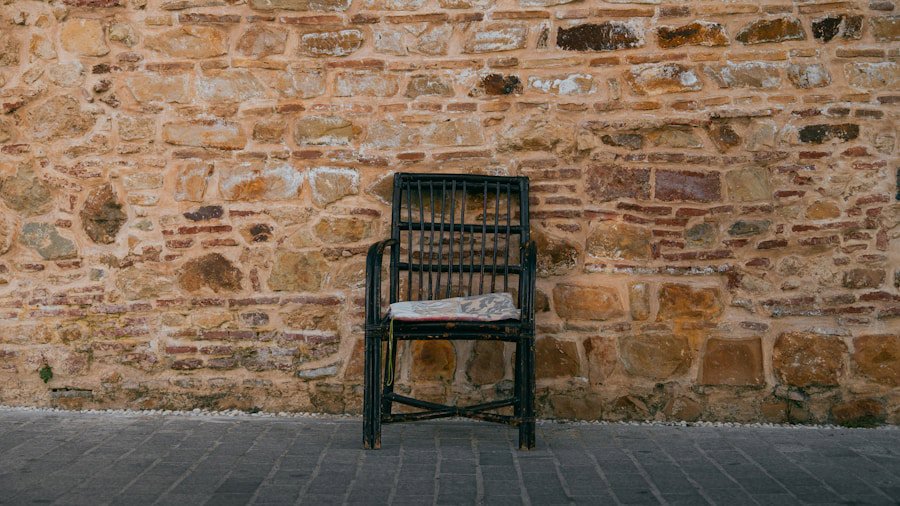
Photo by Othman Alghanmi on Unsplash
What Is the Best Fabric for Outdoor Furniture That Comes Inside in Winter?
Solution-dyed acrylic is the single best fabric choice for furniture that lives both outdoors and inside your home. The color is locked into the fiber during manufacturing rather than applied to the surface, which means it resists UV fading, moisture, and mildew without any seasonal treatment.
Here's the thing: solution-dyed acrylic doesn't look or feel like a technical fabric. It drapes softly, comes in a wide range of colors and woven patterns, and holds up to cleaning with mild soap and water. It scores extremely well on the Martindale abrasion test, which measures fabric durability through a circular rubbing motion that simulates real-world wear. A fabric rated at 20,000 Martindale cycles is considered suitable for heavy domestic use. Many solution-dyed acrylics exceed 50,000 cycles, making them genuinely tough without broadcasting it.
If you've ever seen patio cushions that still look vivid after five summers, that's almost always solution-dyed acrylic doing its job.
Fabric Types That Work Well in Both Settings
Beyond solution-dyed acrylic, a handful of other fabric categories earn their keep across both environments. Here's what's worth considering:
- Woven fabrics with tight construction: A tightly woven fabric resists dirt, pet hair, and snags. Woven upholstery fabrics made with synthetic fibers or synthetic-natural blends give you the warmth of texture with the resilience of performance fiber. They look intentional indoors and hold up to outdoor use without pilling or pulling apart at the seams.
- Vinyl and faux leather: These are genuinely underrated for transitional furniture. Vinyl cleans with a damp cloth, never absorbs moisture, and modern faux leather options have come a long way from the sticky, cracking versions of ten years ago. They don't breathe well in direct heat, so full sun exposure isn't ideal, but for covered patios or furniture that's only partly outside, they're excellent. Indoors, a good faux leather reads as intentional and polished.
- Performance chenille: Honestly, chenille is criminally underrated for this exact use case. When it's made with solution-dyed or performance fibers, chenille brings softness and living-room-worthy texture without sacrificing durability. It's not your grandmother's chenille anymore. Performance versions resist staining and fading, and they feel luxurious enough to anchor a room in winter.
- Jacquard weaves in performance fiber: Jacquard refers to a weaving technique that creates raised patterns directly in the fabric structure rather than printing them on top. This matters because the pattern won't fade, crack, or wash out. A jacquard woven in synthetic or blended yarn brings a designer look that works indoors while still resisting the wear of outdoor use.
- Stripes and solid weaves in synthetic blends: Simple stripe patterns and solid colors in performance weaves are some of the most versatile choices available. They don't scream "patio" when they're inside, they're easy to match with existing decor, and they age well with repeated cleaning.
What Fabrics Should You Avoid for Furniture That Moves Between Seasons?
Pure cotton, standard linen, and untreated natural fiber blends are the ones to skip. Natural fibers absorb moisture, take longer to dry, and are vulnerable to mildew when they get trapped in a storage area or left on a partly covered porch. They also fade faster under UV exposure than performance fabrics do.
Standard velvet is beautiful indoors but has no business going near outdoor conditions. It marks easily, holds moisture, and will show every bit of sun and humidity damage. The same goes for uncoated wovens with open, loose constructions. A high thread count alone doesn't equal durability if the fibers themselves aren't built for exposure.
The quick test: if the fabric's care instructions say "dry clean only" or "keep away from moisture," it's not making the trip outside.
Colors and Patterns That Look Right in Both Places
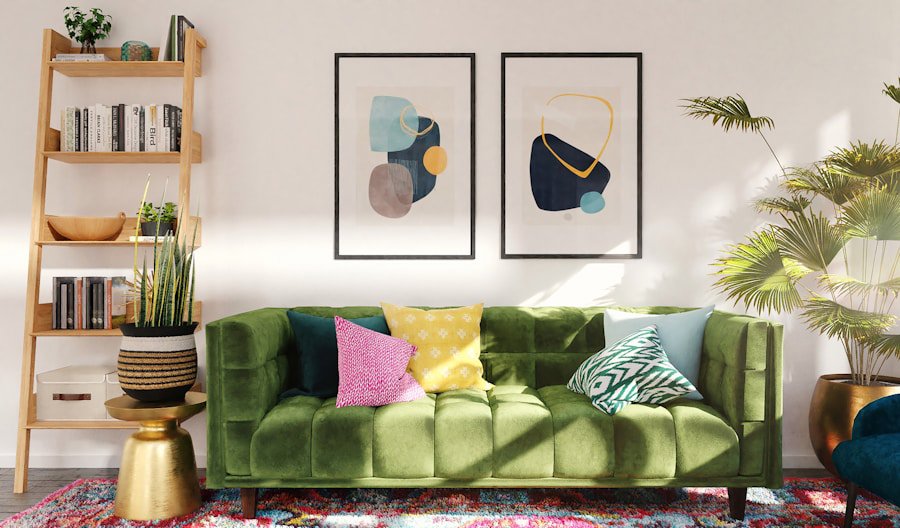
This is where a lot of people make the mistake of going too "outdoor" with their fabric choice. Bright tropical prints and bold geometric patterns can feel jarring once they're moved inside for the season. The fabrics that transition most smoothly tend to sit in a middle ground.
For summer 2025, the trending palette leans into warm neutrals, earthy greens, and deep blues that work as well on a covered porch as they do in a neutral living room. Beige, grey, and cream in woven or textured fabrics are the easiest to integrate inside. Multi-color woven patterns with muted tones land well in both environments too, especially when the pattern has some structure to it rather than being cartoonish or overly tropical.
Blue upholstery is having a strong moment right now, particularly in muted navy or dusty teal tones. These read as relaxed outdoors and sophisticated indoors, which is exactly the combination you want from a fabric that needs to do double duty.
Practical Buying Tips Before You Commit
A few things worth checking before you order:
- Ask about the double rub count. Anything under 15,000 is light-duty. For transitional furniture that gets real use, aim for 30,000 or higher. Some performance fabrics go well past 100,000.
- Check whether the fabric is solution-dyed or surface-printed. Solution-dyed holds color at a fiber level. Surface-printed inks sit on top of the fabric and will fade faster under UV exposure.
- Look at the fiber content label. Polyester, acrylic, and polypropylene blends are your friends here. A blend that's at least 50% synthetic will perform better across both environments than a primarily natural fiber fabric.
- Order samples first. Fabric color reads differently in outdoor light versus indoor light. A sample lets you test both conditions before committing to yardage.
- Consider the backing. A fabric with a tight acrylic or latex backing resists moisture seeping through to the cushion foam underneath, which matters a lot for outdoor use and extends the life of the whole cushion.
The goal is fabric you're actually proud of in both settings. Not something you tolerate inside for five months because you didn't want to store it differently. The fabrics exist. You just need to know what to look for.
Frequently Asked Questions
Q: Can I use indoor upholstery fabric on outdoor furniture if it comes inside for winter?It depends on the fabric and how much outdoor exposure it gets. Standard indoor fabrics like cotton, linen, and velvet will absorb moisture, fade in UV light, and develop mildew if used outdoors, even part-time. If your furniture is on a fully covered porch with minimal sun and rain exposure, a performance indoor fabric may hold up. For any real outdoor use, solution-dyed acrylic or a performance synthetic blend is the safer choice.
Q: What does solution-dyed mean and why does it matter for outdoor fabric?Solution-dyed means the color pigment is added to the fiber before it's spun into yarn, rather than dyed or printed onto the finished fabric. This locks color deep into the fiber so UV rays and moisture can't strip it away from the surface. Solution-dyed fabrics retain their color significantly longer than surface-dyed alternatives under outdoor conditions.
Q: How do I clean upholstery fabric on furniture that's been outside all summer?For most performance and solution-dyed fabrics, a solution of mild dish soap and lukewarm water applied with a soft brush handles dirt, pollen, and light mildew. Rinse with clean water and let the fabric air dry fully before bringing the furniture indoors. Avoid bleach on colored fabrics unless the manufacturer specifically lists it as safe, as it can break down fiber structure over time even in performance fabrics.