
If you're shopping for upholstery fabric in the summer, you've got a very specific problem on your hands. Furniture that lives near sliding doors, sunrooms, screened porches, or anywhere it sees both cool air conditioning and hot outdoor air is under real stress. Fabrics expand slightly in heat and contract when they cool down. Do that enough times, and you'll start to see puckering, fading, and general sadness where your beautiful sofa used to be. Selecting the right upholstery fabric for temperature fluctuations and indoor-outdoor transitions isn't a luxury concern, it's a practical one that affects how long your furniture looks good and holds together.
Why Temperature Changes Are Harder on Fabric Than You Might Think
Here's the thing: fabric behaves a lot like most materials when it meets heat. It expands. When it cools back down, it contracts. For furniture that stays in one consistent climate, that's not a big deal. But pieces that move between an air-conditioned living room and a 90-degree patio, or sit next to a window that swings from morning cool to afternoon blast-furnace, go through that cycle repeatedly. Over time, the stress weakens the fiber structure, loosens the weave, and causes the fabric to look tired and pulled even before the actual wear sets in.
UV exposure compounds the problem. Sunlight doesn't just fade color, it breaks down fiber bonds at a molecular level. A fabric that looks rich and saturated in October can look washed out by August if it's been sitting in direct sun without any UV resistance built into the fibers. Certain dye methods lock color deep into the fiber rather than just coating the surface, which makes an enormous difference in how a fabric holds up.
The good news is that some fabrics are genuinely built for this kind of punishment. You just need to know which ones to look for.
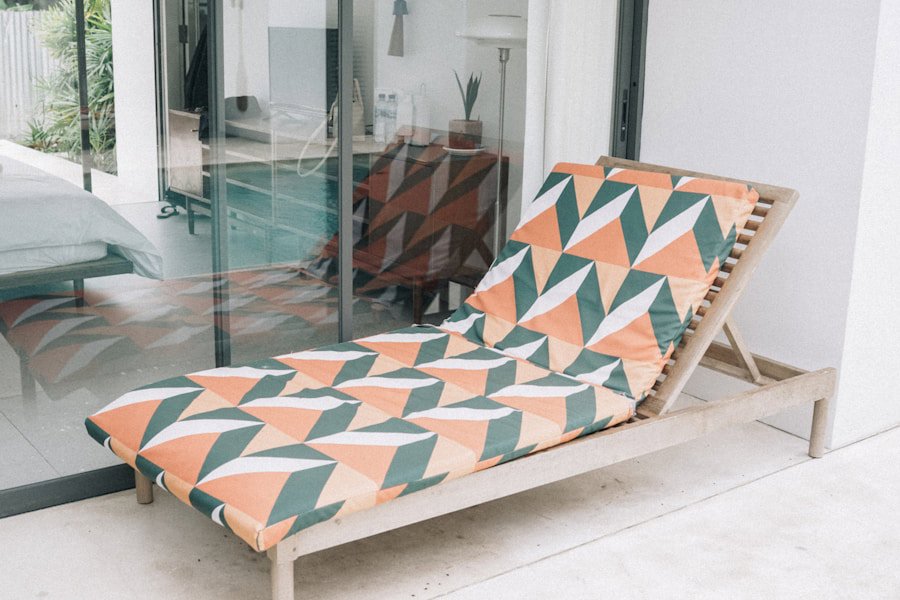
Photo by Asep Rendi on Unsplash
What Is the Best Upholstery Fabric for Indoor-Outdoor Temperature Fluctuations?
Solution-dyed acrylic is the single most reliable upholstery fabric for spaces that experience significant temperature changes and UV exposure. Unlike conventionally dyed fabrics where color sits on the surface of the fiber, solution-dyed acrylic has color integrated directly into the fiber itself during the manufacturing process, which means UV rays have no surface coating to bleach away. Fade resistance in solution-dyed acrylics is dramatically higher than in piece-dyed or yarn-dyed alternatives.
Beyond color stability, solution-dyed acrylic fibers don't absorb much moisture, which reduces the expansion and contraction cycle that damages other fabrics over time. They also resist mildew, which matters a lot if your furniture gets any humidity exposure from open doors or porches. For double rub counts (that's the industry measure of how many back-and-forth rubs a fabric survives before showing wear), quality performance acrylics typically exceed 50,000 double rubs, putting them well above the 15,000 double rubs generally recommended for heavy residential use.
Other strong options for temperature-variable environments include:
- Solution-dyed polyester: Similar dye-in-fiber benefits to acrylic, usually at a lower price point. Not quite as UV-resistant as acrylic but significantly better than most natural fibers.
- Vinyl and faux leather: Non-porous surfaces don't absorb heat the same way woven fabrics do, and they won't fade from UV exposure. The trade-off is that they can feel uncomfortably hot to sit on in direct sun and may crack over time if exposed to extreme temperature swings without UV stabilizers added during manufacturing.
- Solution-dyed polypropylene (olefin): Another fiber where color is locked in before weaving. Excellent for moisture resistance and good UV stability, though it can pill over time with heavy use.
Which Fabric Types Should You Be More Careful With Near Heat and Sun?
Natural fibers are genuinely lovely, and honestly, linen and cotton have a lot going for them in the right setting. But they're not built for repeated temperature cycling or direct UV exposure. Cotton fades relatively quickly in sunlight and can shrink or distort when it absorbs humidity and then dries out repeatedly. Linen shares similar vulnerabilities, especially to UV degradation, though it breathes beautifully and feels wonderful in a shaded, controlled indoor environment.
Velvet gets a bad rap for being high-maintenance, and around sun exposure, that reputation is partially earned. The pile structure that makes velvet look so luxurious can crush and distort unevenly when exposed to heat and humidity swings. That said, synthetic velvets, particularly those made from polyester, perform significantly better than silk or cotton velvet and can still work beautifully in rooms with controlled climate and limited direct sun.
Chenille is criminally underrated as a living room fabric, but keep it away from windows that get serious afternoon sun. The looped pile construction traps heat and can break down under sustained UV exposure faster than tightly woven alternatives.
Jacquard and woven fabrics vary enormously depending on what fiber they're made from. A jacquard woven from solution-dyed polyester performs very differently from one woven from natural cotton, so fiber content matters more than the weave structure when you're evaluating temperature performance.
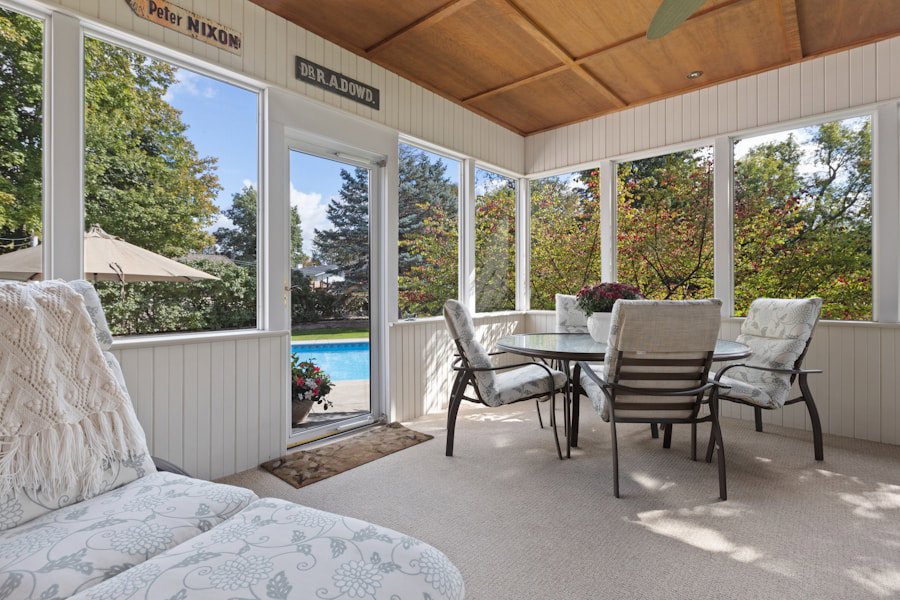
Photo by Point3D Commercial Imaging Ltd. on Unsplash
How Color Choice Affects Fabric Longevity in High-Sun Environments
Color isn't just an aesthetic decision when you're buying upholstery for sun-exposed spaces. Darker colors absorb more heat, which accelerates the expansion-contraction cycle and increases the rate at which fiber bonds break down. They also show fading more visibly when it does occur, because the contrast between faded and unfaded areas is more dramatic.
Lighter neutrals like cream, beige, and grey absorb less heat and tend to fade more gracefully. If you do love a deep color, look specifically for solution-dyed fabrics in that shade, where the color is locked into the fiber rather than applied as a surface treatment. The difference in fade resistance between a surface-dyed navy and a solution-dyed navy is significant enough that it should influence your buying decision.
Here's a practical color guide for sun-heavy spaces:
- Beige and cream: Excellent heat reflection, fade gracefully, hide everyday dust well.
- Grey: Mid-range heat absorption, very forgiving in mixed-light environments, on-trend for modern and transitional spaces.
- White: Lowest heat absorption but shows soiling quickly. Best for very controlled environments or if you're committed to a performance fabric that cleans easily.
- Blue and green: Mid-tones hold up reasonably well in solution-dyed versions and feel seasonally appropriate for summer.
- Deep red, brown, and black: Look rich indoors but are the most demanding in sun-exposed settings. Stick to solution-dyed options if you love these shades.
What to Look for on the Label Before You Buy
Most fabric product listings include information that tells you a lot about performance if you know what you're reading. Here's what to look for when you're evaluating an upholstery fabric for a temperature-variable space:
- Double rub count: This is the standard measure of abrasion resistance. It counts how many back-and-forth rubs a fabric endures before showing wear. For high-use furniture, aim for 30,000 or higher. For heavy residential or any indoor-outdoor transition use, 50,000 is a solid benchmark.
- Martindale abrasion rating: The European equivalent of double rub testing. A Martindale rating above 25,000 is considered suitable for heavy domestic use.
- Fiber content: Look specifically for acrylic, polyester, polypropylene, or vinyl for temperature-variable spaces. These outperform natural fibers in this application.
- Dye method: "Solution-dyed" in the product description is a meaningful indicator of UV and fade resistance. If it's not mentioned, ask or assume it's piece-dyed, which performs less well in sun.
- Care codes: W means water-cleanable, S means solvent-cleanable, W-S means both work, and X means vacuum only. For practical homeowner use in summer, W or W-S fabrics are the most forgiving.
Also, don't overlook the backing. A quality knit or woven backing stabilizes the face fabric and reduces distortion during temperature cycling. Fabrics with no backing or a flimsy scrim are more prone to stretching unevenly over time.
Frequently Asked Questions
Q: What upholstery fabric handles both indoor air conditioning and outdoor heat the best?Solution-dyed acrylic is the top choice for furniture that transitions between air-conditioned interiors and outdoor heat. Its color is integrated into the fiber during manufacturing, so it resists UV fading, and its low moisture absorption reduces stress from expansion and contraction cycles. Look for a double rub count above 50,000 for maximum durability.
Q: Does fabric color affect how quickly upholstery fades in the sun?Yes. Darker colors absorb more heat and tend to show fading more visibly because the contrast between faded and unfaded areas is more apparent. Lighter neutrals like beige, cream, and grey absorb less heat and fade more gradually. Regardless of color, solution-dyed fabrics resist fading far better than piece-dyed or surface-treated alternatives.
Q: Can I use velvet or chenille fabric near sunny windows?Both velvet and chenille are better suited to shaded, climate-controlled interiors rather than sun-exposed locations. Their pile structures can distort unevenly under heat and UV exposure. If you love the look of velvet, a synthetic polyester velvet performs better than natural fiber versions, but even so, direct sustained sunlight will shorten its lifespan and appearance compared to a performance acrylic or woven polyester in the same spot.