
Why Upholstery Fabric Opacity and Weave Density Matter More Than You Think Outdoors
When most people shop for outdoor cushion fabric, they're thinking about color and whether it'll hold up to the kids and the dog. What they're not thinking about is how much UV radiation is actually passing straight through the fabric and degrading the foam underneath, fading the color from the inside out, and slowly breaking down the fiber structure. Upholstery fabric opacity and weave density are the two biggest factors controlling how much heat and light penetrate your outdoor furniture, and understanding them can save you from replacing cushions every couple of years.
Opacity refers to how much light a fabric blocks. A sheer, loosely woven fabric has low opacity, meaning light and heat pass through it easily. A tightly woven, solution-dyed fabric has high opacity, blocking a significant portion of the UV spectrum before it reaches the cushion core. Weave density works hand in hand with this: the tighter the weave, the smaller the gaps between fibers, and the less UV radiation sneaks through. These aren't just aesthetic properties. They're functional ones that directly affect how long your outdoor fabrics last and how comfortable they feel on a hot summer afternoon.
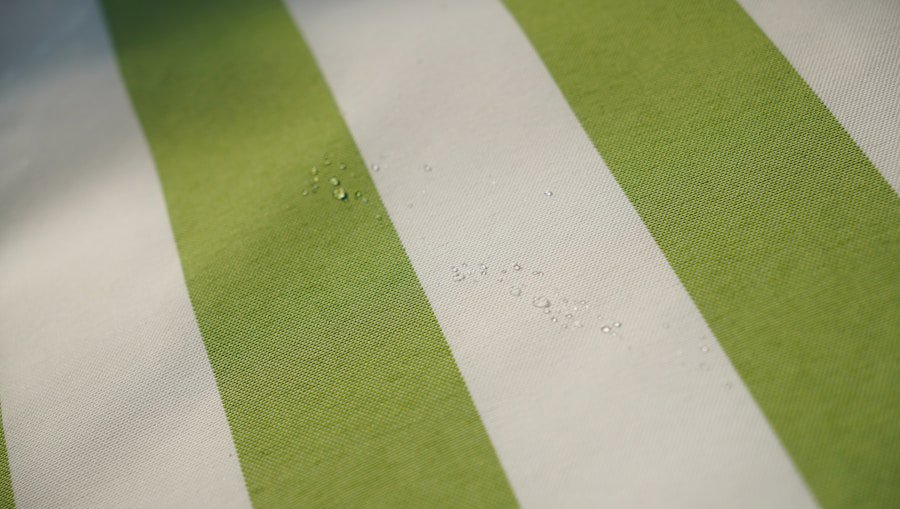
Photo by Tomi Saputra on Unsplash
How Heat and Light Actually Travel Through Fabric
UV radiation from the sun travels in waves, and fabric acts as a filter. How effective that filter is depends on three things: the fiber type, how tightly those fibers are woven or knitted together, and whether the color or dye has UV-absorbing properties. Darker colors and denser weaves naturally absorb and scatter more UV radiation. Lighter colors reflect more visible light but don't always block UV as effectively as people assume.
Heat transfer through fabric works slightly differently. Fabrics trap air between their fibers, and that trapped air acts as insulation, which is great in winter and miserable on a 95-degree Thursday in July. A dense, heavy fabric might do an excellent job blocking UV but turn your cushion into a heat sink. That's why the ideal outdoor upholstery fabric balances opacity with breathability, and why choosing the right weave structure matters as much as choosing the right fiber.
- Tight plain weaves offer good UV blocking and are usually the most breathable because air can still move through the uniform structure.
- Twill weaves (think of the diagonal lines on denim) are denser and more UV-resistant but trap heat more easily.
- Open or loose weaves let air flow freely but offer minimal UV protection, making them better suited for indoor use or shaded spaces.
- Coated or backed fabrics like vinyl and faux leather block UV almost entirely but also block airflow, making them the hottest option to sit on in direct sun.
What Is the Best Fabric Type for UV Protection Without Trapping Heat?
Solution-dyed acrylic is widely considered the gold standard for outdoor upholstery fabrics that need both UV protection and breathability. Unlike fabrics where color is applied to the surface after weaving, solution-dyed acrylic is produced by injecting pigment directly into the fiber before it's spun, making the color chemically part of the fiber itself. This means UV radiation has a much harder time breaking down the dye, and the fabric resists fading significantly longer than surface-printed alternatives.
In practical terms, high-quality solution-dyed acrylic fabrics can retain color integrity for five years or more of outdoor exposure, depending on climate and sun intensity. They're also engineered with a moderately tight weave that blocks a meaningful portion of the UV spectrum while still allowing air to circulate, which is exactly what you want when you're trying to keep cushions cool and comfortable. On the Ultraviolet Protection Factor (UPF) scale, quality solution-dyed acrylic fabrics commonly achieve ratings of UPF 50 or higher, meaning they block 98% or more of UV radiation passing through the fabric.
Other fiber types worth knowing about:
- Polyester: Inherently more UV-resistant than natural fibers and generally more affordable. A tightly woven polyester can perform well outdoors, especially if it has a UV-inhibiting finish applied. It's not as breathable as acrylic but holds up well against moisture.
- Olefin (polypropylene): Extremely resistant to moisture and mildew, with decent UV resistance. It's one of the more affordable synthetic options and works well for cushions that see occasional rain. Breathability is moderate.
- Cotton: Not a great outdoor fabric choice. Cotton absorbs moisture, promotes mildew growth, and offers poor UV resistance without chemical treatment. It can be beautiful on a covered porch with minimal sun exposure, but it's not built for full summer sun.
- Linen: Similar story to cotton outdoors. Lovely texture, naturally breathable, but UV protection is low and moisture resistance is poor without treatment.
- Vinyl and faux leather: Maximum UV protection because light simply can't get through. But they absorb and radiate heat intensely in direct sun, making them uncomfortable to sit on unless they're in a shaded area or used for non-seating surfaces like chair backs and sides.
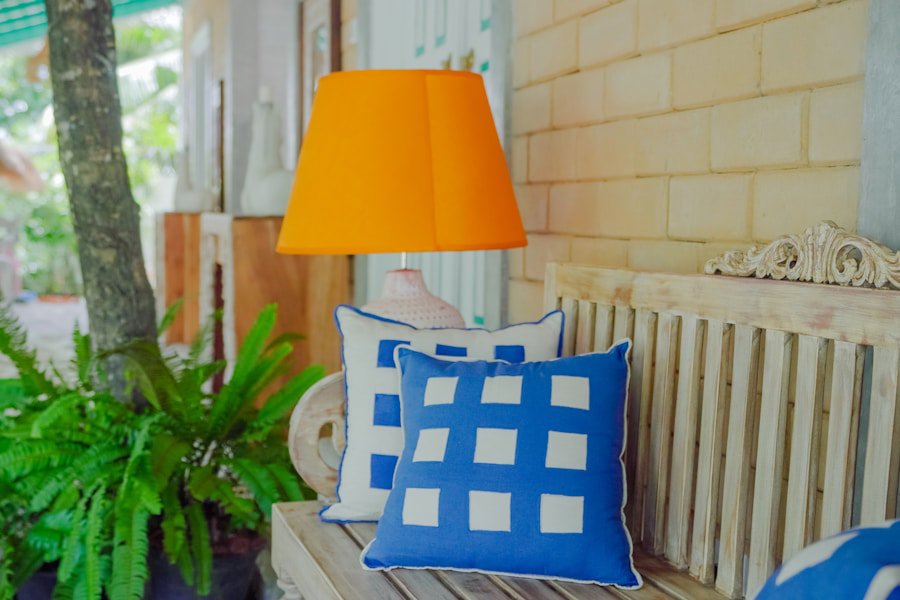
Photo by sidath vimukthi on Unsplash
How Weave Density Is Measured and What Numbers to Look For
Weave density in upholstery fabric is most commonly expressed through thread count (threads per square inch) or referenced indirectly through a fabric's weight in ounces per yard. For outdoor fabrics specifically, a weight of 8 to 12 ounces per yard is generally the sweet spot for balancing UV blockage and breathability. Lighter fabrics below 6 ounces tend to have too much light penetration for full sun use. Heavier fabrics above 14 ounces block UV well but become heat-retentive and harder to dry after rain.
Durability in upholstery fabrics is measured through the double rub count, which represents how many times a fabric can be rubbed back and forth before showing wear. One "double rub" equals one back-and-forth motion. For outdoor use, look for a minimum of 30,000 double rubs. High-traffic outdoor settings, especially with kids and pets in the picture, are better served by fabrics rated at 50,000 double rubs or higher. A fabric can be UV-resistant but structurally weak, so both metrics matter when you're evaluating outdoor upholstery.
Practical Tips for Choosing Outdoor Upholstery Fabric This Summer
Here's the thing: you don't need to memorize fiber chemistry to make a good purchase. A few practical checkpoints will get you 90% of the way there.
- Check the UPF rating. If a fabric is marketed for outdoor use and no UPF or UV protection information is listed, that's a gap worth asking about. Reputable outdoor fabrics usually have this data available.
- Hold it up to a light source. Literally. A fabric with good UV-blocking density won't let much light through when you hold it up to a lamp or window. If you can see your hand clearly through it, it's too sheer for full-sun outdoor use.
- Look for solution-dyed labeling. "Solution-dyed" is not just a marketing phrase. It's a specific manufacturing process that meaningfully improves UV and fade resistance compared to piece-dyed or printed alternatives.
- Consider color strategically. Darker colors absorb more heat but tend to resist UV fading longer. Lighter colors reflect more heat but may fade faster in direct sun without solution-dyeing. Mid-tones, like navy, slate, or warm grey, often hit the best balance.
- Don't ignore moisture management. A fabric that blocks UV but stays wet for days after a summer storm is going to develop mildew fast. Look for fabrics labeled quick-dry or moisture-wicking in addition to UV-resistant.
- Check for a fabric backing. Some outdoor upholstery fabrics have an acrylic or polyurethane backing that adds UV protection and structure. These are great for cushion covers but can reduce breathability on seating surfaces where direct contact is involved.
Which Colors and Patterns Hold Up Best to Summer UV Exposure?
Solution-dyed solid colors are the most UV-stable option available because every fiber is uniformly saturated with pigment. Solid navy, charcoal, forest green, and terracotta are all popular summer choices right now and happen to be among the most fade-resistant colorways when solution-dyed. Stripes work well too, since most quality outdoor stripe fabrics are woven with solution-dyed yarns in each color band rather than printed on top.
Printed patterns are trickier outdoors. The print sits on the surface of the fiber and is more vulnerable to UV degradation, even on otherwise durable base fabrics. If you love a floral or multicolor pattern for outdoor cushions, look specifically for printed fabrics on a solution-dyed base, or choose patterns that are woven in rather than printed on. Jacquard weave patterns, where the design is created by the weave structure itself rather than ink, are an excellent choice for both UV stability and visual interest.
Frequently Asked Questions
Q: Does fabric color affect how hot outdoor cushions get in the sun?Yes, darker colors absorb more solar energy and will make cushions feel hotter to the touch in direct sun. However, color alone doesn't determine UV protection for the fabric itself. A dark, loosely woven fabric will still allow significant UV penetration compared to a tight, light-colored weave. Weave density and fiber type matter more than color when it comes to how much UV actually passes through the fabric.
Q: What does solution-dyed mean, and why does it matter for outdoor fabric?Solution-dyed means the pigment is added to the fiber before it's spun into yarn, making the color part of the fiber structure rather than a surface application. This makes the fabric significantly more resistant to UV fading because the color can't be bleached out from the surface. For outdoor cushions and furniture exposed to direct sunlight, solution-dyed fabrics last noticeably longer than piece-dyed or printed alternatives.
Q: Can I use indoor upholstery fabric for outdoor cushions if I bring them in during rain?Technically yes, but it comes with real trade-offs. Most indoor upholstery fabrics have no UV inhibitors, no moisture resistance, and weave structures that weren't designed for temperature swings and humidity. Even with careful management, you'll likely see fading, fiber breakdown, and mildew faster than you would with a fabric made for outdoor conditions. If the cushions will see regular sun exposure, even on a covered porch, an outdoor-rated fabric is worth the investment.