

Static electricity in upholstery fabric is one of those seasonal annoyances nobody warns you about when you buy a new sofa. One week you're admiring your plush new velvet accent chair, the next you're getting zapped every time you reach for the remote. It's not a defect and it's not just you being unlucky. It's chemistry, humidity, and fiber content colliding the moment your furnace starts running.
Why Does Upholstery Fabric Get Staticky Once the Furnace Kicks On?
Static builds up because indoor relative humidity drops sharply when heating systems run, and dry air can't carry away the electrons that fabric fibers naturally generate through friction. Moisture in the air normally acts as a conductor, letting small electrical charges dissipate before they build up enough to shock you.
Here's the number that matters: static shocks become noticeably more common once indoor relative humidity falls below 40%, and they get downright miserable under 30%. Most homes with forced-air heat sit somewhere in the 15 to 25% range by January, which is drier than the average desert climate at midday. Combine that dry air with a napped or synthetic fabric and you've built a tiny electricity generator disguised as a loveseat.

Photo by Annie Spratt on Unsplash
Which Upholstery Fabrics Are Most Prone to Static Cling?
Napped synthetic fabrics like velvet, chenille, and microfiber-blend textiles hold the most static because their fiber structure creates more surface friction and they're often made from polyester or nylon, both of which are poor conductors. Natural fibers like cotton, linen, and wool release charge much faster and rarely cause noticeable shocks.
- Velvet and chenille: The dense pile and synthetic fiber content (often polyester or a poly-blend) trap charge and make these fabrics some of the biggest static offenders in a heated home.
- Faux leather and vinyl: These synthetic surfaces don't breathe, and they build charge quickly when pets or people slide across them in dry winter air.
- Cotton and linen: Natural cellulose fibers absorb a small amount of ambient moisture, which helps charge dissipate instead of accumulating.
- Wool blends: Wool has natural moisture-wicking properties and tends to stay static-neutral even in dry conditions.
Honestly, chenille upholstery fabric gets an unfair reputation this time of year. It's not the fabric's fault. It's the combination of synthetic fiber content and bone-dry indoor air. Swap in a solution-dyed acrylic chenille or a cotton-blend version and the static problem often disappears entirely.
Step-by-Step Instructions
If your furniture is already shocking your whole family (and your dog gives the couch a suspicious look every time she jumps up), work through these steps in order. Most homeowners see improvement within a day or two.
- Check your indoor humidity level. Buy a $10 hygrometer or check your smart thermostat's readout. If you're under 35%, that's your root cause, not a fabric flaw.
- Run a humidifier near the seating area. A console or whole-home humidifier that keeps indoor air between 40 and 50% relative humidity will cut static shocks dramatically, and it's better for your skin, wood furniture, and houseplants too.
- Test an anti-static fabric spray on a hidden section first. Products like Static Guard or a DIY water-and-fabric-softener mix in a spray bottle can be applied to cushions and seat backs. Always spot test on the underside of a cushion first.
- Wipe a dryer sheet across the fabric surface. This is the fastest fix in a pinch. Rub a used dryer sheet lightly over velvet or chenille cushions and the anti-static coating will neutralize the charge for a day or two.
- Add a leather or wool throw blanket. Layering a natural-fiber throw over a synthetic sofa gives you a barrier that doesn't build charge, so you stop transferring static every time you sit down.
- Increase your own skin moisture. Static shocks are worse when your skin is dry too. Keep hand lotion by the couch, especially if kids or pets are constantly hopping on and off the furniture.
- Consider re-covering high-static pieces with a natural-fiber blend. If a chair shocks everyone who sits in it, reupholstering with a cotton, linen, or wool-blend fabric solves the problem permanently instead of managing it season after season.

What's the Best Upholstery Fabric If You Want to Avoid Static Altogether?
Woven cotton blends, linen-look fabrics, and boucle textiles made with natural or semi-natural fibers hold the least static charge because they retain more ambient moisture than fully synthetic textiles. If static is a dealbreaker for your household, shop fiber content labels before you shop color.
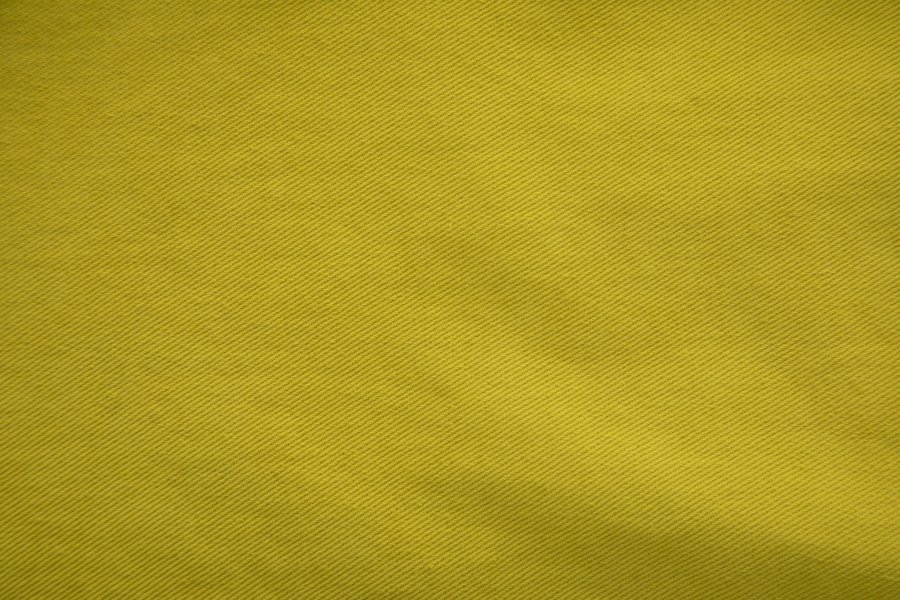
Photo by engin akyurt on Unsplash
Boucle deserves a mention here too. The looped, textured yarn structure in boucle upholstery fabric is usually a wool or wool-acrylic blend, which naturally resists the kind of charge buildup you get from tightly packed velvet pile. If you love texture but hate the zap, boucle is worth a look. Cream and neutral tones in particular pair well with the cozy, textural look everyone wants for fall living rooms, and cream chenille upholstery fabric is one of our most requested categories this time of year, static concerns and all.
For designers speccing multi-family or hospitality projects, this is also a durability conversation, not just a comfort one. Fabric tested to 30,000+ double rubs on the Wyzenbeek abrasion method or rated for heavy Martindale abrasion cycles tends to be tightly woven, and tighter weaves generally shed static faster than loose, plush pile fabrics. A quick reference to the fabric's technical spec sheet will tell you both durability and likely static behavior at once.
How Do You Test a Fabric Swatch for Static Before You Buy?
Rub the swatch briskly against a wool sweater or your own hair for ten seconds, then hold it near a small piece of tissue paper or your arm hair. If it visibly attracts the paper or you feel a light pull, that fabric is likely to build noticeable static once your heating system dries out the air.
This simple test takes thirty seconds and can save you from an expensive reupholstery regret. Order swatches, test them in the room you plan to use them in (rooms near heating vents are worse offenders), and don't judge a fabric only by how it feels in a warm, humid fabric showroom. Showrooms rarely mimic January living room conditions.
If you're browsing broadly, our velvet upholstery fabrics collection and woven upholstery fabrics collection both list fiber content on every product page, so you can compare static risk before you commit to yardage.
Tips to Keep in Mind
- Keep whole-home humidity between 40 and 50% year-round. It protects wood furniture and your health, not just your fabric.
- Vacuum upholstery weekly during heating season. Dust and pet hair increase surface friction and make static worse.
- Avoid dryer sheets directly on light-colored fabric repeatedly, as buildup can eventually dull the finish. Alternate with a diluted fabric softener spray.
- If reupholstering, ask for a fiber content breakdown, not just a color and pattern. A 100% polyester velvet will always behave differently than a cotton-poly blend.
Frequently Asked Questions
Q: Why does my velvet couch shock me more in winter?
Velvet holds static because its dense synthetic pile creates friction and traps electrical charge, and winter heating drops indoor humidity below the 40% threshold where static naturally dissipates. Running a humidifier and applying anti-static spray usually solves it within a day.
Q: Does fabric softener actually reduce static on furniture?
Yes, a diluted fabric softener spray (one part softener to three parts water) coats fibers with a thin conductive layer that helps electrons disperse instead of building up. Spot test on a hidden area first, especially on velvet or suede.
Q: What upholstery fabric has the least static electricity?
Cotton, linen, and wool-blend fabrics hold the least static because their natural fibers absorb small amounts of ambient moisture, which helps electrical charge dissipate rather than accumulate. Fully synthetic fabrics like polyester velvet and vinyl tend to hold the most.